 Pod Save America Hosts Call on Democrats to Cut All Israel Military Aid, No Longer Accept AIPAC Funding
 Jews, Israelis Targeted in Austria Amid Surge in Antisemitic Incidents; Local Jewish Community Calls for Action
 ‘All of Our Strength’: Over 1,000 Pro-Israel Activists Gather in DC for Solidarity Conference
 ‘Devastated’: Wesley LePatner, Killed in Manhattan Mass Shooting, Was a Jewish Communal, Philanthropic Leader
 Sen. Angus King Vows to No Longer Vote for Israel Military Aid Until Gaza Conditions Improve
 Europe Won’t Pressure Israel to ‘Commit Suicide’ Amid Gaza Backlash, Palestinian State Push, Says Israeli FM
 Israel’s National Soccer Coach Attacked in Athens Before Soccer Fans Chant ‘F–K Israel, Free Palestine’ at Match
 New York Judge Sentences Neo-Nazi to 5 Years for Livestreaming Bomb Threats Against Jewish Hospitals
 US Pressures Lebanon to Issue Cabinet Decision to Disarm Hezbollah Before Talks Continue
 UK Plans to Recognize Palestinian State in September Unless Israel Meets Conditions, Starmer Says


Facebook Suspends Account of Ukrainian Jewish Leader After He Posts Details of Country’s Holocaust Collaboration
Error: Contact form not found.
 by Sam Sokol / JNS.org
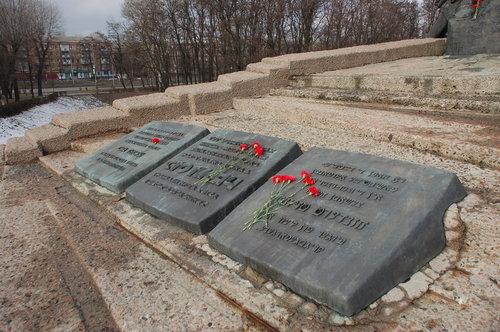
Monument to those murdered at Babi Yar, Ukraine. Photo: Wikimedia Commons.
JNS.org — A prominent Jewish figure in Kiev found his Facebook account suspended after his post detailing Ukrainian collaboration in the Holocaust was flagged as a violation of the social networking site’s terms of service.
Eduard Dolinsky, director-general of the Ukrainian Jewish Committee, told JNS.org he was locked out of his account October 20 after posting an old video of the Soviet trial of two members of the Ukrainian Insurgent Army (UPA), a group that participated in the murder of Jewish civilians during World War II.
Dolinsky, an outspoken critic of the Ukrainian government’s alleged support for revisionist history that denies the country’s role in the Holocaust, said this was not the first time he has been censored by Facebook. Over the past several weeks, two other of his posts critical of Ukraine’s past actions were removed by the social media site.
“I believe that this is an orchestrated attack by Holocaust deniers here in Ukraine,” Dolinsky said. He added that he was careful to avoid foul language or any other objectionable content, which would have resulted in immediate censorship.
“The post was absolutely correct,” he told JNS.org.
Other comments that Dolinsky said have been taken down by Facebook include those criticizing official signs commemorating fighters of the Organization of Ukrainian Nationalists (OUN), an offshoot of the UPA and a group initially supportive of the Germans. The OUN has been implicated in the murder of many Jews and Poles, and only eventually broke from the Nazis over the issue of Ukrainian independence.
Dolinsky’s posts condemning such memorials placed at the Kiev municipality and at Babi Yar — the site of a two-day massacre of 33,000 Jews by the Nazis, where OUN members were later killed as well — were removed as violations of Facebook’s terms of service.
Dr. Efraim Zuroff, director of the Simon Wiesenthal Center’s Jerusalem office told JNS.org, “It is a very sad day and a very serious matter if any criticism of the efforts of the Ukrainian government to distort the history of World War II and the Holocaust are taken down by Facebook.”
“Such a ridiculous policy basically gives the Ukrainian government a green light to continue to glorify individuals who participated in the mass murder of Jews during the Holocaust,” Zuroff added.
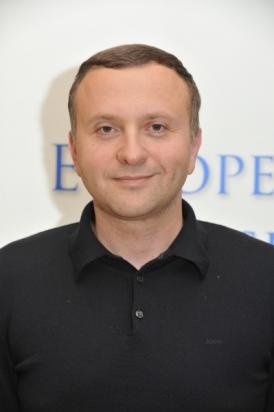
Eduard Dolinsky. Photo: European Jewish Parliament.
Dolinsky is not the only individual to report facing censorship when critical of the Ukrainian government online. Experts say there is rampant restriction of freedom of speech in the formerly communist country.
Ukrainian-Israeli journalists Shimon Briman and Alex Kogan both shared a post discussing the responsibility of World War I-era Ukrainian leader Simon Petliura in a series of pogroms against Jews. The post, which contained a Russian epithet for Jews, was removed from both journalists’ timelines.
“I felt there is anti-Jewish censorship on Facebook,” Briman said.
Briman said he does not believe the Ukrainian government had any direct involvement, but believes that a bill passed last year by parliament making the denigration of the OUN and UPA illegal has encouraged social media “trolls” to attack critics of Ukraine’s historical record.
“We are talking about a well-organized community of Ukrainians, who well understand what they are doing,” Kogan said.
Professor John Paul Himka, a Canadian researcher who focuses on the Holocaust in Ukraine, pointed to the recent government ban on the Polish film “Wołyń” — which details the WWII mass murder of Poles by Ukrainian nationalists — as proof of official stifling of free expression.
Though the 2015 law failed to establish specific penalties for violators who do criticize the OUN or UPA, academics and human rights activists around the world condemned it for censoring historical debate and establishing an official state narrative of the Holocaust.
Asked about the recent Facebook incidents, Volodymyr Viatrovych, director of Ukraine’s state-sponsored Institute for National Memory, told JNS.org, said the policy of “decommunization,” or the process of dismantling the communist legacies of states in the former Soviet Bloc, does not generate censorship or limitations of freedom of speech. He added that he does not believe that the “Ukrainian politics of decommunization has some influence on the politics of Facebook.”
Neither Facebook nor other representatives of the Ukrainian government responded to requests by JNS.org for comment.