 Pod Save America Hosts Call on Democrats to Cut All Israel Military Aid, No Longer Accept AIPAC Funding
 Jews, Israelis Targeted in Austria Amid Surge in Antisemitic Incidents; Local Jewish Community Calls for Action
 ‘All of Our Strength’: Over 1,000 Pro-Israel Activists Gather in DC for Solidarity Conference
 ‘Devastated’: Wesley LePatner, Killed in Manhattan Mass Shooting, Was a Jewish Communal, Philanthropic Leader
 Sen. Angus King Vows to No Longer Vote for Israel Military Aid Until Gaza Conditions Improve
 Europe Won’t Pressure Israel to ‘Commit Suicide’ Amid Gaza Backlash, Palestinian State Push, Says Israeli FM
 Israel’s National Soccer Coach Attacked in Athens Before Soccer Fans Chant ‘F–K Israel, Free Palestine’ at Match
 New York Judge Sentences Neo-Nazi to 5 Years for Livestreaming Bomb Threats Against Jewish Hospitals
 US Pressures Lebanon to Issue Cabinet Decision to Disarm Hezbollah Before Talks Continue
 UK Plans to Recognize Palestinian State in September Unless Israel Meets Conditions, Starmer Says


New York Times Demonstrates ‘Ultra-Bad’ Journalism About Israeli Politics
Error: Contact form not found.
 by Ira Stoll

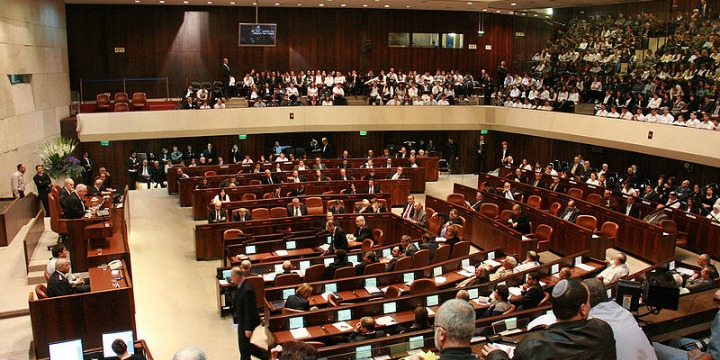
Israel’s parliament, the Knesset. Photo: Itzik Edri via Wikimedia Commons.
Just days after hurling the adjective “nationalist” at the political party of Israel’s defense minister — and coming in for criticism from The Algemeiner for doing so — the New York Times is upping the ante, with a news article describing the minister, Avigdor Lieberman, as “ultra-nationalist.”
The Times offers no explanation about what exactly crosses the line from merely “nationalist” to “ultra-nationalist,” or why a politician described as merely one a few days ago deserves a promotion, or demotion, to the more extreme category a few days later.
Nor is that the only oddity in this Times article, which reports on the election of Avi Gabbay as the chairman of Israel’s Labor Party. The Times describes Labor as “the political home of state builders like David Ben-Gurion, Golda Meir, Shimon Peres and Yitzhak Rabin,” and reports further that Labor has “always been identified with the old Ashkenazic elite who hailed from Europe.”
This is an odd formulation. Rabin was born in Israel. Meir was a Milwaukee public school teacher whose father worked in a railroad yard. Not exactly some European ”elite.” The first prime minister from Labor’s rival, the Likud Party, Menachem Begin, was born in Europe. So was the second Likud prime minister, Yitzhak Shamir, and the party’s ideological progenitor, Vladimir (Ze’ev) Jabotinsky.
The “has always been identified” trick is the Times using the passive voice to put its own spin on the story. Who is doing the identifying? The Times doesn’t say, but the reality is it is the Times itself. The paper is using its own voice to portray Israelis as European colonizers of the Middle East, neglecting to mention that the only reason the Jews were in Europe to begin with was that the Romans — that is, invading Europeans — had invaded Israel, sacked Jerusalem, and forced the Jews to flee their native land. The Jews only “hailed from Europe” in the most temporary of senses; they prayed facing Jerusalem, mentioned it in their daily prayers, and annually mourned the anniversary of their exile.
What can one say about this treatment from the Times? One might call it bad journalism, or bad history. But that might even be too generous. If one were to treat the Times the way the Times treats Israel, one might write that the Times has “always been identified with ultra-bad journalism.”
More of Ira Stoll’s media critique, a regular Algemeiner feature, can be found here.