 Pod Save America Hosts Call on Democrats to Cut All Israel Military Aid, No Longer Accept AIPAC Funding
 Jews, Israelis Targeted in Austria Amid Surge in Antisemitic Incidents; Local Jewish Community Calls for Action
 ‘All of Our Strength’: Over 1,000 Pro-Israel Activists Gather in DC for Solidarity Conference
 ‘Devastated’: Wesley LePatner, Killed in Manhattan Mass Shooting, Was a Jewish Communal, Philanthropic Leader
 Sen. Angus King Vows to No Longer Vote for Israel Military Aid Until Gaza Conditions Improve
 Europe Won’t Pressure Israel to ‘Commit Suicide’ Amid Gaza Backlash, Palestinian State Push, Says Israeli FM
 Israel’s National Soccer Coach Attacked in Athens Before Soccer Fans Chant ‘F–K Israel, Free Palestine’ at Match
 New York Judge Sentences Neo-Nazi to 5 Years for Livestreaming Bomb Threats Against Jewish Hospitals
 US Pressures Lebanon to Issue Cabinet Decision to Disarm Hezbollah Before Talks Continue
 UK Plans to Recognize Palestinian State in September Unless Israel Meets Conditions, Starmer Says


Israel Lawmakers Hope Trump Could Ease Made-in-USA Rules for Military Aid
Error: Contact form not found.
 by Reuters and Algemeiner Staff

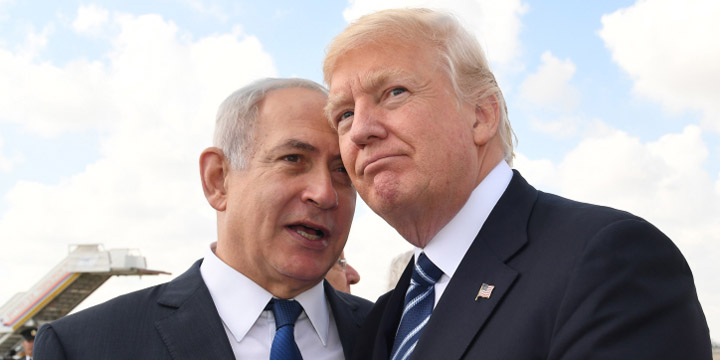
Israeli Prime Minister Benjamin Netanyahu and US President Donald Trump at Ben-Gurion International Airport on May 23, 2017. Photo by Kobi Gideon / GPO.
Israeli lawmakers urged the government on Monday to reopen talks with the United States on a defense aid deal signed in 2016 in the hope that President Donald Trump might ease a requirement that American aid money be spent on US equipment.
Under the deal signed by Prime Minister Benjamin Netanyahu and then US President Barack Obama, the United States would provide Israel with $38 billion in military assistance over 10 years, the largest such aid package in US history.
However, one component of the deal was to phase out a special arrangement that had allowed Israel to use 26.3 percent of the US aid on its own defense industry instead of on American-made weapons. All the aid will now have to be spent on US equipment by 2026.
Israeli lawmakers suggested that this requirement could be renegotiated now that Obama has been succeeded by Trump, who has broken with other past American policies by moving the US embassy to Jerusalem last week.
“The US administration today is different than the previous one and it is possible to do something on a policy level to change the decision in some way,” opposition parliament member Mickey Levy said.
In a meeting of parliament’s finance committee, the chairman of the panel, Moshe Gafni, from a party in Netanyahu’s rightwing government, called on the cabinet to tell the US administration that the current agreement will cause the Israeli defense sector “unacceptable harm.”
According to Defense Ministry economist Zeev Zilber, in addition to the $800 million annually that would be directly diverted from Israeli to US defense firms, the industry would lose another $1.3 billion each year from the knock-on effects of the change. That could threaten 22,000 jobs.
The Economy Ministry said the deal could impact as many as 700 small suppliers.
Eyal Ben-Reuven, another opposition lawmaker, expressed worry that Israel could lose its ability to act independently in times of emergency, such as if its Iron Dome anti-missille system is needed during wartime.
“The most disturbing thing is that the government has no solutions,” he said.
The Prime Minister’s Office was not immediately available for comment.