 Pod Save America Hosts Call on Democrats to Cut All Israel Military Aid, No Longer Accept AIPAC Funding
 Jews, Israelis Targeted in Austria Amid Surge in Antisemitic Incidents; Local Jewish Community Calls for Action
 ‘All of Our Strength’: Over 1,000 Pro-Israel Activists Gather in DC for Solidarity Conference
 ‘Devastated’: Wesley LePatner, Killed in Manhattan Mass Shooting, Was a Jewish Communal, Philanthropic Leader
 Sen. Angus King Vows to No Longer Vote for Israel Military Aid Until Gaza Conditions Improve
 Europe Won’t Pressure Israel to ‘Commit Suicide’ Amid Gaza Backlash, Palestinian State Push, Says Israeli FM
 Israel’s National Soccer Coach Attacked in Athens Before Soccer Fans Chant ‘F–K Israel, Free Palestine’ at Match
 New York Judge Sentences Neo-Nazi to 5 Years for Livestreaming Bomb Threats Against Jewish Hospitals
 US Pressures Lebanon to Issue Cabinet Decision to Disarm Hezbollah Before Talks Continue
 UK Plans to Recognize Palestinian State in September Unless Israel Meets Conditions, Starmer Says


Microplastics Discovered in Marine Invertebrates Along Israel’s Coastline
Error: Contact form not found.
 by JNS.org

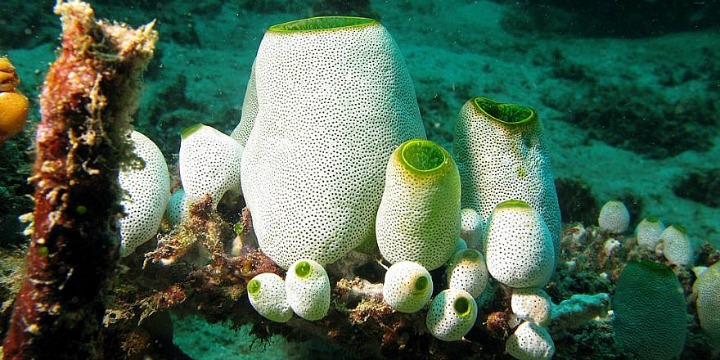
A colony of Didemnum molle. Ascidians like this have been ingesting tiny pieces of plastic and related plastic additives in seawater, according to researchers at Tel Aviv University. Photo: Silke Baron/Wikimedia Commons.
JNS.org – A new Tel Aviv University study finds that microplastics—tiny pieces of plastic ingested by aquatic life—are present in solitary ascidians, or marine invertebrates, all along the Israeli coastline. Ascidians are sac-like marine invertebrate filter feeders.
The research also confirmed the presence of plastic additives, i.e., “plasticizers,” which are substances added to plastics to increase their flexibility, transparency, durability and longevity.
The research, led by Professor Noa Shenkar of the School of Zoology at TAU’s Faculty of Life Sciences and the Steinhardt Museum of Natural History, was published in the January 2019 issue of Marine Pollution Bulletin. The study was conducted in collaboration with Professor Dror Avisar, head of the Water Research Center at TAU’s Faculty of Exact Sciences, and Aviv Kaplan, a postgraduate student in Avisar’s laboratory.
“This is the first study that examines plastic additive contamination in marine organisms in the Eastern Mediterranean and Red Sea,” said Gal Vered, co-author of the study and a Ph.D. student in Shenkar’s laboratory. “Solitary ascidians are highly efficient filter feeders and are excellent examples of the state of pollution that affects many other marine organisms. Our findings are extremely disturbing. Even in protected beaches, there was evidence of microplastics and plastic additives in ascidians. In fact, at every sampling site, we discovered varying levels of these pollutants.”
Shenkar noted that “this is a direct result of human use of plastic. It may seem that plastic bags and bulky plastic products that we notice floating in the sea are the major problem. But a more important cause for concern is the fragmentation of these products into small particles that are then ingested by many organisms and reach even the deepest zones in the ocean.”
Some 350 million tons of plastic are produced worldwide every year and the number is rising. The research suggests that if plastic is found in ascidians, it’s probably present in other sea creatures as well.
The researchers are currently preparing their results for policymakers interested in preventing further damage to Israel’s coastline. They are also continuing to investigate the extent and effect of plastic pollution on the coral reef of Eilat.
“By communicating our results to the public,” said Shenkar, “we hope to further enhance public awareness of the actions everyone can take to beat plastic pollution.”