 Pod Save America Hosts Call on Democrats to Cut All Israel Military Aid, No Longer Accept AIPAC Funding
 Jews, Israelis Targeted in Austria Amid Surge in Antisemitic Incidents; Local Jewish Community Calls for Action
 ‘All of Our Strength’: Over 1,000 Pro-Israel Activists Gather in DC for Solidarity Conference
 ‘Devastated’: Wesley LePatner, Killed in Manhattan Mass Shooting, Was a Jewish Communal, Philanthropic Leader
 Sen. Angus King Vows to No Longer Vote for Israel Military Aid Until Gaza Conditions Improve
 Europe Won’t Pressure Israel to ‘Commit Suicide’ Amid Gaza Backlash, Palestinian State Push, Says Israeli FM
 Israel’s National Soccer Coach Attacked in Athens Before Soccer Fans Chant ‘F–K Israel, Free Palestine’ at Match
 New York Judge Sentences Neo-Nazi to 5 Years for Livestreaming Bomb Threats Against Jewish Hospitals
 US Pressures Lebanon to Issue Cabinet Decision to Disarm Hezbollah Before Talks Continue
 UK Plans to Recognize Palestinian State in September Unless Israel Meets Conditions, Starmer Says


Humanitarian Aid for Syrian Refugees Threatened as Assad Regime Revokes Visas for EU Diplomats
Error: Contact form not found.
 by Reuters and Algemeiner Staff

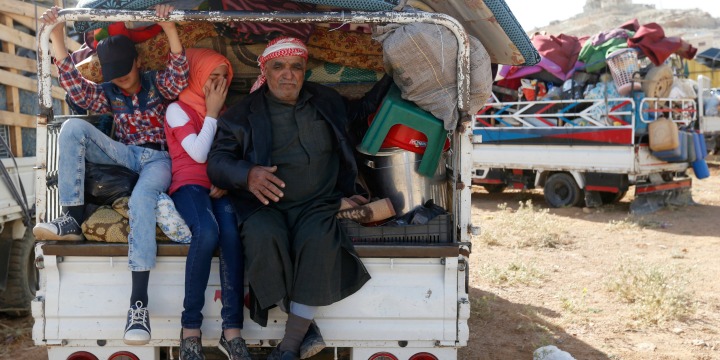
Syrian refugees in the Lebanese border town of Arsal, Lebanon. Photo: Reuters/Mohamed Azakir.
Syria’s President Bashar al-Assad has revoked special visas for European Union diplomats and officials traveling regularly between Beirut and Damascus, complicating efforts to distribute aid to civil war victims, three senior EU diplomats said.
Since conflict broke out in Syria in 2011, the EU has used Beirut, the Lebanese capital, for its diplomatic base while closing most embassies in Damascus in protest at Assad’s atrocities against Syrian civilians.
But the special permission to use multiple-entry Syrian visas for access to Damascus was rescinded at the start of January with no explanation from the Syrian government, the EU diplomats said, meaning personnel have to apply for time-consuming, single-entry visas every time they wish to travel.
The EU diplomats who spoke on condition of anonymity said they believed it was an attempt to try to force European governments and the bloc to re-open embassies in Damascus, as the Syrian army, backed by Russian and Iranian forces, regains control of most of the country.
“It’s a serious problem for the EU’s humanitarian assistance,” said one EU diplomat. “This is a measure that hits diplomats and staff of European government embassies and the European Union institutions.”
Reuters was unable immediately to reach Syrian Foreign Ministry officials for comment.
After more than seven years of a devastating war drawing in foreign powers, the European Commission, the EU executive, has channeled almost 800 million euros ($909.44 million) on food, medicine and shelter for Syrians inside the country.
There was no immediate available estimate for the impact of the multi-visa ban, but a Commission spokesman said that the bloc was “doing everything in our power to take appropriate measures to minimize any impact on the delivery of EU humanitarian assistance inside Syria.”
The European Union, which imposed the latest in a series of economic sanctions on Assad’s government on Monday, says it will not shift its policy until a political transition away from Assad is underway as part of a UN-led peace process.
But EU diplomats also say Assad feels far more secure in his position than several years ago as he consolidates territorial advances and other countries reconsider their positions.
“So far, the EU is united on its policy that we won’t deal with Assad, but he appears to feel his bargaining position is stronger now,” a second diplomat said.