 Pod Save America Hosts Call on Democrats to Cut All Israel Military Aid, No Longer Accept AIPAC Funding
 Jews, Israelis Targeted in Austria Amid Surge in Antisemitic Incidents; Local Jewish Community Calls for Action
 ‘All of Our Strength’: Over 1,000 Pro-Israel Activists Gather in DC for Solidarity Conference
 ‘Devastated’: Wesley LePatner, Killed in Manhattan Mass Shooting, Was a Jewish Communal, Philanthropic Leader
 Sen. Angus King Vows to No Longer Vote for Israel Military Aid Until Gaza Conditions Improve
 Europe Won’t Pressure Israel to ‘Commit Suicide’ Amid Gaza Backlash, Palestinian State Push, Says Israeli FM
 Israel’s National Soccer Coach Attacked in Athens Before Soccer Fans Chant ‘F–K Israel, Free Palestine’ at Match
 New York Judge Sentences Neo-Nazi to 5 Years for Livestreaming Bomb Threats Against Jewish Hospitals
 US Pressures Lebanon to Issue Cabinet Decision to Disarm Hezbollah Before Talks Continue
 UK Plans to Recognize Palestinian State in September Unless Israel Meets Conditions, Starmer Says


It’s Time for the Media to Adopt the IHRA Antisemitism Definition
Error: Contact form not found.
 by Pesach Benson

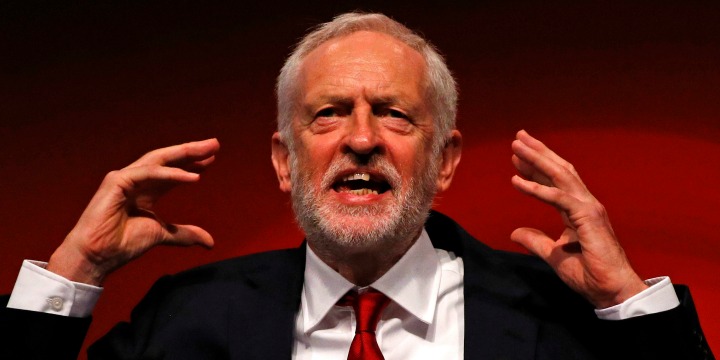
British Labour Party leader Jeremy Corbyn delivers the keynote speech at a Labour conference in Liverpool, Britain, Sept. 26, 2016. Photo: Reuters / Phil Noble.
A working definition of antisemitism is gaining traction. Drawn up by the Berlin-based International Holocaust Remembrance Alliance (IHRA), this definition has been adopted and endorsed by a growing number of governments — most recently, France.
With the guidance of a coherent definition, lawmakers can devise more nuanced policies; police and prosecutors can more effectively respond to hate crimes; colleges can more adequately deal with campus antisemitism; and local activists don’t have to flounder with feeble “I know it when I see it” arguments.
The definition has already served as a powerful tool for public accountability: Last year, Britain’s Labour Party sought to adopt a watered-down version of the IHRA definition, but the controversy it sparked proved too embarrassing. Labour adopted the full definition — but a dark cloud still hangs over the party.
The controversy stirred by Labour’s waffling highlights one aspect of the IHRA definition that many Israel-bashers can’t accept. Examples of antisemitism listed by the IHRA include “denying the Jewish people their right to self-determination,” “claiming that the existence of Israel is a racist endeavor,” and “applying double standards by requiring of it behavior not expected or demanded by any other democratic nation.”
Anti-Zionism is a form of antisemitism. People who cross that line can no longer say, “I’m anti-Zionist, not antisemitic.”
But beyond the governmental level, there’s another sector that needs to adopt the IHRA’s definition of antisemitism — the media.
By choosing what to cover and how to cover it, news services set the agenda for public discourse. Guided by the IHRA definition, journalists would make better-informed decisions in covering hate crimes. Coverage of the Boycott, Divestment, and Sanctions (BDS) movement, especially on local college campuses, would be more nuanced. With a consistent standard, editors would be able to better judge op-eds and letters, while moderators could keep website comments more civilized.
And at a time when public figures on the right and left engage in varying degrees of antisemitic rhetoric, the press will be better poised to fulfill its role of holding leaders accountable.
Send the media a message: click here to sign our petition and give us the backing to demand that the international media adopt the IHRA definition of antisemitism and help clean up the discourse on Jews and Israel.
Pesach Benson is HonestReporting’s deputy managing editor. This article was originally published at HonestReporting.