 Pod Save America Hosts Call on Democrats to Cut All Israel Military Aid, No Longer Accept AIPAC Funding
 Jews, Israelis Targeted in Austria Amid Surge in Antisemitic Incidents; Local Jewish Community Calls for Action
 ‘All of Our Strength’: Over 1,000 Pro-Israel Activists Gather in DC for Solidarity Conference
 ‘Devastated’: Wesley LePatner, Killed in Manhattan Mass Shooting, Was a Jewish Communal, Philanthropic Leader
 Sen. Angus King Vows to No Longer Vote for Israel Military Aid Until Gaza Conditions Improve
 Europe Won’t Pressure Israel to ‘Commit Suicide’ Amid Gaza Backlash, Palestinian State Push, Says Israeli FM
 Israel’s National Soccer Coach Attacked in Athens Before Soccer Fans Chant ‘F–K Israel, Free Palestine’ at Match
 New York Judge Sentences Neo-Nazi to 5 Years for Livestreaming Bomb Threats Against Jewish Hospitals
 US Pressures Lebanon to Issue Cabinet Decision to Disarm Hezbollah Before Talks Continue
 UK Plans to Recognize Palestinian State in September Unless Israel Meets Conditions, Starmer Says


Robotaxis Are a Necessary Stepping Stone for Driverless Cars, Says Mobileye CEO
Error: Contact form not found.
 by Omer Kabir / CTech

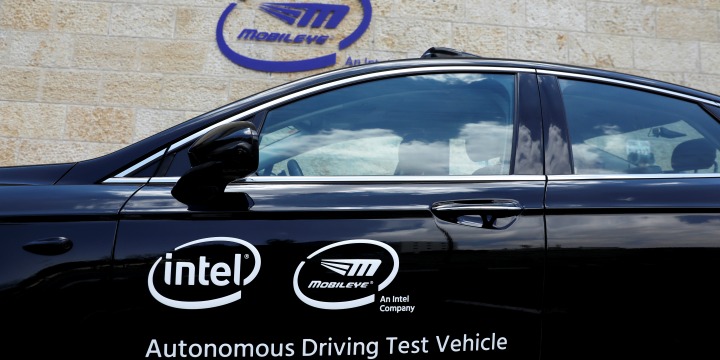
A Mobileye autonomous driving test vehicle, at the Mobileye headquarters in Jerusalem, May 15, 2018. Photo: Reuters / Ronen Zvulun.
CTech – Commercial manufacturing of autonomous cars for the private market will need to wait until autonomous taxis are widespread and entrenched as an industry, Mobileye CEO Amnon Shashua stated Thursday in an article posted to Intel’s website. His words differ from statements made a few years ago by autonomous vehicle developers, Mobileye among them, who predicted such cars will reach the private market by the beginning of the next decade.
Today, a large part of the car industry understands that those phases — robotaxis and private autonomous cars — cannot progress simultaneously, Shashua said.
“Series-production passenger car autonomy (SAE levels 4-5) must wait until the robotaxi industry deploys and matures,” Shashua wrote. “This is due to three factors: cost, regulation, and geographic scale.” Optimizing all three at the same time has proved to be too difficult, he said, leading many industry players to rethink their approach of reaching large-scale production, with a larger number now setting their sights first on commercial self-driving.
Hints of Shashua’s change in priorities could be detected in October 2018, when Mobileye announced a partnership with Volkswagen and Israeli car importer and distributor Champion Motors to launch a self-driving taxi service in Israel in early 2019. In a January interview with Calcalist, Shashua said the partnership plans to have hundreds of autonomous taxis on Tel Aviv’s streets by 2022. But this is the most outspoken Mobileye’s CEO, and indirectly Intel, have been about postponing their autonomous car vision, positioning themselves alongside players like Alphabet’s Waymo, which already operates a robotaxi fleet in Phoenix, Arizona.
“A self-driving system (SDS) with their cameras, radars, lidars, and high-performance computing is in the tens of thousands of dollars and will remain so in the foreseeable future,” Shashua wrote. While a business can handle such expenses, he said, it is too expensive for commercial production of passenger cars.
As for regulation, he said, “beside the fact that laws for granting a license to drive are geared towards human drivers, there is the serious issue of how to balance safety and usefulness in a manner that is acceptable to society.” The geographical factor is the challenge of creating the accurate, high-quality maps needed for private self-driving vehicles. Robotaxis, on the other hand, can be limited to a specific geographical area, meaning they are viable before the industry fully matures.