 Pod Save America Hosts Call on Democrats to Cut All Israel Military Aid, No Longer Accept AIPAC Funding
 Jews, Israelis Targeted in Austria Amid Surge in Antisemitic Incidents; Local Jewish Community Calls for Action
 ‘All of Our Strength’: Over 1,000 Pro-Israel Activists Gather in DC for Solidarity Conference
 ‘Devastated’: Wesley LePatner, Killed in Manhattan Mass Shooting, Was a Jewish Communal, Philanthropic Leader
 Sen. Angus King Vows to No Longer Vote for Israel Military Aid Until Gaza Conditions Improve
 Europe Won’t Pressure Israel to ‘Commit Suicide’ Amid Gaza Backlash, Palestinian State Push, Says Israeli FM
 Israel’s National Soccer Coach Attacked in Athens Before Soccer Fans Chant ‘F–K Israel, Free Palestine’ at Match
 New York Judge Sentences Neo-Nazi to 5 Years for Livestreaming Bomb Threats Against Jewish Hospitals
 US Pressures Lebanon to Issue Cabinet Decision to Disarm Hezbollah Before Talks Continue
 UK Plans to Recognize Palestinian State in September Unless Israel Meets Conditions, Starmer Says


Passover Guide for the Perplexed, 2020
Error: Contact form not found.
 by Yoram Ettinger

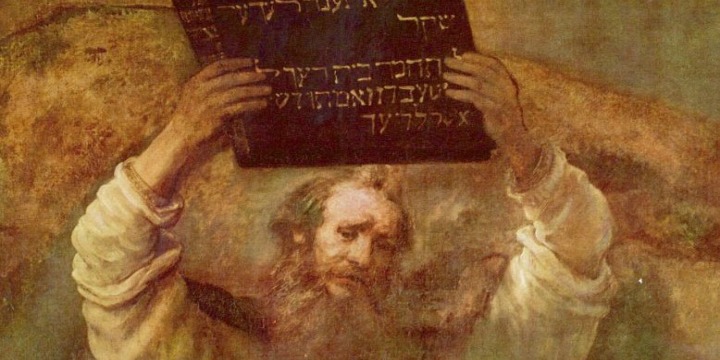
Moses Breaking the Tables of the Law (1659), by Rembrandt. Photo: Wikimedia Commons.
1. In 2020, the battle against the coronavirus demonstrates human limitations in the face of greater forces, requiring a deeper sense of humility. 3,600 hundred years ago, the Passover Exodus demonstrated to the Egyptian Emperor (Pharaoh) the severe limits of human capabilities, when faced with supernatural forces, which demonstrated the flaws of hubris and the need for humility.
2. The annual celebration of the Passover legacy (e.g., the Exodus, Parting of the Sea, the Ten Commandments, 40 years in the desert, and the reentry to the Land of Israel) aims at refreshing and upgrading core values which are essential to a free and vibrant society in general, and the battle against the coronavirus in particular:
- Faith;
- Humility;
- Defiance of odds;
- Family cohesion;
- Communal and national solidarity and responsibility;
- Patriotism;
- Education;
- Repeated study of the past in order to enhance the future;
- Spiritual liberty as a prerequisite to physical liberty and growth.
3. Optimism dominates the legacy of Passover, demonstrating that crises are opportunities in disguise. So is the coronavirus crisis, which will catapult medicine, science, and technology to new heights, and will equip the Free World with enhanced capabilities to fend off future bio-terrorism assaults.
4. David Ben-Gurion, Israel’s Founding Father and first Prime Minister, told the UN Commission of Inquiry in 1947: “300 years ago, the ‘Mayflower’ launched its historical voyage. How many remember the data of the voyage, how many passengers were on the ‘Mayflower’ and what kind of bread did they consume? However, 3,300 years earlier, the Exodus from Egypt took place. Every Jew knows the date of the Exodus — 15th of the month of Nissan — and the kind of bread — ‘matzah’ — consumed. Still today, Jews all over the world tell the story of the Exodus and eat ‘matzah’ on the 15th of Nissan.”
5. The principle of spiritual and physical liberty is a focal point of the Passover/Exodus legacy. It inspired the Early Pilgrims and the Founding Fathers of the USA, as evidenced by the inscription on the Liberty Bell: “Proclaim liberty throughout all the land, unto all the inhabitants thereof” (Leviticus 25:10). The goal of Passover’s liberty was not revenge, nor imperialistic, or subordination of the Egyptian people, but the enshrining of liberty throughout the globe.
6. According to Heinrich Heine, the 19th century German poet, “Since the Exodus, freedom has always spoken with a Hebrew accent.”
7. The Hebrew word for “liberty” (Kheroot, חירות) shares the same root with the Hebrew word for “responsibility” (Akhrayoot, אחריות ), which starts with the Hebrew word “follow me” (אחרי). The Hebrew spelling of “responsibility” starts with the first letter of the alphabet (א), ending with the last letter (ת), attesting to the comprehensive/complete — not partial — nature of responsibility and liberty.
8. Passover highlights the central role of women in Jewish history. For instance, Yocheved, Moses’ mother, hid Moses and then breastfed him at the palace of Pharaoh, posing as a nursemaid. Miriam, Moses’ older sister, was her brother’s keeper. Batyah, the daughter of Pharaoh, saved and adopted Moses (Numbers 2:1-10). Shifrah and Pou’ah, two Jewish midwives, risked their lives, sparing the lives of Jewish male babies, in violation of Pharaoh’s command (Numbers 1:15-19). Tziporah, a daughter of Jethro and Moses’ wife, saved the life of Moses and set him back on the Jewish course (Numbers 4:24-27). They followed in the footsteps of Sarah, Rebecca, Leah, and Rachel — the Matriarchs (who engineered, in many respects, the roadmap of the Patriarchs), Deborah (the Prophetess, Judge and military leader), Hannah (Samuel’s mother), Yael (who killed Sisera, the Canaanite general) and Queen Esther, the heroine of Purim, who was one of the seven Biblical Jewish Prophetesses (Sarah, Miriam, Deborah, Hannah, Abigail, Huldah, and Esther).
9. According to the late Prof. Yehudah Elitzur, one of Israel’s pioneers of Biblical research, the Exodus took place in the second half of the 15th century BCE, during the reign of Egypt’s Amenhotep II. Accordingly, the 40-year national coalescing of the Jewish people — while wandering in the desert — took place when Egypt was ruled by Thutmose IV. Joshua conquered Canaan when Egypt was ruled by Amenhotep III and Amenhotep IV, who were so preoccupied with domestic affairs that they refrained from expansionist operations. Moreover, letters which were discovered in Tel el Amarna, the capital city of ancient Egypt, documented that the 14th century BCE Pharaoh, Amenhotep IV, was informed by the rulers of Jerusalem, Samaria and other parts of Canaan, about a military offensive launched by the “Habirus” (Hebrews and other Semitic tribes), which corresponded to the timing of Joshua’s offensive against the same rulers. Amenhotep IV was a determined reformer, who introduced monotheism, possibly influenced by the ground-breaking and game-changing Exodus.
10. Passover is the first of the three Jewish pilgrimages to Jerusalem, followed by Shavou’ot (Pentecost), which commemorates the receipt of the Ten Commandments, and Sukkot (Feast of Tabernacles), which was named after Sukkota — the first stop in the Exodus.
11. The Passover Seder is concluded by the declaration: “Next Year in the rebuilt Jerusalem!”
Yoram Ettinger is a former ambassador and head of Second Thought: a US-Israel Initiative.