 Pod Save America Hosts Call on Democrats to Cut All Israel Military Aid, No Longer Accept AIPAC Funding
 Jews, Israelis Targeted in Austria Amid Surge in Antisemitic Incidents; Local Jewish Community Calls for Action
 ‘All of Our Strength’: Over 1,000 Pro-Israel Activists Gather in DC for Solidarity Conference
 ‘Devastated’: Wesley LePatner, Killed in Manhattan Mass Shooting, Was a Jewish Communal, Philanthropic Leader
 Sen. Angus King Vows to No Longer Vote for Israel Military Aid Until Gaza Conditions Improve
 Europe Won’t Pressure Israel to ‘Commit Suicide’ Amid Gaza Backlash, Palestinian State Push, Says Israeli FM
 Israel’s National Soccer Coach Attacked in Athens Before Soccer Fans Chant ‘F–K Israel, Free Palestine’ at Match
 New York Judge Sentences Neo-Nazi to 5 Years for Livestreaming Bomb Threats Against Jewish Hospitals
 US Pressures Lebanon to Issue Cabinet Decision to Disarm Hezbollah Before Talks Continue
 UK Plans to Recognize Palestinian State in September Unless Israel Meets Conditions, Starmer Says


Without Tourist Revenue, Prague’s Jewish Community Fears for Future of Welfare Services
Error: Contact form not found.
 by Reuters and Algemeiner Staff

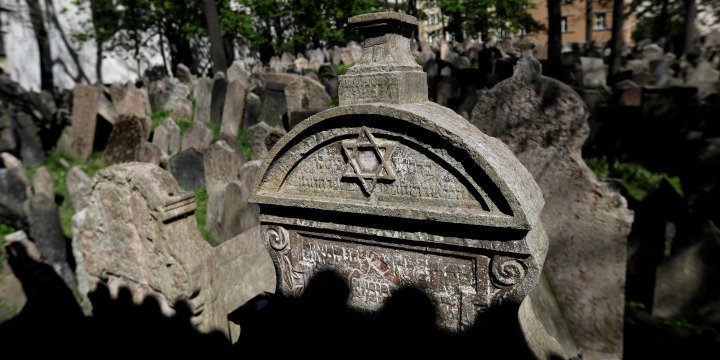
Tombstones are seen at the Old Jewish Cemetery in Prague, Czech Republic, April 20, 2020. Photo: Reuters / David W Cerny.
With ticket sales to Prague’s Jewish quarter halted during the coronavirus lockdown, the community is having to tap its reserves to pay for welfare services for Holocaust survivors that tourists usually help fund.
And even though the Czech Republic’s cultural attractions are due to reopen next month, with global tourism at a standstill the community is looking at ways to cut spending elsewhere to keep funding the programs for the elderly.
The Jewish Quarter — dating back 1,000 years — has long been one of Prague’s most popular destinations, with historic synagogues and one of the largest Jewish cemeteries in Europe drawing visitors from around the globe.
The ticket revenue and rents from tenants such as restaurants fund meals, medical treatment and nursing care to the several hundred elderly members of Prague’s Jewish community, many of them Holocaust survivors, such as 90-year-old Petr Brandejsky.
“I am very grateful for what the community is providing,” he said in his flat where he receives food deliveries during the lockdown instead of daily lunches at a community center.
A big chunk of the group’s revenue comes from the Jewish Museum. Comprising of several synagogues and the cemetery, it attracted 721,000 visitors in 2018, generating 203 million crowns ($8 million) in admission fees.
Frantisek Banyai, chairman of the Jewish community, said it was critical to keep providing services for the most vulnerable members and that the group may need to look to cut funding to other areas, such as investments and restoration projects.
“The loss of tourist revenue is substantial,” said Banyai, whose community today numbers around 1,500 compared with 39,000 before the Nazis started deportations in 1941.
“You cannot shut these services, you have to keep providing them.”
But even with cultural venues set to open on May 11, the closed borders and lack of foreign tourists mean the museum’s outlook is uncertain, Jewish Museum Director Leo Pavlat said.
“Even after the borders open, we need to take into account the economic downfall caused by the pandemic and it is likely that tourism will be paralyzed,” Pavlat told Reuters, as he walked among the thousands of headstones in the cemetery that is normally full of tourists.