 Pod Save America Hosts Call on Democrats to Cut All Israel Military Aid, No Longer Accept AIPAC Funding
 Jews, Israelis Targeted in Austria Amid Surge in Antisemitic Incidents; Local Jewish Community Calls for Action
 ‘All of Our Strength’: Over 1,000 Pro-Israel Activists Gather in DC for Solidarity Conference
 ‘Devastated’: Wesley LePatner, Killed in Manhattan Mass Shooting, Was a Jewish Communal, Philanthropic Leader
 Sen. Angus King Vows to No Longer Vote for Israel Military Aid Until Gaza Conditions Improve
 Europe Won’t Pressure Israel to ‘Commit Suicide’ Amid Gaza Backlash, Palestinian State Push, Says Israeli FM
 Israel’s National Soccer Coach Attacked in Athens Before Soccer Fans Chant ‘F–K Israel, Free Palestine’ at Match
 New York Judge Sentences Neo-Nazi to 5 Years for Livestreaming Bomb Threats Against Jewish Hospitals
 US Pressures Lebanon to Issue Cabinet Decision to Disarm Hezbollah Before Talks Continue
 UK Plans to Recognize Palestinian State in September Unless Israel Meets Conditions, Starmer Says


Iran’s Khamenei Demands ‘Action, Not Words’ From Biden to Revive Nuclear Deal
Error: Contact form not found.
 by Reuters and Algemeiner Staff

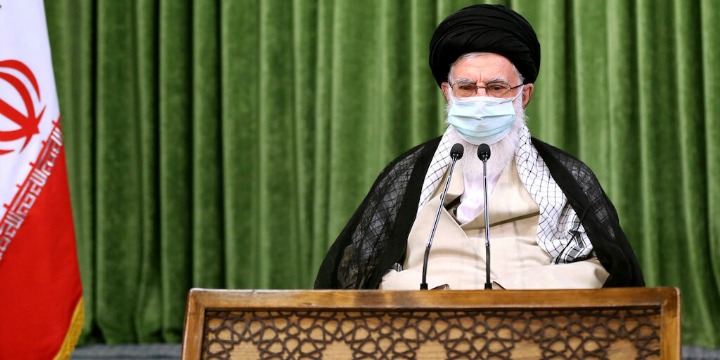
Iranian leader Ayatollah Ali Khamenei wears a protective face mask, during a virtual meeting with lawmakers, in Tehran, Iran, July 12, 2020. Photo: Official Khamenei website / Handout via Reuters.
Iran‘s Supreme Leader Ayatollah Ali Khamenei demanded “action, not words” from the United States if it wants to revive Tehran’s 2015 nuclear deal with world powers, the latest challenge to new President Joe Biden to take the first step towards a thaw.
Tehran has set a deadline of next week for Biden to begin reversing sanctions imposed by his predecessor Donald Trump, or Iran will take its biggest step yet to violate the nuclear deal — banning short-notice inspections by the UN nuclear watchdog.
“We have heard many nice words and promises which in practice have been broken and opposite actions have been taken. Words and promises are no good. This time (we want) only action from the other side, and we will also act,” Khamenei said in a televised speech.
Biden aims to restore the pact under which Iran agreed to curbs on its nuclear program in return for the lifting of sanctions, struck by the Obama administration and abandoned by Trump in 2018.
But while both Tehran and Washington now say they want to see the agreement revived, they are at odds over who should make the first move. Iran says the United States must first lift Trump’s sanctions, while Washington says Tehran must first return to compliance with the deal, which it began violating after the sanctions were reimposed.
Iran has accelerated its breaches of the deal’s restrictions in recent months, culminating in an announcement that it will end snap inspections by the International Atomic Energy Agency (IAEA) on Feb. 23. The inspections are required under a part of the agreement known as the “Additional Protocol.”
European parties to the deal, which have called on Tehran not to halt the IAEA snap inspections, will discuss the issue with the United States on Thursday, the French foreign ministry said.
Iranian President Hassan Rouhani played down the importance of the snap inspections, saying ending them would not be a “significant step”, as Iran would still comply with obligations under a so-called Safeguards Agreement with the IAEA.
“We will end the implementation of the Additional Protocol on Feb. 23 and what will be implemented will be based on the safeguards,” Rouhani said at a televised cabinet meeting. “The Additional Protocol is a step beyond safeguards.”
Iran‘s envoy to the IAEA said on Wednesday that the agency’s director general, Rafael Grossi, will visit Tehran on Saturday to discuss the country’s plan to scale back cooperation next week.