 Pod Save America Hosts Call on Democrats to Cut All Israel Military Aid, No Longer Accept AIPAC Funding
 Jews, Israelis Targeted in Austria Amid Surge in Antisemitic Incidents; Local Jewish Community Calls for Action
 ‘All of Our Strength’: Over 1,000 Pro-Israel Activists Gather in DC for Solidarity Conference
 ‘Devastated’: Wesley LePatner, Killed in Manhattan Mass Shooting, Was a Jewish Communal, Philanthropic Leader
 Sen. Angus King Vows to No Longer Vote for Israel Military Aid Until Gaza Conditions Improve
 Europe Won’t Pressure Israel to ‘Commit Suicide’ Amid Gaza Backlash, Palestinian State Push, Says Israeli FM
 Israel’s National Soccer Coach Attacked in Athens Before Soccer Fans Chant ‘F–K Israel, Free Palestine’ at Match
 New York Judge Sentences Neo-Nazi to 5 Years for Livestreaming Bomb Threats Against Jewish Hospitals
 US Pressures Lebanon to Issue Cabinet Decision to Disarm Hezbollah Before Talks Continue
 UK Plans to Recognize Palestinian State in September Unless Israel Meets Conditions, Starmer Says


Leading Dutch Philosopher Slammed for Claiming Diaspora Was ‘Blessing’ That Kept Jews Away From Power
Error: Contact form not found.
 by Algemeiner Staff

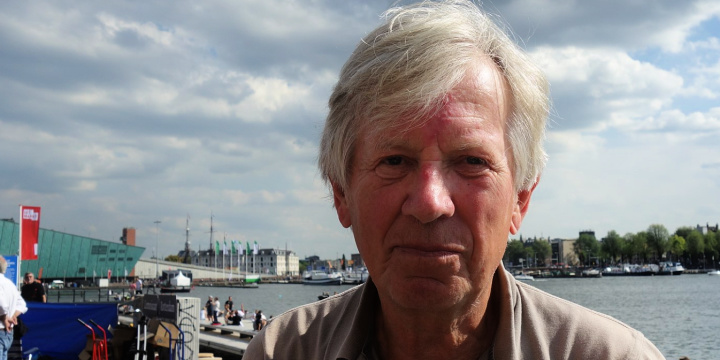
Dutch philosopher Hans Achterhuis. Photo: Wikimedia commons.
A Dutch philosopher who was awarded with one of his nation’s highest intellectual honors has angered the Jewish community over remarks arguing that the dispersal of Jews in the diaspora was a “blessing” that had prevented “religiously-motivated violence.”
In an interview with the newspaper Trouw that was published last week on Yom HaShoah, the annual day commemorating the Holocaust, philosopher Hans Achterhuis — the first recipient of the Netherlands’ ‘Thinker of the Fatherland’ title in 2011 — stated that the 2,000 year history of the Jewish people in the diaspora had been a positive experience, because it had kept them from accessing power.
“As terrible as the story of the Jews has been, it was still in a certain sense a blessing that they were dispersed in the Diaspora. They had no power and therefore no possibility of exercising religiously motivated violence. And one sees how it can go wrong if that power does exist, in the State of Israel,” Achterhuis said.
The Center for Information and Documentation on Israel (CIDI) which combats antisemitism in the Netherlands accused Achterhuis of racism.
“Being satisfied if a group is oppressed and fearing it if it realizes its rights. That’s the definition of racism, which Hans Achterhuis exemplifies in Trouw,” the group declared on Twitter. “He has not earned his title of Thinker of the Fatherland today.”
Israel’s Ambassador to the Netherlands also slammed Achterhuis, who teaches at the University of Twente.
“Shameful article in Trouw on the day we remember the 6 million Jews murdered in Europe. History taught us that having a Jewish state – Israel – is the only way to survive. Never Again,” Naor Gilon wrote on Twitter.
Over the weekend, Achterhuis complained that his observations about Jews and power had been taken out of context. He said that he had been drawing an analogy with Christianity, which he portrayed as a peace-loving faith until its adoption by the Byzantine Emperor Constantine in the fourth century meant that Christians “began persecuting heretics and converting pagans by force.”
He said that the Jewish religion “had been extremely peaceful in the long history of the diaspora, but after the establishment of the State of Israel, provided opportunities for Jewish believers in, for example, the occupied West Bank, to act violently.”