 Pod Save America Hosts Call on Democrats to Cut All Israel Military Aid, No Longer Accept AIPAC Funding
 Jews, Israelis Targeted in Austria Amid Surge in Antisemitic Incidents; Local Jewish Community Calls for Action
 ‘All of Our Strength’: Over 1,000 Pro-Israel Activists Gather in DC for Solidarity Conference
 ‘Devastated’: Wesley LePatner, Killed in Manhattan Mass Shooting, Was a Jewish Communal, Philanthropic Leader
 Sen. Angus King Vows to No Longer Vote for Israel Military Aid Until Gaza Conditions Improve
 Europe Won’t Pressure Israel to ‘Commit Suicide’ Amid Gaza Backlash, Palestinian State Push, Says Israeli FM
 Israel’s National Soccer Coach Attacked in Athens Before Soccer Fans Chant ‘F–K Israel, Free Palestine’ at Match
 New York Judge Sentences Neo-Nazi to 5 Years for Livestreaming Bomb Threats Against Jewish Hospitals
 US Pressures Lebanon to Issue Cabinet Decision to Disarm Hezbollah Before Talks Continue
 UK Plans to Recognize Palestinian State in September Unless Israel Meets Conditions, Starmer Says


Herzog Receives Annual Assessment of Israel’s Strategic Challenges, From Iran Threat to Divisions at Home
Error: Contact form not found.
 by Algemeiner Staff

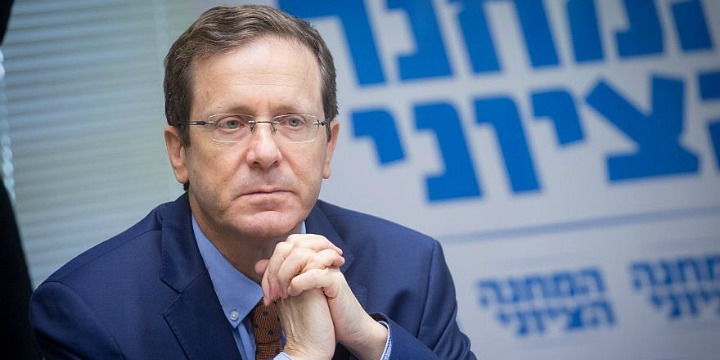
Opposition Leader Isaac Herzog attends a faction meeting at the Israeli parliament on May 21, 2018. Photo: Miriam Alster/Flash90.
Israeli President Isaac Herzog on Tuesday received the annual report by the Institute for National Security Studies on Israel’s primary strategic challenges and how to deal with them.
According to Israel’s N12, the latest report cites major changes that have taken place over the last year in the region and the world in general. It cited the new US presidential administration, President Joe Biden’s decision to rejoin the 2015 nuclear deal with Iran, the formation of a new government in Israel, and the recent violent clashes between Israeli Arabs and Jews, among others.
The Institute made several policy recommendations, including the adoption by the IDF of a new strategic conceptualization of the military challenges facing Israel, updating IDF operational plans, approving a multi-year defense budget, and assuring that the IDF is prepared for a possible multi-front war.
On the Iran nuclear issue, the Institute recommended close collaboration with the United States, especially if it does choose to return to the nuclear deal, in hopes of influencing an outcome in Israel’s favor.
At the same time, Israel must ensure that there is a military option available if Iran violates the deal and appears to be heading swiftly toward a nuclear weapon.
Regarding the Palestinians, INSS stated that Israel should strengthen the Palestinian Authority while also preparing for the eventual replacement of its president, Mahmoud Abbas, who is already in his 80s.
On Gaza and Hamas, the report said, Israel should attempt to reach a long-term ceasefire with the terror group and assist in developing Gaza economically, while at the same time readying for the possibility of a ground operation that will deal a major blow to Hamas’ terrorist capabilities.
On domestic affairs, the Institute recommended an effort to improve relations between Israeli Jews and Arabs, combat crime and violence, and promote education and employment in the Arab sector.
Equally important, it said, is to promote trust and belief in Israel’s democratic and legal institutions — in particular, strengthening Israel’s judiciary.
On economics, the Institute recommended the long-delayed approval of a state budget; prioritizing infrastructure such as housing, transportation, education, and health care; and formulating a way of “living with corona,” due to the emergence of new variants and issues with vaccine effectiveness.
Upon receiving the report, President Herzog said that it “proves the size of the national challenges that face the State of Israel.”