 Pod Save America Hosts Call on Democrats to Cut All Israel Military Aid, No Longer Accept AIPAC Funding
 Jews, Israelis Targeted in Austria Amid Surge in Antisemitic Incidents; Local Jewish Community Calls for Action
 ‘All of Our Strength’: Over 1,000 Pro-Israel Activists Gather in DC for Solidarity Conference
 ‘Devastated’: Wesley LePatner, Killed in Manhattan Mass Shooting, Was a Jewish Communal, Philanthropic Leader
 Sen. Angus King Vows to No Longer Vote for Israel Military Aid Until Gaza Conditions Improve
 Europe Won’t Pressure Israel to ‘Commit Suicide’ Amid Gaza Backlash, Palestinian State Push, Says Israeli FM
 Israel’s National Soccer Coach Attacked in Athens Before Soccer Fans Chant ‘F–K Israel, Free Palestine’ at Match
 New York Judge Sentences Neo-Nazi to 5 Years for Livestreaming Bomb Threats Against Jewish Hospitals
 US Pressures Lebanon to Issue Cabinet Decision to Disarm Hezbollah Before Talks Continue
 UK Plans to Recognize Palestinian State in September Unless Israel Meets Conditions, Starmer Says


BDS Comes to the Campus, the Streets, and Politics
Error: Contact form not found.
 by Alexander Joffe

The George Washington University President’s Office. Photo: Wikimedia Commons.
In November, BDS in academia was marked by efforts to cancel speakers perceived as pro-Israel, such as Israeli Ambassador Tzipi Hotovely’s talk at the London School of Economic. While the talk proceeded with high security, Hotovely was threatened by a large mob afterwards and had to leave the school under security escort. The incident was widely condemned by British politicians — but defended by BDS activists.
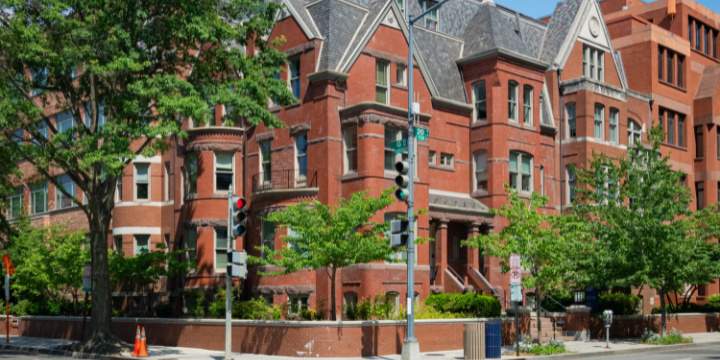
Also blatant was the vandalizing of a fraternity house and a miniature paper Torah scroll at George Washington University. This also produced widespread condemnation from the university community, as well as national and local officials. A public march was held to protest the incident, but an investigation has yet to solve the case.
In the aftermath, however, Palestinian students staged a march to protest the removal of a “virtual processing space” that had been set up for them by the university’s “Office of Advocacy and Support” (which has directly supported BDS) in the “aftermath of Gaza.” The university president then announced support for the Palestinian students and an investigation of their allegations.
At Barnard College, the Jewish Voice for Peace (JVP) chapter attempted to prevent a talk by a leading scholar of antisemitism and an author of the International Holocaust Remembrance Alliance (IHRA) working definition of antisemitism, Kenneth Stern — on the grounds that his presence was “legitimizing apartheid.”
Similarly, at Northwestern University, the Students for Justice in Palestine (SJP) chapter led a walkout of a talk by former presidential candidate Andrew Yang over his support for Israel. The SJP chapter at the University of Illinois in October also led a walkout of a joint talk by Israeli author Yossi Klein Halevi and his Palestinian co-author, Mohammad Darawashe.
At Stockton University, a talk by disabled Israeli veterans was disrupted by protestors holding signs, including those saying, “These are the children YOU killed.” At New York University, an SJP-sponsored panel demanded the removal of US tax-exempt status for non-profit groups including the Jewish National Fund and Regavim. Panelists made it clear the intent was not simply to restrict the flow of funds to Israel and the “territories,” but to label supporters of Israel as “racists” by “confronting those kind of supporters that were coming in to contribute to their fundraising.”
At Oberlin College, a proposed winter trip to “Israel-Palestine” was opposed by JVP and “Students for a Free Palestine.” This incident produced widespread condemnation from the university community, as well as national and local officials. The protests at Oberlin came as the school continued to grapple with the fact that a faculty member, Mohammad Jafar Mahallati, had helped cover up mass killings in 1988 as an Iranian representative to the United Nations.
These efforts took place against a continuing backdrop of anti-Israel agitation such as divestment protests at Harvard, an “apartheid week” at McGill University, and a call for Sabra hummus to be removed from college property at Swarthmore.
A BDS resolution passed in the student government at the University of Toronto at Scarborough. The resolution cuts funding to pro-Israel organizations, demands that Jewish groups purchase kosher food from sources that do not support “Israeli apartheid,” blacklists a number of organizations, and categorizes Jewish students in terms of those who are “inherently in violation of the BDS policy” and those who reject Israel. In response, the university president issued a strongly worded statement in opposition, decrying the resolution’s discrimination, restrictions on academic freedom, and political tests.
Manipulating the campus environment and student organizations to exclude supporters of Israel also continued. At Duke University, the student government first approved and then the leadership revoked the status of a Students Supporting Israel chapter, after the chapter engaged in an exchange on social media. The student government then upheld the veto.
In response, the university administration condemned the student government and offered SSI separate funding.
The student-led New York University Review of Law & Social Change also formally endorsed BDS, including boycotts of supporters of Israel and individuals with viewpoints that differ from the editorial board. The university and the law school immediately stated they were “troubled and disappointed” by the move.
The impact of BDS, now also in the context of “critical race theory,” is being felt widely. In Massachusetts, the proposal to adopt a California style “ethnic studies” curriculum has alarmed Jewish and pro-Israel groups, particularly given the presence of BDS supporters within the faction pressing for adoption. The effects of BDS agitation at the high school level were also seen in Canada, where students at a Toronto school led a walkout and protested against the existence of Israel. In another case, a New York City public school teacher was forbidden by his principal from wearing a “Proud Zionist” shirt, while the school was simultaneously permitting “Black Lives Matter” apparel.
Another disturbing trend is when BDS supporters are given roles as “gatekeepers” or “correspondents.” In one case, it emerged that Twitter hired Fadeh Jassem, former Al Jazeera reporter and anti-Israel activist, as an “Editorial Curation Lead” for the Middle East and North Africa.
The New York Times has also hired a longtime opponent of Israel, Raja Abdulraham, as an Israel correspondent, while the Nation hired anti-Israel activist Muhammad el-Kurd as its “Palestine correspondent.”
BDS activists are also being hired as “trainers” in the burgeoning “diversity, equity, and inclusion” industry. In the continuing controversy at Yale Law School, it emerged that the individual hired as a diversity “trainer” claimed that antisemitism is a “subset of anti-blackness,” while Google’
The hiring of Mizanur Rahman as an “inclusivity trainer” for British civil servants brought an anti-Israel activist and overt Israel hater into a role of educating those charged with protecting the rights of all citizens.
Potentially deadly incidents included attempted arson at an Austin, Texas, synagogue, attacks on Jewish children in New York, and an arson threat against a Queens, New York, deli.
In the political sphere, the trend toward BDS supporters running for Congress continued. The most notable example was Huwaida Arraf, co-founder of the “International Solidarity Movement” and advocate of “violent resistance” against Israel, who announced her candidacy in Michigan. Arraf was among the volunteers who supported Palestinian terrorists in their 2002 occupation of the Church of the Nativity in Bethlehem, and was an organizer and participant in the 2010 Gaza flotilla.
Another example is Nida Allam, a BDS supporter and anti-police activist, who is running in North Carolina. Allam, currently a county commissioner in Durham, is a close ally of Linda Sarsour, who immediately endorsed her candidacy, along with the local Jewish Voice for Peace chapter. In Vermont, Rep. Peter Welch (D), who has co-sponsored anti-Israel legislation, also announced that he would be a candidate to succeed retiring Senator Patrick Leahy.
At the same time, vociferous criticism was aimed by the BDS supporting “Democratic Socialists of America” against Rep. Jamaal Bowman (D-NY), a strong critic of Israel, for meeting with Israeli political leaders during a J Street sponsored trip to Israel and voting to fund Iron Dome replenishment.
A version of this article was originally published at SPME, where the author is a contributor.