 Pod Save America Hosts Call on Democrats to Cut All Israel Military Aid, No Longer Accept AIPAC Funding
 Jews, Israelis Targeted in Austria Amid Surge in Antisemitic Incidents; Local Jewish Community Calls for Action
 ‘All of Our Strength’: Over 1,000 Pro-Israel Activists Gather in DC for Solidarity Conference
 ‘Devastated’: Wesley LePatner, Killed in Manhattan Mass Shooting, Was a Jewish Communal, Philanthropic Leader
 Sen. Angus King Vows to No Longer Vote for Israel Military Aid Until Gaza Conditions Improve
 Europe Won’t Pressure Israel to ‘Commit Suicide’ Amid Gaza Backlash, Palestinian State Push, Says Israeli FM
 Israel’s National Soccer Coach Attacked in Athens Before Soccer Fans Chant ‘F–K Israel, Free Palestine’ at Match
 New York Judge Sentences Neo-Nazi to 5 Years for Livestreaming Bomb Threats Against Jewish Hospitals
 US Pressures Lebanon to Issue Cabinet Decision to Disarm Hezbollah Before Talks Continue
 UK Plans to Recognize Palestinian State in September Unless Israel Meets Conditions, Starmer Says


Energy Independence Is a Bipartisan Issue
Error: Contact form not found.
 by Fred Zeidman and Martin Frost

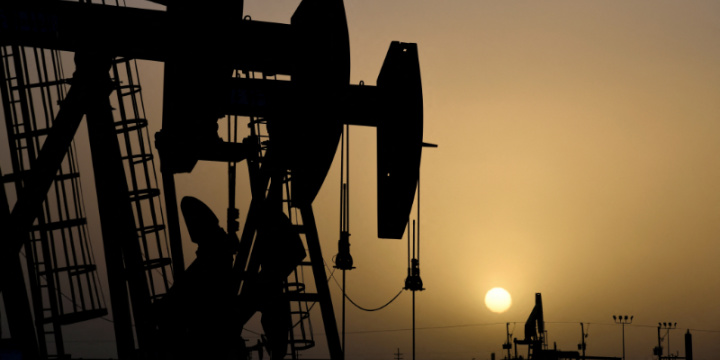
Pump jacks operate at sunset in Midland, Texas, U.S., February 11, 2019. REUTERS/Nick Oxford/
A decade ago, two visionary leaders — Harold Hamm, a leading domestic independent oil and gas producer, and the late Sandy Eisenstat, a nationally renowned Jewish philanthropist — founded the Council for a Secure America (CSA).
CSA’s founding mission was committed to “promoting United States energy independence, its impact on United States foreign policy and the strategic relationship between the United States and Israel.” Recent developments have demonstrated that Hamm, Eisenstat, and other key leaders in the domestic energy and the pro-Israel communities were prescient.
Making the US North American-energy independent is key to our country’s ability to defend freedom and democracy at home and abroad. This is on display today: as Ukraine stands against Russian aggression, America’s ability to maintain its own energy supplies allows it to support Ukraine.
At the time of CSA’s founding, America was heavily reliant on imported oil and gas. Much of it came from the Middle East and other countries that were not our friends, and who were hostile to our longest-standing ally in the region, Israel.
Today, America has achieved greater energy independence. We still import oil from Canada and Mexico, but domestic production has increased dramatically.
This situation is reminiscent of the old adage, “They laughed when I sat down to play.” No one is laughing anymore at American energy — a goal that most thought impossible only 10 years ago.
Thanks in large part to domestic production, the United States now has the opportunity to cut all its imports of Russian oil — exercising significant soft power on its petro-economy without entering into a direct conflict in Europe. This capacity is a direct reflection of our domestic supply chain. Harold Hamm, for example, was on the cutting edge of US energy independence, through his pioneering techniques to pry oil out of oil shale, largely in North Dakota.
Minimizing the effects of extricating all imported Russian oil (currently 3%) from the US economy will require sacrifices by American consumers at the pump due to rising gasoline prices. It will also force a rebalancing of American energy policy towards domestic oil and gas production. This can be achieved by granting additional permits to drill for oil and gas on federal lands (not including national parks), lessening regulations that have slowed other domestic producers, and placing an increased emphasis on clean-burning natural gas.
Furthermore, America needs to diversify its energy production base by investing and encouraging alternative energy sources such as wind and solar, but with the understanding that traditional oil and gas need to remain a bridge to fuel the transition as alternatives are brought online.
As our European allies try to wean themselves off of Russian energy, America needs to find ways to buttress our allies. This could take the form of increased exports of liquified natural gas to Europe.
American energy independence is a great treasure, empowering us to defend democratic values around the globe. It grants us and our allies the power to stand for freedom and our ideals in the face of regimes who wish to bend us to their wills. Let’s keep producing as much as we can in America, so we maintain that freedom for us and all those who share in the same belief abroad.
The Honorable Martin Frost is the Secretary/Treasurer of the Council for a Secure America. He represented Texas’ 24th Congressional District (Dallas-Ft. Worth) for 26 years (1979-2005), and served as chair of the DCCC and the House Democratic Caucus for eight of those years. The Honorable Fred Zeidman is Co-Chairman of the Council for a Secure America. He is the Chairman of Woodrock and Co and is the Chairman Emeritus of the United States Holocaust Memorial Museum, appointed by President George W. Bush.