 Pod Save America Hosts Call on Democrats to Cut All Israel Military Aid, No Longer Accept AIPAC Funding
 Jews, Israelis Targeted in Austria Amid Surge in Antisemitic Incidents; Local Jewish Community Calls for Action
 ‘All of Our Strength’: Over 1,000 Pro-Israel Activists Gather in DC for Solidarity Conference
 ‘Devastated’: Wesley LePatner, Killed in Manhattan Mass Shooting, Was a Jewish Communal, Philanthropic Leader
 Sen. Angus King Vows to No Longer Vote for Israel Military Aid Until Gaza Conditions Improve
 Europe Won’t Pressure Israel to ‘Commit Suicide’ Amid Gaza Backlash, Palestinian State Push, Says Israeli FM
 Israel’s National Soccer Coach Attacked in Athens Before Soccer Fans Chant ‘F–K Israel, Free Palestine’ at Match
 New York Judge Sentences Neo-Nazi to 5 Years for Livestreaming Bomb Threats Against Jewish Hospitals
 US Pressures Lebanon to Issue Cabinet Decision to Disarm Hezbollah Before Talks Continue
 UK Plans to Recognize Palestinian State in September Unless Israel Meets Conditions, Starmer Says


Biden’s Visit: Behind the Smiles
Error: Contact form not found.
 by Eyal Zisser / Israel Hayom / JNS.org

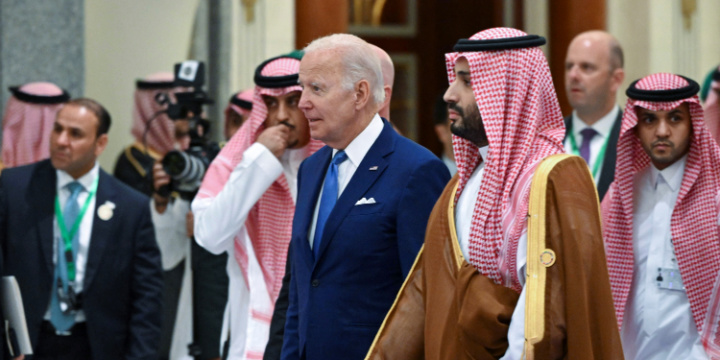
US President Joe Biden and Saudi Crown Prince Mohammed bin Salman arrive for the family photo during the Jeddah Security and Development Summit (GCC+3) at a hotel in Jeddah, Saudi Arabia July 16, 2022. Mandel Ngan/Pool via REUTERS
JNS.org – American presidents usually aren’t very popular in the Middle East. Although every Arab, Iranian and Turk dreams of one day immigrating to the United States and making a life there, until that day comes, they will wholeheartedly hate the West. Especially the United States, which more than anything symbolizes the West’s diplomatic, economic, and even technological superiority over the East.
Indeed, more than a few presidents have raised the ire and animosity of the region’s people and rulers—but at least they were feared and respected.
Presidents such as George H.W. Bush and Donald Trump eschewed attempts to gain favor and popularity, which were largely futile from the start, and instead worked steadily and aggressively to advance American interests in the region. Under George W. Bush, the United States conquered Afghanistan and Iraq, while Trump made the decision to confront Iran, ordered the assassination of Qassem Soleimani, the Quds Force commander at the time, and withdrew from the nuclear deal with the ayatollah regime.
Lo and behold, these presidents were respected and feared, and there was little to no appetite for getting on their wrong side. After all, when you speak to the people of the region in their language, the language of force and power, your message will be far better understood than if you pander, appease and display a misguided desire to exhibit understanding and tolerance.
Joe Biden, who visited the region for the first time as president last week, is not a Bush, Trump, or even Barack Obama, who, as we recall, tried riding the wave of the Arab Spring to encourage the younger generation to seek change but ultimately found himself mired in chaos and a swelling tide of Islamist extremism.
Biden came here weak and domestically challenged, needing the goodwill of the region’s rulers—Saudi Arabia’s in particular—more than they need him. To be sure, Biden’s primary goal was to enlist Saudi support for stabilizing global oil markets before it costs him a trouncing in the midterm elections this November, and of course the presidency in two years.
During his visit, Biden said all the right things, but what’s more important is what he didn’t say. First and foremost, that he doesn’t really care about the Middle East and that unlike Eastern Europe, where he is eager to confront the Russians, or the Far East, where he is preparing for a conflict with China, over here he wants to cut a deal with Iran that will allow him to disengage from the Middle East and its assortment of problems.
Second, that he is committed to defending his allies, the rulers of the moderate Arab countries. The Americans, to be sure, have built a reputation for lacking credibility and loyalty to their friends and allies.
Such was the case with the shah in Iran, Hosni Mubarak and then Abdel-Fattah el-Sissi in Egypt, and today, again, with Saudi Crown Prince Mohammed Bin Salman, whom Biden has shunned and even treated with hostility since entering the White House, over the assassination of Saudi journalist Jamal Khashoggi.
All of this is obvious and plain to see, and therefore it’s no surprise that the Saudi press was apathetic about his visit and instead chose to highlight his weakness and a lack of faith in Washington’s steps. After all, no one is truly pinning any hopes on American commitments and resolve when it comes to fighting Iran, and not just on the nuclear front but over its support for terror, subversive activities and spreading military presence across the region.
The person who capitalized on Biden’s visit to the region was Russian President Vladimir Putin, who will visit Iran this week. No one particularly likes Putin either, not even Iran, but Putin is respected and Putin is feared.
Hence, it could still emerge that Biden not only failed to advance a regional defense alliance against Iran but brought Russia and Tehran closer together—a blunder for which Israel might have to pay in the form of reduced freedom of action in Syria.
Eyal Zisser is a lecturer in the Middle East History Department at Tel Aviv University.
This article first appeared in Israel Hayom.