 Pod Save America Hosts Call on Democrats to Cut All Israel Military Aid, No Longer Accept AIPAC Funding
 Jews, Israelis Targeted in Austria Amid Surge in Antisemitic Incidents; Local Jewish Community Calls for Action
 ‘All of Our Strength’: Over 1,000 Pro-Israel Activists Gather in DC for Solidarity Conference
 ‘Devastated’: Wesley LePatner, Killed in Manhattan Mass Shooting, Was a Jewish Communal, Philanthropic Leader
 Sen. Angus King Vows to No Longer Vote for Israel Military Aid Until Gaza Conditions Improve
 Europe Won’t Pressure Israel to ‘Commit Suicide’ Amid Gaza Backlash, Palestinian State Push, Says Israeli FM
 Israel’s National Soccer Coach Attacked in Athens Before Soccer Fans Chant ‘F–K Israel, Free Palestine’ at Match
 New York Judge Sentences Neo-Nazi to 5 Years for Livestreaming Bomb Threats Against Jewish Hospitals
 US Pressures Lebanon to Issue Cabinet Decision to Disarm Hezbollah Before Talks Continue
 UK Plans to Recognize Palestinian State in September Unless Israel Meets Conditions, Starmer Says


Iran Hails ‘Historic’ $40 Billion Deal With Russian Energy Giant Gazprom as Putin Arrives in Tehran
Error: Contact form not found.
 by Ben Cohen

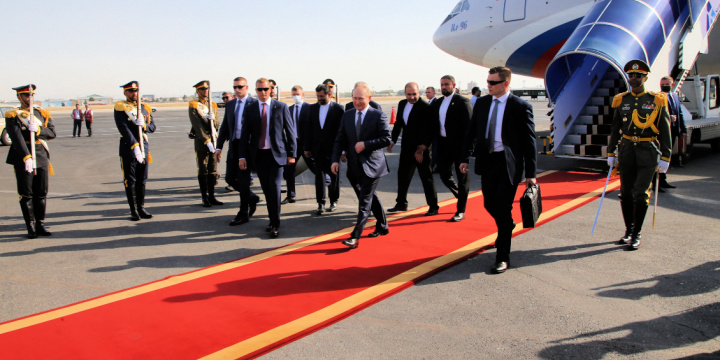
Russian President Vladimir Putin arriving in the Iranian capital Tehran. Photo: Reuters/Konstantin Zavrazhin
Iran’s state-owned oil company announced on Tuesday that it had signed a “historic” deal with Russian energy giant Gazprom that will enable the development of two offshore gas fields, six oil fields and the construction of gas export pipelines.
Valued at $40 billion, the deal was inked at a ceremony in Tehran as Russian President Vladimir Putin arrived in the Iranian capital for talks with Iranian and Turkish leaders. A memorandum of understanding between the two companies was signed by Mohsen Khojastehmehr, the CEO of the National Iranian Oil Company (NIOC), and Vitaly Markelov, deputy chairman of the Gazprom Management Committee.
Khojastehmehr hailed the deal as “the largest foreign investment commitment on record” in the history of Iran’s energy industry, commenting that the influx of cash would account for 25 percent of all investments in Iran’s energy sector until 2025. Both the Russian and Iranian economies have been battered by international sanctions stemming from, in Russia’s case, its invasion of Ukraine, while Iran has been targeted over its backing for a range of terrorist organizations.
A report on the signing ceremony carried by Shana, an official Iranian news agency serving the oil sector, emphasized that relations between Moscow and Tehran “have been put on a new path with the support of Iranian President Ebrahim Raisi and Russian President Vladimir Putin, and the two countries want to expand relations at all economic and political levels.”
The agency said that the deal had been in preparation for several weeks, noting that Gazprom executives had traveled to Tehran last week where “constructive talks” were held in accordance with the “order of Vladimir Putin, President of Russia.” According to Shana, the deal will enable the “development of Kish and North Pars gas fields, pressure enhancement of South Pars field, development of six oil fields, gas and product swap, completion of liquefied natural gas (LNG) projects, construction of gas export pipelines and other scientific and technological cooperation.” In his remarks at the ceremony, Khojastehmehr predicted that “with active energy diplomacy and intensive negotiations with Russia and well-known companies, we will sign new memorandums and contracts.”
Putin meanwhile landed in Tehran on his first foreign trip outside the borders of the former Soviet Union since unleashing the invasion of Ukraine on Feb. 24. The Russian leader is meeting with both Iran’s “Supreme Leader,” Ayatollah Ali Khamenei, and the Islamic Republic’s President, Ebrahim Raisi. As Putin prepared for his departure from Moscow, one of his foreign policy advisors, Yuri Ushakov, told reporters that the “contact with Khamenei is very important.”
Said Ushakov: “A trusting dialogue has developed between them on the most important issues on the bilateral and international agenda. On most issues, our positions are close or identical.”
While in Tehran, Putin will also meet with Turkish President Recep Tayyip Erdogan to discuss the situation in Syria, where Moscow has provided decisive military support for the regime of President Bashar al-Assad in Damascus.
The US has expressed concern regarding the closer ties between Russia and Iran, warning that this could involve a military dimension. Last week, US national security adviser Jake Sullivan stated that Iran was preparing to supply Russia with hundreds of drones for use in Ukraine.
In an interview last week with the Italian newspaper La Repubblica, Iranian Foreign Minister Hossein Amir Abdollahian played down suggestions that Tehran was offering Russia military assistance.
“Our belief remains that the solution for Ukraine is not war,” Abdollahian said. “And that even if the conflict lasts for a long time, there will be no other way to resolve it than through negotiations.”
Abdollahian conceded that Iran engaged in “different types of collaboration with Russia, including in the defense sector,” but insisted that “we will not help either side involved in this war because we believe it must be stopped.” He added that Iran’s stance on Ukraine was based on its opposition to “wars and aggressions in Palestine, Afghanistan, Iraq, Syria and Yemen and the occupation of territories in Palestine.”