 Pod Save America Hosts Call on Democrats to Cut All Israel Military Aid, No Longer Accept AIPAC Funding
 Jews, Israelis Targeted in Austria Amid Surge in Antisemitic Incidents; Local Jewish Community Calls for Action
 ‘All of Our Strength’: Over 1,000 Pro-Israel Activists Gather in DC for Solidarity Conference
 ‘Devastated’: Wesley LePatner, Killed in Manhattan Mass Shooting, Was a Jewish Communal, Philanthropic Leader
 Sen. Angus King Vows to No Longer Vote for Israel Military Aid Until Gaza Conditions Improve
 Europe Won’t Pressure Israel to ‘Commit Suicide’ Amid Gaza Backlash, Palestinian State Push, Says Israeli FM
 Israel’s National Soccer Coach Attacked in Athens Before Soccer Fans Chant ‘F–K Israel, Free Palestine’ at Match
 New York Judge Sentences Neo-Nazi to 5 Years for Livestreaming Bomb Threats Against Jewish Hospitals
 US Pressures Lebanon to Issue Cabinet Decision to Disarm Hezbollah Before Talks Continue
 UK Plans to Recognize Palestinian State in September Unless Israel Meets Conditions, Starmer Says


Does Holocaust Education Actually Work? Yes — Ask the Data
Error: Contact form not found.
 by Daniel Pomerantz


The entrance to Auschwitz-Birkenau in Poland. Photo: Wikimedia Commons.
Should we stop Holocaust education and shutter Holocaust museums?
A growing chorus of voices, both within and outside the Jewish world are saying that we should.
Some voices question whether Holocaust education is effective; others (incorrectly) claim that there is no data to support its effectiveness; and some even claim that Holocaust education is increasing antisemitism.
There’s just one problem: this isn’t true.
A new study from RealityCheck Research reveals that Holocaust education is most definitely not making antisemitism worse, and that Holocaust education is reducing hate crimes against all studied minority communities, with America’s Black communities benefiting the most of all.
With Senators James Lankford (R-OK) and Jacky Rosen (D-NV) introducing the HEAL Act (Holocaust Education and Antisemitism Lessons) to the US Senate just last April, and the White House announcing its plan to combat antisemitism recently, the topic is once again urgently relevant.
While all the articles against Holocaust education that I listed above contain thoughtful opinions, intense criticism, and heartfelt concern, all also lack one critical ingredient that should be central to any conversation of this importance: actual, credible data that examines the real-world impact of Holocaust education on hate crimes.
According to our study, in states with Holocaust education laws, hate crimes against Black communities are lower by more than 55% compared to states that do not have such laws, even more than the 54.8% decrease for Jewish communities. The study also shows dramatic decreases in hate crimes against Muslims (24%), LGBTQ+ (43%), Hispanic communities (34%), Asian Americans (13%), Native Americans (39%), and Americans with Disabilities (3%).
These results are taken from the first phase of the RealityCheck study: a “desk research” that uses publicly available data from the FBI Hate Crimes Database, the US Census Bureau, and a survey of state legislation to identify meaningful trends in data regarding hate crimes. Although this dramatic correlation between reduced hate crimes and Holocaust education does not by itself prove causation, RealityCheck is currently working on Phase II: a field study including a national survey of 1,500 Americans between the ages of 18 and 40.
This field study is designed to further explore the causes behind this correlation (thus answering any “correlation vs causation” questions), the varying quality of Holocaust education across states, and other relevant questions. Results are expected within the coming months.
Claims against Holocaust education almost always rely strongly on personal anecdote, the author’s hypothetical musings, and fantastical conjectures such as, “teaching about the Holocaust might even be making antisemitism worse” and “the more I thought about it the less obvious it [the value of Holocaust education] seemed.” (Emphasis added).
Some also promote outright inaccuracies, including the claim that “Holocaust education … has long been required in most states.” In fact, Holocaust education is required by state law only in 20 of America’s 50 states, and “recommended” by law in three states — and many of those states passed their relevant laws only in recent years.
It is simply not possible, responsible, or safe, to address a topic of this importance with statements such as “might be,” or “I thought” alongside a total lack of any statistically significant data, and “facts” that are entirely un-researched and blatantly incorrect.
I recently returned from the United States, where I spoke with university and high school students. One theme emerged with consistency: the campus environment is hostile to Jews and Israel, and the young generation needs greater and more meaningful help than we have ever provided before. The students emphasized to me the importance of data, of academic framing, of educational programs, and a strong avoidance of anything that even smells like propaganda or agenda.
Fortunately we do have access to relevant, professional, statistically significant data, and it is encouraging to know that Holocaust education is strongly correlated with making America safer for its most vulnerable groups, including Jewish young adults.
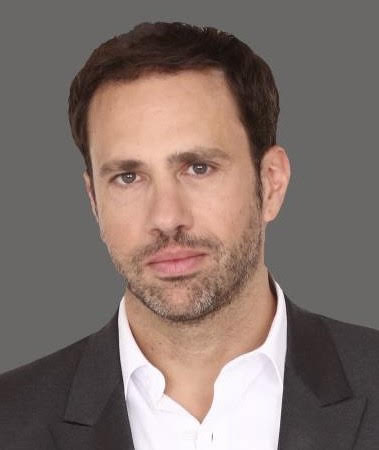
Daniel Pomerantz is the CEO of RealityCheck, an organization dedicated to deepening public conversation through robust research studies and public speaking. He previously worked as a lawyer in the United States, and as CEO of HonestReporting. Daniel lives in Tel Aviv, Israel, where he lectures at Reichman and Bar Ilan Universities. You can learn more about RealityCheck at: www.RealityCheckResearch.org.