 Pod Save America Hosts Call on Democrats to Cut All Israel Military Aid, No Longer Accept AIPAC Funding
 Jews, Israelis Targeted in Austria Amid Surge in Antisemitic Incidents; Local Jewish Community Calls for Action
 ‘All of Our Strength’: Over 1,000 Pro-Israel Activists Gather in DC for Solidarity Conference
 ‘Devastated’: Wesley LePatner, Killed in Manhattan Mass Shooting, Was a Jewish Communal, Philanthropic Leader
 Sen. Angus King Vows to No Longer Vote for Israel Military Aid Until Gaza Conditions Improve
 Europe Won’t Pressure Israel to ‘Commit Suicide’ Amid Gaza Backlash, Palestinian State Push, Says Israeli FM
 Israel’s National Soccer Coach Attacked in Athens Before Soccer Fans Chant ‘F–K Israel, Free Palestine’ at Match
 New York Judge Sentences Neo-Nazi to 5 Years for Livestreaming Bomb Threats Against Jewish Hospitals
 US Pressures Lebanon to Issue Cabinet Decision to Disarm Hezbollah Before Talks Continue
 UK Plans to Recognize Palestinian State in September Unless Israel Meets Conditions, Starmer Says


The Jenin Raid: The IDF’s Fight Against Iran in the West Bank
Error: Contact form not found.
 by Chaim Lax

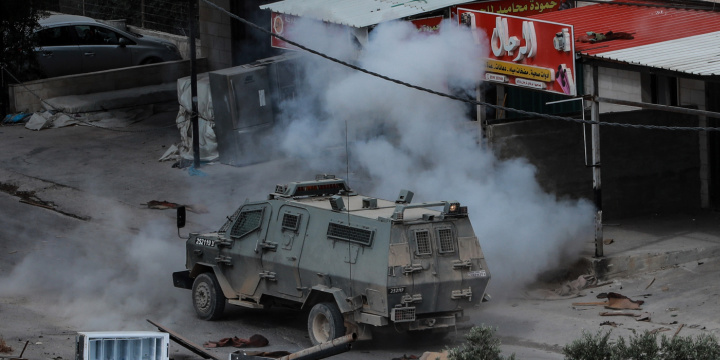
Israeli forces clash with Palestinians during a large-scale Israeli military operation in the West Bank city of Jenin.
The IDF’s raid against Palestinian Islamic Jihad (PIJ) in Jenin that began early Monday is the latest battle in Israel’s ongoing effort to stem the growing threat of Iran-backed Palestinian terror groups in the West Bank.
With this Israeli operation coming mere days after the announcement by Islamic Jihad’s chief that the terror group was expanding its presence in the West Bank with the support of Iran’s Supreme Leader Ayatollah Ali Khamenei, the connection between Iran and the rise in Israeli-Palestinian violence has never been clearer.
Yet, while Tehran’s creeping involvement in West Bank violence is vital to understanding the nature and scope of Israel’s counter-terrorism activities, many are unaware of this crucial context due to it largely being overlooked by the international media.
For a proper contextualization of Israel’s counter-terrorism activities in Jenin, this piece will take a look at the expansion of Iran’s influence into the West Bank, its role in increasing deadly Palestinian terrorism, and how this support for terrorism is underreported by the mainstream media.
Footage of @IDF‘s strikes in Jenin tonight. Comes right after PIJ’s secretary-general’s interview showcasing #Iran‘s supreme leader’s instructions to “move from a state of calm to one of resistance” in the West Bank. pic.twitter.com/8MiXL7gSAQ
— Jason Brodsky (@JasonMBrodsky) July 2, 2023
Guns, Bombs, and Rockets: Iran in the West Bank
Traditionally, Iran’s anti-Israel influence was contained to Hamas-controlled Gaza, Hezbollah-dominated southern Lebanon, and Bashar al-Assad’s Syria.
However, beginning in mid-2021, Tehran began to focus its efforts on influencing the activities of West Bank-based Palestinian terror groups, including Palestinian Islamic Jihad, Hamas, and the Al-Aqsa Martyrs’ Brigades.
While Iran has had a declared interest in influencing what happens in the West Bank as far back as 2014, there are several reasons why Iran’s turn to the West Bank occurred only a couple of years ago.
A weakened Palestinian Authority left a power vacuum that Iran was willing to fill; the “regression of American influence in the region”; and the desire to open a fourth front against Israel in what has been described as Iran’s “pincer war.”
By expanding its influence within the region, Iran could successfully coordinate a multi-front attack against the Jewish state from Gaza, Lebanon, Syria, and the West Bank. An example of this was seen in April 2023, when, within the span of a week, rockets were fired at Israel from Gaza, Lebanon, and Syria, while a major Hamas terror attack occurred in the northern West Bank.
This multi-front war is essential for Iran to attain its goal of destabilizing Israel and the ultimate destruction of the Jewish state.
As part of its growing influence within the West Bank, Iran has helped:
- Form the Nablus-based Lions’ Den terror group;
- Arrange the smuggling of weapons from Lebanon into the hands of PIJ in the West Bank;
- Expand the reach of Islamic Jihad and Al-Aqsa Martyrs’ Brigades in the northern West Bank;
- Aid in the development of homemade rockets in Jenin;
- Coordinate the execution of deadly terror attacks in the region.
Notably, meetings between representatives of Hamas, PIJ, and Iran in June 2023 were followed by a sharp rise in West Bank terror attacks. For some regional analysts, this is proof of a direct link between Iranian patronage and Palestinian terror.
#Jenin
▪️ Islamic Jihad (PIJ) leaders are openly collaborating with the Islamic regime in Iran who has directly coordinated terrorism from the West Bank effort and funded and supplied weapons to the Palestinian terror group.
▪️This month PIJ meet with Khamenei and said the money… pic.twitter.com/N4aDDfHug1— Emily Schrader – אמילי שריידר امیلی شریدر (@emilykschrader) July 3, 2023
The Media’s Blind Eye to Iran’s Support of Palestinian Terror
At the same time as the global media have been glossing over Iran’s creeping involvement in Palestinian terrorism in the West Bank, they have been dedicating a considerable amount of attention to Iran’s relations with the United States and Europe.
Recent pieces by several international media outlets have reported on nuclear talks between the United States and Iran, the likelihood that the UK, France, and Germany will breach the 2015 nuclear deal by not lifting sanctions on the Islamic Republic’s use of missiles, and Tehran’s material support for Russia’s invasion of Ukraine.
By focusing on these aspects of the Iranian regime while ignoring its support for Palestinian terrorism and the destabilization of the West Bank, the international media have failed to provide their audience with a complete picture of the Islamic Republic’s aggressive intentions and threat to stability within the Middle East and around the world.
Until Iran is brought to account for its continued efforts to destabilize the Jewish state, Palestinian terrorism will continue to rear its ugly head in the West Bank and the IDF will continue to be forced to engage in counter-terrorism operations to protect Israeli lives.
The author is a contributor to HonestReporting, a Jerusalem-based media watchdog with a focus on antisemitism and anti-Israel bias — where a version of this article first appeared.