 Pod Save America Hosts Call on Democrats to Cut All Israel Military Aid, No Longer Accept AIPAC Funding
 Jews, Israelis Targeted in Austria Amid Surge in Antisemitic Incidents; Local Jewish Community Calls for Action
 ‘All of Our Strength’: Over 1,000 Pro-Israel Activists Gather in DC for Solidarity Conference
 ‘Devastated’: Wesley LePatner, Killed in Manhattan Mass Shooting, Was a Jewish Communal, Philanthropic Leader
 Sen. Angus King Vows to No Longer Vote for Israel Military Aid Until Gaza Conditions Improve
 Europe Won’t Pressure Israel to ‘Commit Suicide’ Amid Gaza Backlash, Palestinian State Push, Says Israeli FM
 Israel’s National Soccer Coach Attacked in Athens Before Soccer Fans Chant ‘F–K Israel, Free Palestine’ at Match
 New York Judge Sentences Neo-Nazi to 5 Years for Livestreaming Bomb Threats Against Jewish Hospitals
 US Pressures Lebanon to Issue Cabinet Decision to Disarm Hezbollah Before Talks Continue
 UK Plans to Recognize Palestinian State in September Unless Israel Meets Conditions, Starmer Says


New Netflix Doc Examines How German Police Could So Easily Murder Jews
Error: Contact form not found.
 by Alan Zeitlin

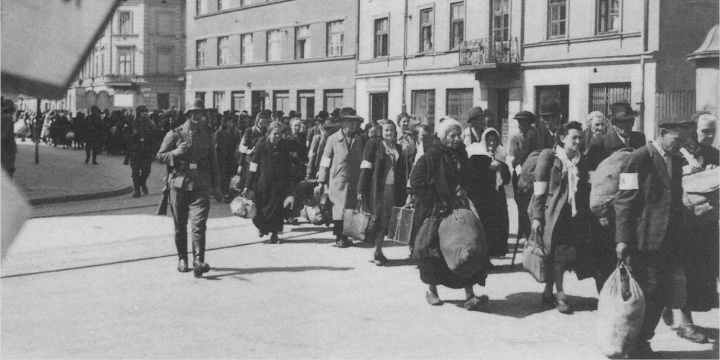
Jewish men, women, and children march with bundles down the main thoroughfare in Krakow, Poland, during the liquidation of the Krakow Ghetto by Nazi German soldiers, March 1943. Photo: United States Holocaust Memorial Museum, courtesy of Instytut Pamieci Narodowejvia via Wikimedia Commons.
They were German carpenters, office workers, and plumbers — and they murdered Jewish men, women and children in cold blood, shooting them at point-blank range in the forest, sometimes even after talking to them.
Among the many questions posed in a new documentary, Ordinary Men: The Forgotten Holocaust, is why these men would take part in such savagery.
The film does away with one false explanation: German social psychologist Harald Welzer explains that the men were not forced to murder, and while they would have been mocked for refusing, they would not have been physically harmed.
Rather, there was a social pressure to commit the murders, and years of propaganda had made them view Jews as subhuman. In the documentary, we learn that 160,000 Germans applied for only about 30,000 openings.
According to Christopher Browning, the author of Ordinary Men, which deals with German police battalions in Poland, in one instance, 12 men stepped away and refused to murder Jews.
Otto Ohlendorf was one of the Nazi leaders responsible for the murder of Jews.
Benjamin Ferencz, one of the prosecutors of the Nuremberg Trials, now 100, speaks about what Ohlendorf told him.
He says they would have a mother hold her baby to her chest. “Then they killed both of them with one shot and they saved ammunition,” says Ferencz, recalling Ohlendorf’s words.
We see video of a Jew being murdered, as well as archival footage of Dina Pronicheva testifying before a 1946 Military Tribunal in Kiev.
“I closed my eyes, clenched my fists, tensed up all my muscles and jumped,” she tells a packed room describing what she did when the shooting began, as murdered Jews fell into giant pits. She pretended to be dead in order to survive.
Reserve Police Battalion 101 members (from recordings) said they believed Jews were sub-human. At first some of them were alarmed, but then became desensitized, Browning says.
Browning explains that more than two million Jews were killed by mass firing squads.
We hear the story of one man who has a psychosomatic reaction and can’t kill Jews. Another brings his pregnant bride on a ghetto clearing. Yet we are told these were people, not monsters. Yes, I understand they were humans. But they were monsters also; the fact that they listened to Beethoven and had degrees doesn’t matter to me.
Historian Hilary Earl is unimpressive. Her claim that people are motivated by actions of the state, doesn’t match up with the fact that Lithuanians killed Jews before the Nazis even ordered them to. Intentionally, or not, she downplays antisemitism and German and European lust for Jewish blood.
The film is narrated excellently by Brian Cox of Succession fame, who notes that 2,00 anti-Jewish laws were passed by the Nazis and their allies. We get it — people are more likely to become violent if fed propaganda, but that’s not a reason to murder your fellow citizens.
Browning notes that the German policeman justified their actions by seeing themselves as double-victims. They had to do dirty work that others didn’t want to do. Although it was legal during the war, it later became illegal.
It is harrowing to see pictures of Jews shortly before their execution. Ohlendorf says that children were shot because if they grew up and knew what happened to their parents, there was a good chance they would come back for revenge later.
When you see pictures of these German men drinking and playing instruments, it’s hard not to want to jump into the screen and murder them. Ohlendorf was sentenced to death by hanging, but almost all of the “ordinary” men got away with it.
Ferencz says he talked to Ohlendorf shortly before he was executed. He said he was surprised the Nazi offered no remorse and said he would have shot his own sister if that was what his country demanded.
Ferencz, a hero who should be praised for fighting for justice, offers a bizarre analogy that I wholeheartedly disagree with.
Browning says all sorts of people can become killers under the right circumstances. He should use the word murderer. There is a difference.
Sadly, Browning is naïve. People have a lust for power and a hunger to scapegoat. That will never change. At this moment, people making antisemitic comments are being elected to high positions of government in the United States.
While the film raises a couple of interesting points, it is lazily done. Earl says “we want to believe we would never do what those men did.”
If Earl is admitting that she would be capable of murdering innocent people, she should look in the mirror and find out why that is.
The main problem of this film is that such an important topic is only given superficial treatment. Deeper questions needed to be asked — and they weren’t.
The author is a writer based in New York.