 Pod Save America Hosts Call on Democrats to Cut All Israel Military Aid, No Longer Accept AIPAC Funding
 Jews, Israelis Targeted in Austria Amid Surge in Antisemitic Incidents; Local Jewish Community Calls for Action
 ‘All of Our Strength’: Over 1,000 Pro-Israel Activists Gather in DC for Solidarity Conference
 ‘Devastated’: Wesley LePatner, Killed in Manhattan Mass Shooting, Was a Jewish Communal, Philanthropic Leader
 Sen. Angus King Vows to No Longer Vote for Israel Military Aid Until Gaza Conditions Improve
 Europe Won’t Pressure Israel to ‘Commit Suicide’ Amid Gaza Backlash, Palestinian State Push, Says Israeli FM
 Israel’s National Soccer Coach Attacked in Athens Before Soccer Fans Chant ‘F–K Israel, Free Palestine’ at Match
 New York Judge Sentences Neo-Nazi to 5 Years for Livestreaming Bomb Threats Against Jewish Hospitals
 US Pressures Lebanon to Issue Cabinet Decision to Disarm Hezbollah Before Talks Continue
 UK Plans to Recognize Palestinian State in September Unless Israel Meets Conditions, Starmer Says


From Tragedy to Proactive Peace: Holocaust Insights in Israel’s Security Measures
Error: Contact form not found.
 by Elham Sataki

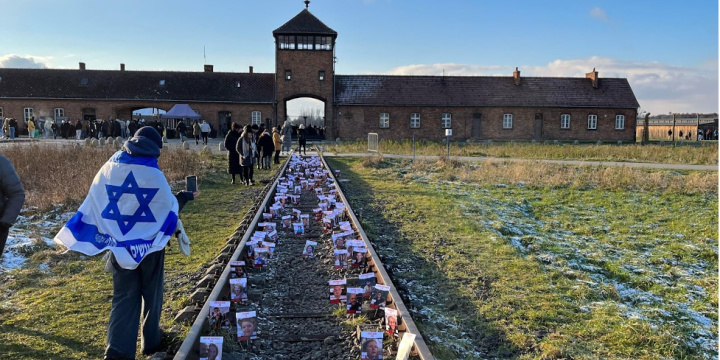
British teens placed pictures of Israeli hostages seized by Hamas on the train tracks leading to Auschwitz-Birkenau, the notorious Nazi death camp. Photo: JRoots
The Holocaust stands as a stark lesson in the catastrophic outcomes of unchecked hatred, systemic discrimination, and the silence of the global community in the face of deadly human rights violations.
This dark chapter in history compels us to examine contemporary threats to human dignity and life, especially the acts of terrorism from groups like Hamas. These acts destabilize regions and challenge our collective moral compass, urging us to apply historical lessons to prevent a recurrence of history’s darkest moments.
Israel, born from the ashes of the Holocaust, has embedded the memory of this tragedy into the very core of its national identity and security policies. The Jewish State’s approach to security is not just about safeguarding borders, but also about preserving the sanctity of life, a resolve that was forged in the Holocaust’s aftermath.
Israel’s security measures, often scrutinized, are fundamentally shaped by an acute awareness of what happens when threats are not taken seriously. This awareness informs its vigilant stance against groups like Hamas, whose charter calls for the destruction of Israel, echoing the genocidal intent of the Nazis. In other words, this strategic foresight is complemented by educational initiatives that instill the importance of vigilance and the moral imperative to act against potential threats to human dignity.
Israel’s security apparatus employs advanced technology and intelligence-gathering to preempt terrorist attacks, reflecting the state’s commitment to “never again” allow Jewish lives to be imperiled without recourse. Yet Israel also faces ethical dilemmas reminiscent of those posed by historical persecution, balancing national security with the rights of Palestinians. This balance is precarious, underscoring the need for solutions that ensure security without compromising human dignity, mirroring the global call to action that arose from the Holocaust’s horrors.
Beyond military and security responses, Israel’s investment in Holocaust education serves as a tool against extremism. By educating future generations about the consequences of unchecked hatred and bigotry, Israel aims to cultivate a society resilient against ideologies that fuel terrorism. Furthermore, Israel’s efforts in peacebuilding and normalization with Arab states indicate a forward-looking approach to securing not only its future, but also fostering regional stability, drawing on historical lessons to navigate contemporary challenges.
The global response to the Holocaust underscored the need for international cooperation to prevent future atrocities. Israel today advocates for a unified global stance against terrorism, emphasizing the importance of collective action and shared intelligence. International cooperation in counter-terrorism efforts not only bolsters Israel’s security, but also contributes to global peace, highlighting the interconnectedness of nations in the fight against extremism.
The Holocaust’s enduring lesson is the necessity of confronting hatred, safeguarding the vulnerable, and erasing the scourge of indifference. As Israel navigates the threats posed by terrorism today, it leverages these lessons in its security strategies, striving for a balance that honors the memory of Holocaust victims while addressing the complexities of modern geopolitical realities.
This commitment to learning from the past and acting decisively in the present underscores the ongoing relevance of Holocaust insights to Israel’s security measures, offering a path toward a future where peace and human dignity can flourish.
Elham Sataki, a distinguished journalist with more than two decades of expertise, specializes in international reporting, digital content production, and investigative journalism. She possesses a deep knowledge of European history and American policy, coupled with a talent for delivering compelling narratives across various media platforms. She was the former anchor of VOA ( Voice of America).