 Pod Save America Hosts Call on Democrats to Cut All Israel Military Aid, No Longer Accept AIPAC Funding
 Jews, Israelis Targeted in Austria Amid Surge in Antisemitic Incidents; Local Jewish Community Calls for Action
 ‘All of Our Strength’: Over 1,000 Pro-Israel Activists Gather in DC for Solidarity Conference
 ‘Devastated’: Wesley LePatner, Killed in Manhattan Mass Shooting, Was a Jewish Communal, Philanthropic Leader
 Sen. Angus King Vows to No Longer Vote for Israel Military Aid Until Gaza Conditions Improve
 Europe Won’t Pressure Israel to ‘Commit Suicide’ Amid Gaza Backlash, Palestinian State Push, Says Israeli FM
 Israel’s National Soccer Coach Attacked in Athens Before Soccer Fans Chant ‘F–K Israel, Free Palestine’ at Match
 New York Judge Sentences Neo-Nazi to 5 Years for Livestreaming Bomb Threats Against Jewish Hospitals
 US Pressures Lebanon to Issue Cabinet Decision to Disarm Hezbollah Before Talks Continue
 UK Plans to Recognize Palestinian State in September Unless Israel Meets Conditions, Starmer Says


Normalization with Saudi Arabia: A Distant Dream or a Dangerous Illusion?
Error: Contact form not found.
 by Amine Ayoub

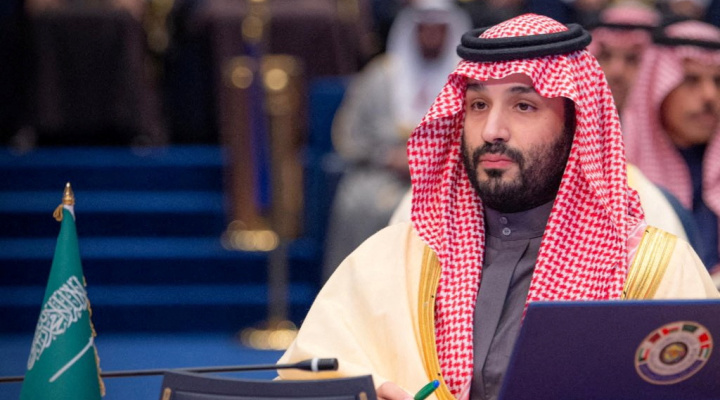
Saudi Crown Prince Mohammed bin Salman attends the 45th Gulf Cooperation Council (GCC) Summit in Kuwait city, Kuwait, Dec. 1, 2024. Photo: Bandar Algaloud/Courtesy of Saudi Royal Court/Handout via REUTERS
The possibility of diplomatic normalization between Saudi Arabia and Israel has been a topic of heated debate in recent years. As geopolitical dynamics shift, the question remains: is normalization an inevitable outcome of evolving Middle Eastern politics, or is it a deceptive illusion that could empower an authoritarian regime and strengthen extremist forces?
The prospect of normalization between Saudi Arabia and Israel has largely been driven by strategic calculations rather than ideological shifts. Saudi Arabia has historically positioned itself as a leader in the Arab and Islamic world, emphasizing the Palestinian cause as a central component of its foreign policy. However, with the emergence of new regional challenges, including Iran’s growing influence and the shifting role of the United States in the Middle East, Riyadh’s priorities have begun to change. But at what cost?
One of the key factors influencing Saudi-Israeli normalization is the kingdom’s relationship with the United States. The Trump administration has made it a priority to push for normalization, seeing it as a cornerstone of broader regional stability. However, Washington’s willingness to overlook Saudi Arabia’s human rights violations, its funding of radical Islamist groups, and its questionable role in regional conflicts should raise alarms. A US-brokered deal that rewards Saudi Arabia with security guarantees and advanced weaponry could further embolden its aggressive foreign policy, leading to more instability rather than peace.
Crown Prince Mohammed bin Salman (MBS) has introduced sweeping economic and social reforms under the Vision 2030 initiative, aiming to transform Saudi Arabia into a global economic powerhouse. However, beneath the surface of these modernization efforts lies a deeply authoritarian regime that silences dissent, funds extremist ideologies worldwide, and continues to impose severe restrictions on human rights. Any normalization agreement that strengthens MBS’ grip on power risks exacerbating these problems rather than resolving them.
Despite potential economic benefits, the Palestinian issue remains a significant obstacle to normalization. Saudi Arabia has reiterated its commitment to the Arab Peace Initiative, which conditions normalization with Israel on the establishment of a Palestinian state with eastern Jerusalem as its capital. However, in practice, Riyadh’s stance appears increasingly performative, as the kingdom continues to maintain backdoor relations with Israel while failing to take meaningful action to support Palestinian self-determination. If Saudi Arabia ultimately normalizes relations without securing major concessions for Palestinians, it will expose its long-standing rhetoric as little more than empty posturing.
Another critical concern is Saudi Arabia’s long history of involvement with radical Islamist movements. While the kingdom has taken steps in recent years to distance itself from jihadist groups, its past funding of Wahhabi extremism and its questionable ties to groups like Hamas raise serious doubts about its commitment to regional stability. Hamas, which is designated as a terrorist organization by the US and several other countries, has historically received support from Saudi-aligned entities. A normalization deal that fails to address these lingering connections could further empower militant factions and escalate violence.
Public sentiment in Saudi Arabia also plays a crucial role in the kingdom’s decision-making process. Unlike the UAE and Bahrain, where leadership-driven policies paved the way for normalization, Saudi Arabia’s deeply religious and conservative society presents a different challenge. Anti-Israel sentiment is still widespread, and many Saudis view normalization as a betrayal of Islamic principles. This raises the question: is MBS willing to risk domestic unrest to secure a deal that primarily serves his geopolitical ambitions?
The shifting role of the United States in the region is another variable to consider. Trump’s transactional approach to diplomacy — where alliances are dictated by economic deals rather than long-term strategic stability — raises concerns about the sustainability of any normalization agreement. Saudi Arabia, aware of US political volatility, has been hedging its bets by strengthening ties with China and Russia, signaling that its loyalty to Washington is far from guaranteed.
While normalization between Saudi Arabia and Israel may seem like a step toward peace, it could, in reality, be a dangerous illusion. The geopolitical and economic incentives for both nations are clear, but the risks far outweigh the benefits. Strengthening an authoritarian regime with a track record of human rights abuses, fueling regional power struggles, and indirectly empowering jihadist groups are consequences that cannot be ignored. The future of Saudi-Israeli relations must be approached with extreme caution — failure to do so could turn a supposed diplomatic victory into a long-term security nightmare for the entire region.
Amine Ayoub, a Middle East Forum Fellow, is a policy analyst and writer based in Morocco.