 Pod Save America Hosts Call on Democrats to Cut All Israel Military Aid, No Longer Accept AIPAC Funding
 Jews, Israelis Targeted in Austria Amid Surge in Antisemitic Incidents; Local Jewish Community Calls for Action
 ‘All of Our Strength’: Over 1,000 Pro-Israel Activists Gather in DC for Solidarity Conference
 ‘Devastated’: Wesley LePatner, Killed in Manhattan Mass Shooting, Was a Jewish Communal, Philanthropic Leader
 Sen. Angus King Vows to No Longer Vote for Israel Military Aid Until Gaza Conditions Improve
 Europe Won’t Pressure Israel to ‘Commit Suicide’ Amid Gaza Backlash, Palestinian State Push, Says Israeli FM
 Israel’s National Soccer Coach Attacked in Athens Before Soccer Fans Chant ‘F–K Israel, Free Palestine’ at Match
 New York Judge Sentences Neo-Nazi to 5 Years for Livestreaming Bomb Threats Against Jewish Hospitals
 US Pressures Lebanon to Issue Cabinet Decision to Disarm Hezbollah Before Talks Continue
 UK Plans to Recognize Palestinian State in September Unless Israel Meets Conditions, Starmer Says


The Media Painted Israel’s Eurovision Entry as ‘Divisive’ — Viewers Made Her a Star
Error: Contact form not found.
 by Rachel O'Donoghue

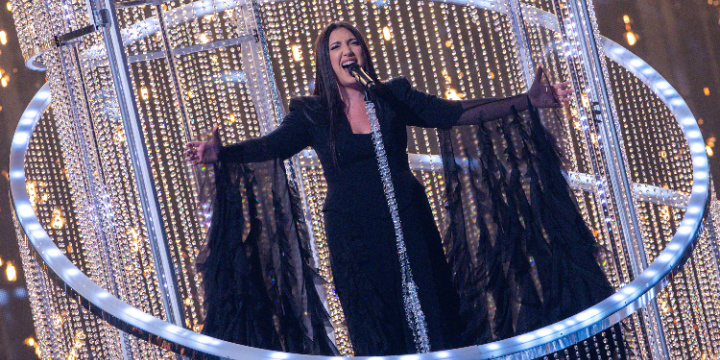
Yuval Raphael from Israel with the title “New Day Will Rise” on stage at the second semi-final of the 69th Eurovision Song Contest in the Arena St. Jakobshalle. Photo: Jens Büttner/dpa via Reuters Connect
If you were reading the media’s Eurovision coverage ahead of Saturday night’s live final, you could be forgiven for thinking Europe was on the brink of revolt — not over the music, but because Israel was allowed to compete.
For days, major outlets drip-fed a steady stream of articles focused less on the music and more on the “divisiveness” of Israel’s singer, Yuval Raphael. The contest was held in Basel, Switzerland — in keeping with tradition that the previous year’s winner hosts the following year’s event. But instead of coverage on costumes, staging, or song predictions, much of the press zeroed in on Israel.
Take the Associated Press, which on May 16 published a piece headlined: “Israel’s presence still roils Eurovision a year after major protests over the war in Gaza.” The article detailed a protest in Basel the night before the final — involving 200 people, “many draped in Palestinian flags,” demanding Israel’s expulsion from the competition.
That’s 200 people. In a city hosting an event watched by 160 million.
But beyond the AP’s decision to devote an entire article to a relatively small protest, it’s what the piece doesn’t say that stands out.
The article solemnly describes demonstrators marching “in silence down a street noisy with music and Eurovision revelry” — conferring a quiet dignity to the scene — while omitting that just days earlier, protesters in the same city were filmed shouting death threats and that one man was caught miming the slitting of Yuval Raphael’s throat.
The article also recites the protestors’ talking point: “Russia was banned after invading Ukraine, so why not Israel?” A responsible journalist might have added a key bit of context: Eurovision is a contest between broadcasters, and Russia’s state broadcaster was disqualified for breaching contest rules. Israel, by contrast, was attacked by Hamas on October 7, and its broadcaster KAN was not accused of doing anything wrong.
NBC News took an even more dramatic tone with its headline: “United by music, divided on Israel: Eurovision tensions bubble up in famously neutral Switzerland.” Readers were told that protests over Israel’s participation had reached a “fever pitch,” and that “Basel, and Europe at large, are anything but united.”
A fever pitch? For 200 people with flags — and little more than death threats for a 24-year-old woman?
The AFP joined the chorus with a headline on May 11: “Parade, protests kick off Eurovision Song Contest week.” But even that article opened with a contradictory statement: “The Swiss city is hosting the 69th edition of the world’s biggest annual live televized music event, reaching around 160 million viewers.”
In other words: massive global interest. And yet, we’re meant to believe the event was overshadowed by a protest that could barely fill a city square.
The UK media did its part too. On May 10, the BBC reported: “Israel heads to Eurovision final, despite protests” — a headline designed to suggest Raphael had narrowly slipped through under a cloud of outrage.
Meanwhile, The Independent vaguely claimed that “tensions” had erupted over Israel’s performance, without saying who was tense, or why.
The same publication even attempted to reframe one of the anti-Israel protestors who tried to storm the stage when Raphael was singing during the final as the victim, running a lead that defies belief:
Pro-Palestine protester’s hair pulled as attempted Eurovision disruption blocked.
And The Guardian ran multiple pieces implying Israel’s participation was in jeopardy, after national broadcasters from Spain and Ireland requested a “discussion” over Israel’s inclusion.
View this post on Instagram
Israel Triumphs in Public Vote
So after all the noise, what happened?
Israel came first in the audience vote.
Yuval Raphael placed second overall in the competition, with 357 points. Austria’s winner received 436 points. But here’s the key detail: Israel scored 297 points from the public, compared to just 60 from the jury. Austria, by contrast, received 178 from the public and 258 from juries.
In other words: if the public alone had decided, Israel would have won.
Israel earned the maximum 12 points in the public vote from the United Kingdom, Spain, Sweden, Australia, and Portugal — all of whose juries gave her zero. In Ireland, where the broadcaster led the charge to discuss Israel’s participation, the public gave Israel 10 points, and the jury gave 7.
For all the media’s insistence that Israel’s presence was unwelcome, millions of ordinary viewers voted otherwise.
And yet, even as the final aired, broadcasters continued to undermine Israel.
Spain’s RTVE ignored warnings from the European Broadcasting Union and allowed its presenters to recite unverifiable casualty figures: “The victims of the Israeli attacks in Gaza now exceed 50,000, including more than 15,000 children, according to the United Nations.” (The UN has issued no such definitive number.) Before the broadcast began, RTVE aired a message: “In the face of human rights, silence is not an option. Peace and justice for Palestine.”
Will Spain face disqualification next year for politicizing the contest on-air? Don’t hold your breath.
Even the BBC’s Graham Norton seemed to join the pattern of omission, describing Yuval Raphael as a newcomer who only began singing in 2023 after appearing on Israel’s Rising Star. He neglected to mention she is also a survivor of the October 7 massacre at the Nova music festival — where she hid under the bodies of others who were murdered.
Let’s be honest: much of the media wasn’t reporting on Eurovision — it was campaigning within it. The press wanted to make Israel’s participation look controversial. They wanted Yuval Raphael to lose. That, for them, would have been the ultimate verdict: a musical referendum on Israel.
But they failed.
The audience saw through it. The public voted. And Israel’s Yuval Raphael sang — and soared.
The author is a contributor to HonestReporting, a Jerusalem-based media watchdog with a focus on antisemitism and anti-Israel bias — where a version of this article first appeared.