 Pod Save America Hosts Call on Democrats to Cut All Israel Military Aid, No Longer Accept AIPAC Funding
 Jews, Israelis Targeted in Austria Amid Surge in Antisemitic Incidents; Local Jewish Community Calls for Action
 ‘All of Our Strength’: Over 1,000 Pro-Israel Activists Gather in DC for Solidarity Conference
 ‘Devastated’: Wesley LePatner, Killed in Manhattan Mass Shooting, Was a Jewish Communal, Philanthropic Leader
 Sen. Angus King Vows to No Longer Vote for Israel Military Aid Until Gaza Conditions Improve
 Europe Won’t Pressure Israel to ‘Commit Suicide’ Amid Gaza Backlash, Palestinian State Push, Says Israeli FM
 Israel’s National Soccer Coach Attacked in Athens Before Soccer Fans Chant ‘F–K Israel, Free Palestine’ at Match
 New York Judge Sentences Neo-Nazi to 5 Years for Livestreaming Bomb Threats Against Jewish Hospitals
 US Pressures Lebanon to Issue Cabinet Decision to Disarm Hezbollah Before Talks Continue
 UK Plans to Recognize Palestinian State in September Unless Israel Meets Conditions, Starmer Says


Israel and Palestinian Authority Agree To Second Meeting
Error: Contact form not found.
-avatar.jpg) by Maxine Dovere
by Maxine Dovere

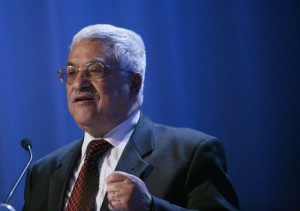
Mahmoud Abbas, President of the Palestinian Authority; Chairman of the Palestinian Liberation Organization Executive Committee. Photo: WEF.
The Quartet-sponsored talks in Amman which brought together Israeli and Palestinian Authority envoys for the first time in more than fifteen months will reconvene in one week.
At a press conference following the meeting, Jordanian Foreign Minister Nasser Judeh said that the Palestinian Authority delegation had submitted demands on border and security issues which would be reviewed by Israel. Israel is to respond and present its ideas in a future meeting. Israel, too, is expected to state its demands, likely to include retention of an Israeli presence along the Jordan River.
According to Judeh, the talks, held without preconditions, were divided into two parts. The first segment included Israeli envoy Yitzhak Molcho, PA negotiator Saeb Erekat, Jordanian Foreign Minister Judeh, Quartet envoy Tony Blair of Britain, and representatives of the US, EU, Russia and the UN, the Quartet members. This was followed by a one to one meeting between Molcho and Erekat, with the Jordanian Minister as the only other participant. Judeh, who is serving as spokesman for all parties, noted the importance of conducting direct dialogue. He stated that an agreement on borders and security would end the Palestinian Authority’s ‘issue’ with development in Judea and Samaria.
The Quartet has given Israelis and the Palestinian Authority three months to work toward reviving the stalled peace process. The deadline expires January 26. Abbas has said “We won’t be able to continue living in a vacuum,” following that date. “If the Israelis comply with our demands, we will be prepared to return to the negotiations,” the PA president said. He said that the PA did not rule out the possibility of land swaps with Israel as part of a two state solution. Prior to the first meeting, the P. A. President had threatened “If Israel does not accept the Palestinian demands, we will take other measures which we cannot detail. These measures could be hard,” he said.
Domestic politics are unstable in both Jerusalem and Ramallah. The leadership of Netanyahu’s Likud party may be contested January 31, and a general election may follow. The Prime Minister is unlikely to take any strong action until the Likud leadership is decided. Fatah, too, is reassessing its position, negotiating with Hamas in an attempt to form a working coalition.
In the United States, the “photo finish” of former Gov. Mitt Romney and former Senator Rick Santorum leaves the race for the 2012 Republican nomination open. Election year concerns are of prime importance for President Barack Obama, as the countdown towards the November election begins.
In many places in the Middle East uncertainty continues as the Arab Spring turns into autumn with no democratic governments in place and political directions undefined.