 Pod Save America Hosts Call on Democrats to Cut All Israel Military Aid, No Longer Accept AIPAC Funding
 Jews, Israelis Targeted in Austria Amid Surge in Antisemitic Incidents; Local Jewish Community Calls for Action
 ‘All of Our Strength’: Over 1,000 Pro-Israel Activists Gather in DC for Solidarity Conference
 ‘Devastated’: Wesley LePatner, Killed in Manhattan Mass Shooting, Was a Jewish Communal, Philanthropic Leader
 Sen. Angus King Vows to No Longer Vote for Israel Military Aid Until Gaza Conditions Improve
 Europe Won’t Pressure Israel to ‘Commit Suicide’ Amid Gaza Backlash, Palestinian State Push, Says Israeli FM
 Israel’s National Soccer Coach Attacked in Athens Before Soccer Fans Chant ‘F–K Israel, Free Palestine’ at Match
 New York Judge Sentences Neo-Nazi to 5 Years for Livestreaming Bomb Threats Against Jewish Hospitals
 US Pressures Lebanon to Issue Cabinet Decision to Disarm Hezbollah Before Talks Continue
 UK Plans to Recognize Palestinian State in September Unless Israel Meets Conditions, Starmer Says


Congress Mulls New Restrictions to Egypt, PA Aid
Error: Contact form not found.
 by Samara Greenberg

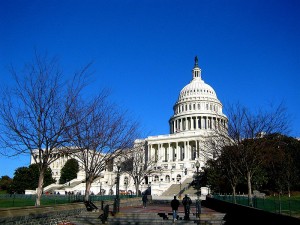
Capitol Hill. Photo: wiki commons.
The House of Representatives’ Foreign Operations Appropriations subcommittee passed a $40.1 billion budget for 2013 with new stipulations for U.S. funds that go to Egypt and the Palestinian Authority (PA) in an effort to protect U.S. interests in the midst of regional changes.
According to the legislation, which is in its initial stages, should Egypt terminate its peace treaty with Israel, America’s $1.3 billion in military aid to Cairo would be immediately cut. Also, the secretary of state would need to certify that elections are free and policies respecting civil rights are being implemented in order for aid to be delivered. The secretary can waive the restriction based on elections, but cannot waive funds if the peace treaty is canceled. In addition, concerning the Palestinians, according to the bill American aid would be withheld if the PA makes any agreement with Hamas, and if the PA does not actively work to end incitement. This language is harsher than the current text, which would cut aid to Palestinians should there be a Fatah-Hamas unity government.
Last month, President Obama signed a waiver releasing millions of dollars in aid to the Palestinian Authority that was frozen by Congress after Palestinian President Mahmoud Abbas sought statehood recognition at the United Nations in September 2011. And in March, Secretary of State Hillary Clinton waived a Congressional requirement linking the annual $1.3 billion in aid to Cairo to the military rulers’ support of transitioning to a civilian government, holding free elections, and protecting citizens’ freedoms.
The new restrictions on aid passed by the House subcommittee must now face a vote in the Appropriations Committee, which is expected to take place next week. If approved, the House of Representatives will vote on the bill. By the time the budget works its way through Congress and is presented to the president, however, these harsher restrictions will likely be watered down. And, if not, the administration can always waive Congress’s restrictions on funding.
But in the new Middle East landscape, it would benefit the United States to tie its foreign aid to specific policy issues. By handing over millions of dollars to a country or people without those bodies falling in line with Washington’s desires, any administration only weakens the value of its words — and standing — in the region.