 Pod Save America Hosts Call on Democrats to Cut All Israel Military Aid, No Longer Accept AIPAC Funding
 Jews, Israelis Targeted in Austria Amid Surge in Antisemitic Incidents; Local Jewish Community Calls for Action
 ‘All of Our Strength’: Over 1,000 Pro-Israel Activists Gather in DC for Solidarity Conference
 ‘Devastated’: Wesley LePatner, Killed in Manhattan Mass Shooting, Was a Jewish Communal, Philanthropic Leader
 Sen. Angus King Vows to No Longer Vote for Israel Military Aid Until Gaza Conditions Improve
 Europe Won’t Pressure Israel to ‘Commit Suicide’ Amid Gaza Backlash, Palestinian State Push, Says Israeli FM
 Israel’s National Soccer Coach Attacked in Athens Before Soccer Fans Chant ‘F–K Israel, Free Palestine’ at Match
 New York Judge Sentences Neo-Nazi to 5 Years for Livestreaming Bomb Threats Against Jewish Hospitals
 US Pressures Lebanon to Issue Cabinet Decision to Disarm Hezbollah Before Talks Continue
 UK Plans to Recognize Palestinian State in September Unless Israel Meets Conditions, Starmer Says


Noah Meets Katrina in “Watershed”
Error: Contact form not found.
 by Elke Reva Sudin

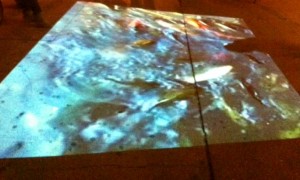
Anita Glesta's "Watershed: Fish on 14th" Photo: Elke Reva Sudin.
How difficult is it to imagine a truly devastating catastrophe? Will calamity come from an instantaneous, even violent change in the landscape, or a slow transformation that could have been prevented? Will we suddenly realize the terrifying future when the prevention is attainable or when it is too late?
Artist Anita Glesta considers these issues in her use of installations and large scale works to bring awareness of global and social issues by drawing parallels between historical events and specific trends today. One example is Gernika/Guernica where she brings awareness to the bombing at Guernica in Spain and connects it to the events of 9/11 in the US by creating site specific installations that show the impact both events made on their cities. Her work is a visual discussion of memory, the question of identity, and connects past historical events to contemporary issues, by integrating physical space with large scale installations, and social consciousness.
Over the past few months Glesta has participated in the LABA Fellowship, a Torah learning program for a select group of artists that encourages the creation of new works of art that reflect on their study.
Glesta wasn’t exactly familiar with biblical stories, at least not in the way she had learned through the program. Growing up with a yeshiva dropout father, she grew up in family where a Jewish identity meant more of a cultural identity. Through participating in the program Glesta explains that she could recognize these stories with fresh eyes, as well as appreciate such elements of her heritage through the eyes of the other fellows. What she discovered was that the tales are shockingly raw. She was surprised to find out that biblical history is more random than she realized, and that the stories do not possess the formulaic order and character archetypes that tales from other ancient civilizations seem to contain. Even more strange, Glesta found the texts to be conclusive in their narratives at times.
Inspired by universal myths largely rooted in the Old Testament, Glesta created a piece based on the story of Noah and the Great Flood, a traditional Jewish tale that has a place in the World-origin mythologies of many other cultures. Her work Watershed: Fish on 14th is a projection of frenzied fish swimming in a phantom river that is showcased on the ground. Glesta’s response to the epic flood in the Torah is a powerful reminder of Climate Change as she relates Watershed to the scare of flooding today.