 Pod Save America Hosts Call on Democrats to Cut All Israel Military Aid, No Longer Accept AIPAC Funding
 Jews, Israelis Targeted in Austria Amid Surge in Antisemitic Incidents; Local Jewish Community Calls for Action
 ‘All of Our Strength’: Over 1,000 Pro-Israel Activists Gather in DC for Solidarity Conference
 ‘Devastated’: Wesley LePatner, Killed in Manhattan Mass Shooting, Was a Jewish Communal, Philanthropic Leader
 Sen. Angus King Vows to No Longer Vote for Israel Military Aid Until Gaza Conditions Improve
 Europe Won’t Pressure Israel to ‘Commit Suicide’ Amid Gaza Backlash, Palestinian State Push, Says Israeli FM
 Israel’s National Soccer Coach Attacked in Athens Before Soccer Fans Chant ‘F–K Israel, Free Palestine’ at Match
 New York Judge Sentences Neo-Nazi to 5 Years for Livestreaming Bomb Threats Against Jewish Hospitals
 US Pressures Lebanon to Issue Cabinet Decision to Disarm Hezbollah Before Talks Continue
 UK Plans to Recognize Palestinian State in September Unless Israel Meets Conditions, Starmer Says


Flame Virus Tied to Stuxnet Attack on Iran by Researchers
Error: Contact form not found.
 by News Editor

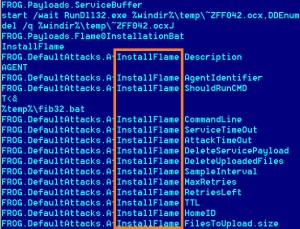
Computer code. Photo: http://www.wired.com/threatlevel.
Wired – The sophisticated espionage toolkit known as Flame is directly tied to the Stuxnet superworm that attacked Iran’s centrifuges in 2009 and 2010, according to researchers who recently found that the main module in Flame contains code that is nearly identical to a module that was used in an early version of Stuxnet.
Researchers at Russia-based Kaspersky Lab discovered that a part of the module that allows Flame to spread via USB sticks using the autorun function on a Windows machine contains the same code that was used in a version of Stuxnet that was unleashed on computers in Iran in 2009, reportedly in a joint operation between the U.S. and Israel. The module, which was known as Resource 207 in Stuxnet, was removed from subsequent versions of Stuxnet, but it served as a platform for what would later develop into the full-fledged Flame malware that is known today.