 Pod Save America Hosts Call on Democrats to Cut All Israel Military Aid, No Longer Accept AIPAC Funding
 Jews, Israelis Targeted in Austria Amid Surge in Antisemitic Incidents; Local Jewish Community Calls for Action
 ‘All of Our Strength’: Over 1,000 Pro-Israel Activists Gather in DC for Solidarity Conference
 ‘Devastated’: Wesley LePatner, Killed in Manhattan Mass Shooting, Was a Jewish Communal, Philanthropic Leader
 Sen. Angus King Vows to No Longer Vote for Israel Military Aid Until Gaza Conditions Improve
 Europe Won’t Pressure Israel to ‘Commit Suicide’ Amid Gaza Backlash, Palestinian State Push, Says Israeli FM
 Israel’s National Soccer Coach Attacked in Athens Before Soccer Fans Chant ‘F–K Israel, Free Palestine’ at Match
 New York Judge Sentences Neo-Nazi to 5 Years for Livestreaming Bomb Threats Against Jewish Hospitals
 US Pressures Lebanon to Issue Cabinet Decision to Disarm Hezbollah Before Talks Continue
 UK Plans to Recognize Palestinian State in September Unless Israel Meets Conditions, Starmer Says


Abbas Conveys Moderate Position in Pre US Election Interview on Israeli TV
Error: Contact form not found.
 by JNS.org

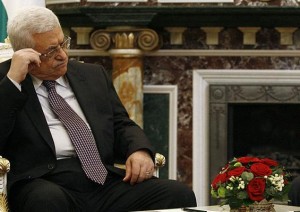
Palestinian Authority President Mahmoud Abbas. Photo: wiki commons.
Palestinian President Mahmoud Abbas ignited a firestorm of controversy in the Middle East over the weekend, stemming from remarks that he made on an Israeli television interview that seemingly conceded the Palestinian “right of return.”
In an English language one-on-one interview with Israel’s Channel 2, Abbas was asked if he would like to go back to Safed, the northern Israeli town where he was born in 1935. Abbas responded:
“It’s my right to see it, but not to live there,” he said. “I am a refugee, but I am living in Ramallah, and this is Palestine. I believe the West Bank and Gaza is Palestine, and the other parts are Israel.”
Abbas’s response has been widely interpreted as conceding the issue of the Palestinian “right of return.”
The “right of return” is one the core issues of the Arab-Israeli conflict, perhaps the most important issue to the Palestinian people. As part of the 1948 War of Independence, over 700,000 Palestinian Arabs became refugees as a result of the conflict they initiated. Today, the refugees and their descendants (estimated to be around 5 million) remain largely stateless in refugee camps throughout the Arab world.
Over the decades, Palestinian leaders have promised to seek the return of the refugees as part of any final peace agreement. However, the Israelis see this as an existential threat and despite Palestinian rhetoric, its leaders in recent peace negotiations have conceded on the issue.
“It is illogical to ask Israel to take five million, or indeed one million,” Abbas said in 2011 according to the New York Times.
Abbas’s remarks were widely condemned in the Muslim world. In Hamas-controlled Gaza, pictures of Abbas were burned and he was branded a traitor. However, in Israel, his remarks were met with mixed reaction. Politicians on the Israeli left praised his remarks, while right-wing politicians, including Netanyahu, did not see any connection with his remarks and his actions.
Political analysts believe that Abbas was attempting to bring the issue of Palestinian negotiations to the center stage ahead of the Israeli January elections.
After the political fallout, Abbas later partially retracted his remarks, saying, “What I said about Safed is my personal stance.”