 Pod Save America Hosts Call on Democrats to Cut All Israel Military Aid, No Longer Accept AIPAC Funding
 Jews, Israelis Targeted in Austria Amid Surge in Antisemitic Incidents; Local Jewish Community Calls for Action
 ‘All of Our Strength’: Over 1,000 Pro-Israel Activists Gather in DC for Solidarity Conference
 ‘Devastated’: Wesley LePatner, Killed in Manhattan Mass Shooting, Was a Jewish Communal, Philanthropic Leader
 Sen. Angus King Vows to No Longer Vote for Israel Military Aid Until Gaza Conditions Improve
 Europe Won’t Pressure Israel to ‘Commit Suicide’ Amid Gaza Backlash, Palestinian State Push, Says Israeli FM
 Israel’s National Soccer Coach Attacked in Athens Before Soccer Fans Chant ‘F–K Israel, Free Palestine’ at Match
 New York Judge Sentences Neo-Nazi to 5 Years for Livestreaming Bomb Threats Against Jewish Hospitals
 US Pressures Lebanon to Issue Cabinet Decision to Disarm Hezbollah Before Talks Continue
 UK Plans to Recognize Palestinian State in September Unless Israel Meets Conditions, Starmer Says


Questions Arise Over J Street’s Impact on Election
Error: Contact form not found.
 by JNS.org

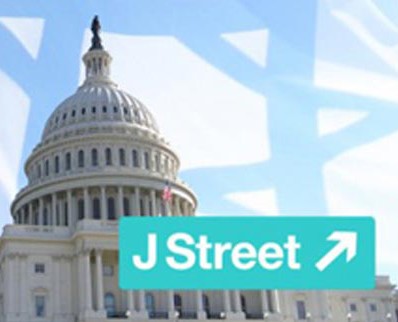
J Street logo. Photo:J Street.
A U.S. election that many political pundits hailed as “a return to the status quo” was a different story for many in the pro-Israel community, with concerns arising over the future of bipartisan support for Israel relating to the influence of the self-labeled “pro-Israel, pro-peace” group J Street. But others say J Street has overstated its influence.
J Street’s stated goal is “redefining what it means to be pro-Israel in America” by “changing the U.S. political dynamics around Israel.” However, critics contend that J Street’s efforts are ultimately anti-Israel, and several prominent Jewish leaders, including Israeli Prime Minister Benjamin Netanyahu, have refused to meet with the group.
In the recent election, J Street’s political action committee—JStreetPAC—spent more than $1.8 million to endorse 71 candidates in the recent election. According to J Street, 70 of its endorsed candidates won.
J Street believes the election outcomes present an opportunity for American leadership to resolve the Arab-Israeli conflict.
“JStreetPAC’s resounding success speaks to the deep hunger among American Jews and friends of Israel for a political voice that represents their belief that American leadership is vital to achieving a two-state solution and to securing Israel’s Jewish, democratic future,” said J Street Executive Director Jeremy Ben-Ami in a press release.
However, some feel that J Street is overstating its influence in many races that Democrats would have won regardless of the group’s support.
For instance, in the heavily contested Ohio Senate race between Democratic Senator Sherrod Brown and Republican Josh Mandel, most analysts attribute Mandel’s loss to a backlash against Mitt Romney’s position on the auto bailout—not the money poured in by groups like J Street against Mandel.
“It is clear that J Street’s role in this year’s election was basically irrelevant, and certainly far humbler than its own superlative: ‘astounding,'” wrote columnist Lori Lowenthal Marcus in The Jewish Press.
There are also concerns that J Street’s efforts to support more liberal candidates may eventually lead to an erosion of bipartisan support for Israel—an issue that groups like AIPAC have worked hard to cultivate and maintain.
J Street supporters like Peter Beinart often “depict Israel as the obstacle to peace and favor U.S. pressure to force Israeli concessions,” wrote Middle East expert Stephen J. Rosen in Foreign Policy.
“As a result, these ideas are moving gradually from the far left to the center-left of the Democratic base. And as the older generation of Democratic stalwarts gradually passes from the scene and new Democrats to the left of their predecessors enter the House and Senate and slowly climb the ranks, there will be an evolution within the Democratic Party,” Rosen wrote.