 Pod Save America Hosts Call on Democrats to Cut All Israel Military Aid, No Longer Accept AIPAC Funding
 Jews, Israelis Targeted in Austria Amid Surge in Antisemitic Incidents; Local Jewish Community Calls for Action
 ‘All of Our Strength’: Over 1,000 Pro-Israel Activists Gather in DC for Solidarity Conference
 ‘Devastated’: Wesley LePatner, Killed in Manhattan Mass Shooting, Was a Jewish Communal, Philanthropic Leader
 Sen. Angus King Vows to No Longer Vote for Israel Military Aid Until Gaza Conditions Improve
 Europe Won’t Pressure Israel to ‘Commit Suicide’ Amid Gaza Backlash, Palestinian State Push, Says Israeli FM
 Israel’s National Soccer Coach Attacked in Athens Before Soccer Fans Chant ‘F–K Israel, Free Palestine’ at Match
 New York Judge Sentences Neo-Nazi to 5 Years for Livestreaming Bomb Threats Against Jewish Hospitals
 US Pressures Lebanon to Issue Cabinet Decision to Disarm Hezbollah Before Talks Continue
 UK Plans to Recognize Palestinian State in September Unless Israel Meets Conditions, Starmer Says


Boycott Movement Against Iranian Goods Gaining Traction in Arab World
Error: Contact form not found.
 by David Daoud

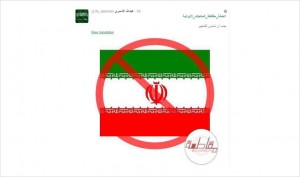
Private citizens from across the Arab world are launching a campaign for an economic boycott of Iranian goods. PHOTO: Twitter/Al-Jazeera.
The confrontation between some Arab states and Iran has now inspired a popular boycott against Iranian goods by Arab activists, Al Jazeera reported on Thursday.
Political tensions have been at an all-time high recently over Iran’s perceived hegemonic desires in the region, which include its support for Shia Houthi rebels in Yemen.
But now, according to the report, private Arab citizens have entered the fray and are planning to combat Iran economically by calling on fellow Arabs to “boycott Iranian goods.”
These activists have been promoting their boycott through the internet and on social media, particularly on Twitter with the hashtag, translated from Arabic, “#Campaign_to_Boycott_Iranian_Products.”
So far, the message has been retweeted 19,000 times in Qatar alone, which boasted the highest number of retweets among its citizens, according to Al Jazeera. Online users listed various Iranian products to be boycotted and publicized the symbol indicating a product of Iranian origin.
The hasthag’s popularity reflects deep-seated anger among many Arabs over Iranian regional policies. Many tweeted their hope that the boycott would help lead to the Iranian economy’s collapse. One Twitter user with the handle, Mohammad Al-Mansour, insisted Iran was “on the verge of collapse.”
Algerian lawmaker Anwar Malek tweeted that supporting the campaign was “an obligation upon all peoples because it would greatly affect [Iran’s] economy and will lead large companies which import its goods to avoid them. So do not hesitate.”
Other Twitter users also called on their governments to join the boycott, with one user, Ahmad Al-Zufairi, saying that if governments joined such boycotts, “the people would naturally follow suit.”
Another user, Ahmad Al-Ajlan, said that the economic battle was no less important than a military or political one, “and so it is our duty to boycott all types of Iranian goods.”
The spark which set off the campaign was a video uploaded to the Internet on Wednesday of an individual from one of the Gulf states warning against buying Iranian-produced watermelon which is being sold in markets throughout the Arab world, particularly in the Omani and Qatari market.
The creator of of the video waxed slightly conspiratorial, asserting that the Iranian watermelon was injected with a poison that would kill anybody who ate it and saying that tests on the watermelon had proved his claims.
The assertion led officials in Qatar and Kuwait to quarantine watermelon shipments and send samples to state-run laboratories for tests.