 Pod Save America Hosts Call on Democrats to Cut All Israel Military Aid, No Longer Accept AIPAC Funding
 Jews, Israelis Targeted in Austria Amid Surge in Antisemitic Incidents; Local Jewish Community Calls for Action
 ‘All of Our Strength’: Over 1,000 Pro-Israel Activists Gather in DC for Solidarity Conference
 ‘Devastated’: Wesley LePatner, Killed in Manhattan Mass Shooting, Was a Jewish Communal, Philanthropic Leader
 Sen. Angus King Vows to No Longer Vote for Israel Military Aid Until Gaza Conditions Improve
 Europe Won’t Pressure Israel to ‘Commit Suicide’ Amid Gaza Backlash, Palestinian State Push, Says Israeli FM
 Israel’s National Soccer Coach Attacked in Athens Before Soccer Fans Chant ‘F–K Israel, Free Palestine’ at Match
 New York Judge Sentences Neo-Nazi to 5 Years for Livestreaming Bomb Threats Against Jewish Hospitals
 US Pressures Lebanon to Issue Cabinet Decision to Disarm Hezbollah Before Talks Continue
 UK Plans to Recognize Palestinian State in September Unless Israel Meets Conditions, Starmer Says


Generations of Survivors: From Auschwitz to Khojaly
Error: Contact form not found.
 by Israel Barouk

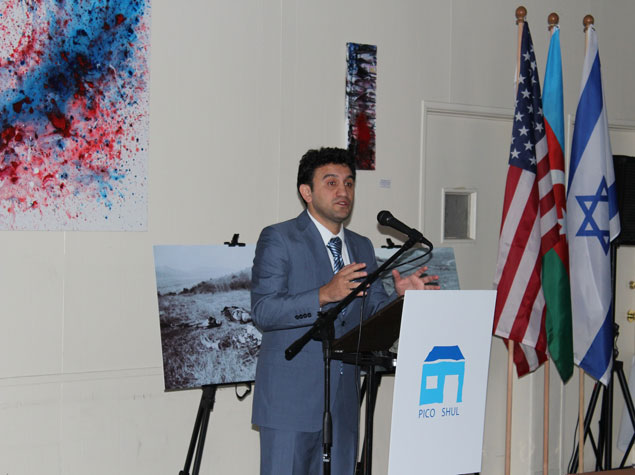
Anar Usubov, a survivor of the Khojaly Massacre. Photo: provided.
My recent book Khojaly: A Crime Against Humanity, outlines the history of the Khojaly Massacre — one of the most horrific events of recent history. The story of the 1992 massacre in Khojaly, Azerbaijan, is a true nightmare of war that so many of us learned about as children.
Something that has struck me about studying and traveling in Azerbaijan over the past few years is that it is the culture, and the people, that make it so special. Through the best and worst of times, Azerbaijan has stood on the side of justice — against Nazis and extremism, and in favor of celebrating many cultures and faiths in one shared space. The rest of the world has a lot to learn from their example. These characteristics stand out especially in the survivors of the Khojaly Massacre, most notably those who endured the nightmare as children, and are today still relatively young.
Anar Usubov is now 32 years old and lives in the United States. We caught up recently, and he shared a story about surviving the massacre, and about his family’s history, which resonated strongly with me.
During World War II, Anar’s grandfather, Shahhuseyn, was drafted by the Soviet Army to fight the Nazis. He was eventually captured and sent to Auschwitz. The commandant receiving prisoners on the day of his grandfather’s arrival was separating out Jews from Muslims — affording Muslims a better chance of survival. But circumcision, a common test for Jewish or non-Jewish men in Nazi captivity, would not work as an identifier, because Muslim men are also circumcised.
To distinguish between the two groups, the guards required the Muslim men to state a specific line from the Koran in Arabic, which nearly all of the Jewish men did not know. The Nazis had a long, thick line of new prisoners to process that day. Shahhuseyn saw that opportunity to save many lives, and taught the Jews around him the Arabic line to save them from an otherwise certain death. Eventually, the guards noticed, and he was beaten nearly to death. Shahhuseyn survived, and his bold risk and act of kindness that day likely saved Jewish lives.
This hero’s grandson, Anar, told me, “I am relieved that my grandfather did not live to see me go through what I am sure he thought could never happen again.”
When Anar was eight, the invasion by Armenian troops began across the Nagorno-Karabakh region of his homeland, Azerbaijan. For Anar, hiding in a cellar instead of attending school for several years was relatively easy compared to the night his village of Khojaly was brutally targeted in February 1992. As the massacre unfolded, thousands of men, women and children were killed — including most of Anar’s family.
The fact that Anar’s grandfather is a survivor of Auschwitz and a rescuer of Jews, and that today Jewish communities are working with Khojaly survivors, is a stunning development in history and a testament to the goodness inherent in human nature. The Khojaly Massacre is a bold reminder of the great amount of work we have left to do.