 Pod Save America Hosts Call on Democrats to Cut All Israel Military Aid, No Longer Accept AIPAC Funding
 Jews, Israelis Targeted in Austria Amid Surge in Antisemitic Incidents; Local Jewish Community Calls for Action
 ‘All of Our Strength’: Over 1,000 Pro-Israel Activists Gather in DC for Solidarity Conference
 ‘Devastated’: Wesley LePatner, Killed in Manhattan Mass Shooting, Was a Jewish Communal, Philanthropic Leader
 Sen. Angus King Vows to No Longer Vote for Israel Military Aid Until Gaza Conditions Improve
 Europe Won’t Pressure Israel to ‘Commit Suicide’ Amid Gaza Backlash, Palestinian State Push, Says Israeli FM
 Israel’s National Soccer Coach Attacked in Athens Before Soccer Fans Chant ‘F–K Israel, Free Palestine’ at Match
 New York Judge Sentences Neo-Nazi to 5 Years for Livestreaming Bomb Threats Against Jewish Hospitals
 US Pressures Lebanon to Issue Cabinet Decision to Disarm Hezbollah Before Talks Continue
 UK Plans to Recognize Palestinian State in September Unless Israel Meets Conditions, Starmer Says


Israeli Students Help Uncover 2,700-Year-Old Assyrian-Era Water Reservoir
Error: Contact form not found.
 by JNS.org

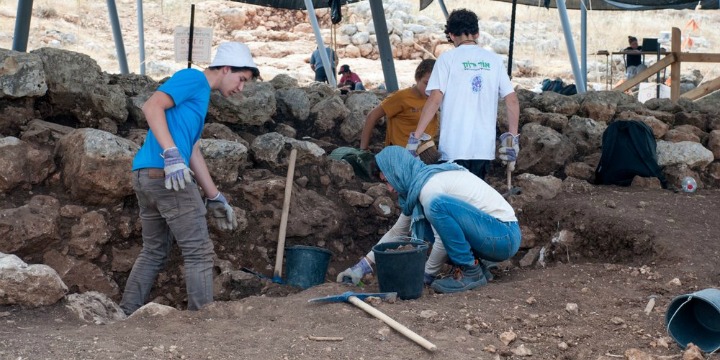
Israeli students participate in the dig near Rosh Ha’ayin, which resulted in the discovery of a 2,700-year-old ancient water reservoir. Credit: Gili Stern / Israel Antiquities Authority.
JNS.org – Israeli high school students working in conjunction with the Israel Antiquities Authority (IAA) have unearthed an “impressively large” 2,700-year-old ancient water reservoir near Rosh Ha’ayin in central Israel that dates to the period around the destruction of the Kingdom of Israel in 720 B.C., when the Assyrian Empire dominated the region.
According to Gilad Itach, director of excavations at the IAA, the reservoir was crucial for the survival of the local inhabitants of the area during dry seasons.
“It is difficult not to be impressed by the sight of the immense underground reservoir quarried out so many years ago,” Itach said. “In antiquity, rainwater collection and storage was a fundamental necessity. With an annual rainfall of 500 millimeters (20 inches), the region’s winter rains would easily have filled the huge reservoir.”
Within the reservoir, the archaeologists also discovered engravings of human figures, crosses and a vegetal motif that were likely carved by a passerby in a later period.
“Overall, we identified seven figures measuring 15–30 centimeters (6-12 inches),” Itach said. “Most have outstretched arms and a few appear to be holding some kind of object.”
The water system, which is nearly 20 meters (66 feet) long and reaches a depth of more than 4 meters (13 feet), was found beneath a large structure with walls that are nearly 50 meters (164 feet) long.
“It is highly likely that the structure and the reservoir were built at the end of the Iron Age (late 8th or early 7th century B.C.), but whereas the building was abandoned during the Persian period, the reservoir was still in use until modern times,” the IAA said.
In recent years, a number of farmsteads have been found near Rosh Ha’ayin dating back to the end of the First Temple period, when the Assyrians dominated the area. Archaeologists believe that the farmsteads were likely an attempt by the empire’s wish to establish settlements in the region.
“The structure exposed in this excavation is different from most of the previously discovered farmsteads,” Itach said. “Its orderly plan, vast area, strong walls and the impressive water reservoir hewn beneath it suggest that the site was administrative in nature, and it may well have controlled the surrounding farmsteads.”