 Pod Save America Hosts Call on Democrats to Cut All Israel Military Aid, No Longer Accept AIPAC Funding
 Jews, Israelis Targeted in Austria Amid Surge in Antisemitic Incidents; Local Jewish Community Calls for Action
 ‘All of Our Strength’: Over 1,000 Pro-Israel Activists Gather in DC for Solidarity Conference
 ‘Devastated’: Wesley LePatner, Killed in Manhattan Mass Shooting, Was a Jewish Communal, Philanthropic Leader
 Sen. Angus King Vows to No Longer Vote for Israel Military Aid Until Gaza Conditions Improve
 Europe Won’t Pressure Israel to ‘Commit Suicide’ Amid Gaza Backlash, Palestinian State Push, Says Israeli FM
 Israel’s National Soccer Coach Attacked in Athens Before Soccer Fans Chant ‘F–K Israel, Free Palestine’ at Match
 New York Judge Sentences Neo-Nazi to 5 Years for Livestreaming Bomb Threats Against Jewish Hospitals
 US Pressures Lebanon to Issue Cabinet Decision to Disarm Hezbollah Before Talks Continue
 UK Plans to Recognize Palestinian State in September Unless Israel Meets Conditions, Starmer Says


Arbor Day (Tu Bishvat) Guide for the Perplexed
Error: Contact form not found.
 by Yoram Ettinger

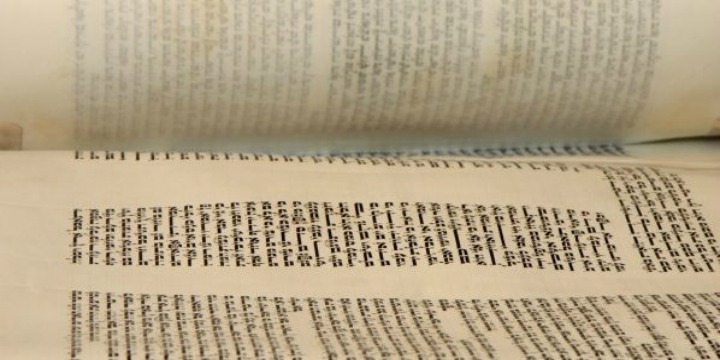
A Torah scroll. Photo: RabbiSacks.org
1. Judaism stipulates four new years celebration — one of them is the New Year for the trees, Tu Bishvat (Arbor Day), the 15th day of the month of Shvat (January 31, 2018).
Tu Bishvat highlights the rejuvination and blooming of trees and the Jewish people. According to Rashi, the leading Jewish Biblical commentator, this date was determined because most of the winter rains are over by Tu Bishvat, sap starts to rise and fruit begins to ripen. The Knesset, was established on Tu Bishvat, 1949.
The other three New Years are the first day of the month of Nissan (the Biblical Exodus — the birth of the Jewish people), the first day of the month of Tishrei (Rosh Hashanah, the Jewish New Year) and the first day of the month of Elul (the tithing of cattle — only if the Temple is rebuilt).
2. The Hebrew word for tree — Etz (עצ) – is the root of the Hebrew words for independence (עצמאות), power (עוצמה), identity/selfhood (עצמיות), essence (עצם) and bones (עצמות).
3. Another Hebrew word for tree is Ilan (אילן), whose root is איל (the awesome/mogul), which is also the Hebrew spelling for the majestic ram. The two letters, אל, mean God and the letter י is an acronym for God.
4. Just like trees, human beings aspire for stability, long-term planning and durability in face of rough times. Rough times forge stronger trees and character.
Just like trees, human-beings are capable of withstanding adversity/storm because of deep roots and a solid, tenacious trunk. Both also possess flexible leaves and branches. And just like fruit-bearing trees, human beings reproduce and benefit their community.
5. According to Genesis 1:11, trees were created on the third day of Creation, the only day which was blessed twice by God. Leviticus 19:23 stipulates: “When you come to the Land, you shall plant fruit trees.”
Deuteronomy 20:19/20 commands: “When you besiege a city. .. you shall not destroy its trees. … For you may eat from them, and you shall not cut them down, since the human-being is a tree of the field. … Only the trees which you know are not fruit trees you shall destroy and cut down.”
Psalms 1:3 states: “He shall be like a tree planted by the brooks of water, that brings forth his fruit in his season; his leaf also shall not wither; and whatsoever he does shall prosper.”
6. According to Proverbs, 3:18, The Five Books of Moses (the Torah) are “the tree of life to those who cleave to it.” The Book of Ethics, 6:7, refers to the Torah as a tree of life, since the Torah is both spiritual and practical like a tree, which is an integral part of nature,. The Tree of Life was first mentioned in Genesis (2:9), next to the Tree of Knowledge, which was the focus of the story of the expulsion of Adam and Eve from the Garden of Eden.
7. Tu Bishvat is mentioned not in the Bible, but in the Mishnah — the collection of Jewish oral laws, compiled by Rabbi Yehudah Hanasi around 200AD.
8. Trees have been critical to the ingathering of the Jewish people in the land of Israel, representing longevity and permanence, and underlying the inherent linkeage/bond between the Jewish people and the Jewish land. Hence, Tu Bishvat is a day of planting trees in Israel, by school and kindergarten children, as well as by pilgrims and tourists.
During (Mussaf) prayers on Shabbat and holidays, Jews ask God that trees be planted in the land of Israel.
9. The almond tree, which blossoms earlier than most trees/fruits, announces the arrival of Tu Bishvat. The almond tree/fruit commemorates the rods of Moses and Aharon (the symbol of shepherds’ authority and might, guiding their flocks), which were endowed with miraculous power during the Ten Plagues, the ensuing Exodus and the Korah rebellion against Moses. According to the book of Numbers 17:8, “[Aharon’s rod] put forth buds, produced blossoms and bore ripe almonds.”
10. On Tu Bishvat, it is customary to eat — for the first time — fruit from the new season, particularly the 30 types of fruit growing in the land of Israel.
11. A Tu Bishvat Seder is conducted on the eve of the holiday, recounting the importance of the trees and fruit of the land of Israel — and the historical background and significance of Tu Bishvat.