 Pod Save America Hosts Call on Democrats to Cut All Israel Military Aid, No Longer Accept AIPAC Funding
 Jews, Israelis Targeted in Austria Amid Surge in Antisemitic Incidents; Local Jewish Community Calls for Action
 ‘All of Our Strength’: Over 1,000 Pro-Israel Activists Gather in DC for Solidarity Conference
 ‘Devastated’: Wesley LePatner, Killed in Manhattan Mass Shooting, Was a Jewish Communal, Philanthropic Leader
 Sen. Angus King Vows to No Longer Vote for Israel Military Aid Until Gaza Conditions Improve
 Europe Won’t Pressure Israel to ‘Commit Suicide’ Amid Gaza Backlash, Palestinian State Push, Says Israeli FM
 Israel’s National Soccer Coach Attacked in Athens Before Soccer Fans Chant ‘F–K Israel, Free Palestine’ at Match
 New York Judge Sentences Neo-Nazi to 5 Years for Livestreaming Bomb Threats Against Jewish Hospitals
 US Pressures Lebanon to Issue Cabinet Decision to Disarm Hezbollah Before Talks Continue
 UK Plans to Recognize Palestinian State in September Unless Israel Meets Conditions, Starmer Says


New Study: ISIS Media Production Quality Reflects Organizational Trajectory
Error: Contact form not found.
 by Steven Emerson

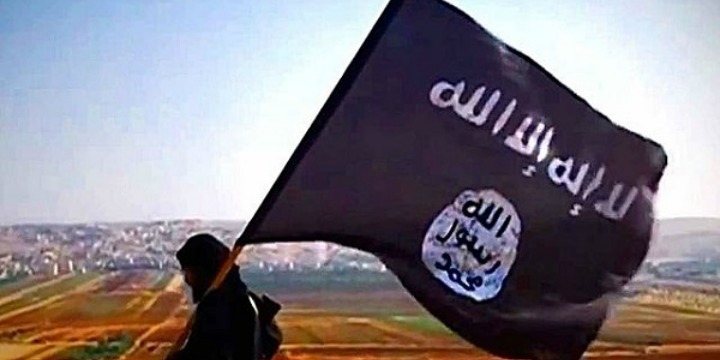
An ISIS terrorist. Photo: Wikimedia Commons.
Since losing most of its territory in Syria and Iraq, the terrorist organization ISIS has faced other considerable setbacks. For example, it is desperately scrambling for new revenue sources — even trying to sell its own minted currency as memorabilia.
ISIS’ media network has also taken a big hit. With the demise of its “caliphate,” there has been a noticeable and significant reduction in the quantity and quality of ISIS media production, a new study from the Meir Amit Intelligence and Terrorism Information Center finds.
The latest ISIS media reports are shorter in length, featuring poorer production quality and growing inaccuracies. More importantly, these reports adopt an increasingly defensive narrative — reflecting the group’s setbacks.
At its height, ISIS used its media network to brag about its governance, encouraging others from around the world to join the “new Caliphate” and build a fundamentalist Islamic state. Now, however, ISIS primarily calls on its adherents to carry out terrorist attacks abroad and be patient while the group goes through a period of reconstruction.
But by the end of 2017, the ISIS media network showed some signs of revival. Most of its websites and media institutions are fully functioning again, and the quality of its publications has improved. These improvements are noticeable in Syria and Iraq, along with some of its key regional affiliates, including in the Sinai Peninsula and the Afghanistan/Pakistan region.
The Meir Amit Center study finds that improved media production is generally associated with higher levels of activity by ISIS and other terrorist operations in those Islamic State provinces. Therefore, the quality and frequency of ISIS’ media output can be seen as a proxy for the organization’s durability.
Despite its territorial loses, ISIS remains a major threat to regional and international stability. Without a “state” to defend and manage, it can now focus on conducting terrorist attacks across the Middle East, its other regional affiliates, and in the West.
The study is based on primary research of various ISIS media outlets, as well as other prominent research on the subject. The report is divided into four parts, exploring ISIS’s media network at its organizational peak; the features of its current media landscape; media activity within ISIS regional affiliates; and ISIS’ social network communications.
Click here to read the full Meir Amit Center report.