 Pod Save America Hosts Call on Democrats to Cut All Israel Military Aid, No Longer Accept AIPAC Funding
 Jews, Israelis Targeted in Austria Amid Surge in Antisemitic Incidents; Local Jewish Community Calls for Action
 ‘All of Our Strength’: Over 1,000 Pro-Israel Activists Gather in DC for Solidarity Conference
 ‘Devastated’: Wesley LePatner, Killed in Manhattan Mass Shooting, Was a Jewish Communal, Philanthropic Leader
 Sen. Angus King Vows to No Longer Vote for Israel Military Aid Until Gaza Conditions Improve
 Europe Won’t Pressure Israel to ‘Commit Suicide’ Amid Gaza Backlash, Palestinian State Push, Says Israeli FM
 Israel’s National Soccer Coach Attacked in Athens Before Soccer Fans Chant ‘F–K Israel, Free Palestine’ at Match
 New York Judge Sentences Neo-Nazi to 5 Years for Livestreaming Bomb Threats Against Jewish Hospitals
 US Pressures Lebanon to Issue Cabinet Decision to Disarm Hezbollah Before Talks Continue
 UK Plans to Recognize Palestinian State in September Unless Israel Meets Conditions, Starmer Says


With Pompeo’s Rise, Uncertainty Deepens for Iran Nuclear Deal
Error: Contact form not found.
 by Reuters and Algemeiner Staff

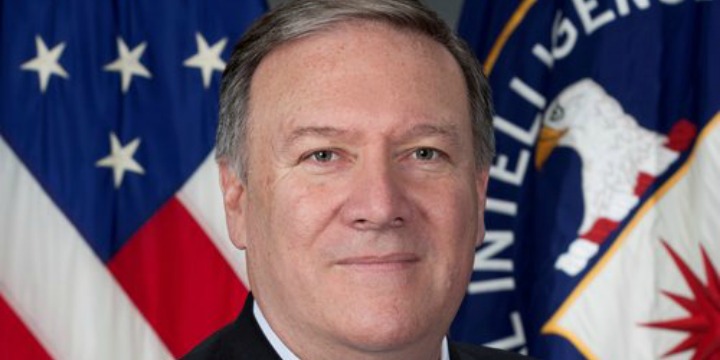
Mike Pompeo. Photo: CIA.
It is unclear how Mike Pompeo becoming US secretary of state may affect the Iran nuclear deal given that there is only one voice that counts in President Donald Trump’s administration: his own.
Trump’s choice of the Central Intelligence Agency director to replace Rex Tillerson means an Iran hawk who fiercely opposed the 2015 pact as a member of Congress will now be in charge of the US diplomacy trying to strengthen, and perhaps save, it.
Former US officials and serving European officials were at a loss to gauge how the switch would affect negotiations between the United States and three European powers — Britain, France and Germany — that are also parties to the agreement.
Some said Washington may take a harder line under Pompeo and the Europeans may be under more pressure to offer concessions, while others suggested his views on the deal have evolved and he may be better placed to influence Trump to keep it.
US, British, French and German officials are due to meet on the deal in Berlin on Thursday.
“Any officials negotiating with the Europeans right now will get a much more aggressive set of requirements from Pompeo,” said Richard Nephew, a former White House and State Department official who worked on Iran during the Obama administration.
“The odds of them coming up with a thoughtful compromise by May just got a lot longer,” he added.
Trump on Tuesday singled out the Iran nuclear deal as one of the main differences he had with Tillerson.
“I think it’s terrible, I guess he thinks it was OK,” Trump said.
Trump delivered an ultimatum to the European powers on Jan. 12, saying they must agree to “fix the terrible flaws of the Iran nuclear deal” or he would refuse to extend US sanctions relief on Iran that it calls for. US sanctions will resume unless Trump issues fresh “waivers” to suspend them on May 12.
The crux of the July 2015 pact between Iran and six major powers — Britain, China, France, Germany, Russia and the United States — was that Iran would restrict its nuclear program in return for relief from sanctions that have crippled its economy.
Trump sees three defects in the deal: its failure to address Iran’s ballistic missile program; the terms under which international inspectors can visit suspect Iranian nuclear sites; and “sunset” clauses under which limits on the Iranian nuclear program start to expire after 10 years. He wants all three strengthened if the United States is to stay in the deal.
In a Jan. 13 cable, the State Department sketched out a path under which the three European allies would simply commit to try to improve the deal over time in return for Trump keeping the pact alive by renewing sanctions relief in May.
Trump ‘is what matters here’
Other European officials and former US officials said Pompeo’s rise, if he is confirmed as secretary of state by the Senate, might have a more ambiguous effect on the negotiations and that, in any case, Trump’s views are paramount.
“All our work is going into delivering a credible package that is sellable to Trump,” said a European diplomat on condition of anonymity. “He is what matters here.”
While Pompeo was a fierce critic of the deal, called the Joint Comprehensive Plan of Action (JCPOA), as a congressman, he tempered his views when testifying before Congress in January 2017 to seek confirmation as CIA director.
“Pompeo was a hawk on Iran. However, my understanding is he doesn’t want the deal to disappear,” said a former senior US official. “People should not jump to conclusions.”
Many of Trump’s top national security aides, like Tillerson, have argued that the United States is better off with the Iran nuclear deal than without it. That stance was echoed on Tuesday by the US general who heads the US military command responsible for the Middle East and Central Asia.
Former US officials suggested that, as the administration nears a planned summit meeting with North Korean leader Kim Jong-un about Pyongyang’s nuclear program, it could rethink its stance on the Iran deal.
European diplomats saw some chance Pompeo may have more influence over Trump than Tillerson, who antagonized the US president by reportedly calling him a “moron” and who differed with Trump on Iran and other issues.
“If Pompeo is that hawkish, then in reality all it is is the affirmation of Trump’s policies. It’s Trump’s line,” said a another European diplomat. “Hopefully he’ll have the mandate that Tillerson didn’t have.”