 Pod Save America Hosts Call on Democrats to Cut All Israel Military Aid, No Longer Accept AIPAC Funding
 Jews, Israelis Targeted in Austria Amid Surge in Antisemitic Incidents; Local Jewish Community Calls for Action
 ‘All of Our Strength’: Over 1,000 Pro-Israel Activists Gather in DC for Solidarity Conference
 ‘Devastated’: Wesley LePatner, Killed in Manhattan Mass Shooting, Was a Jewish Communal, Philanthropic Leader
 Sen. Angus King Vows to No Longer Vote for Israel Military Aid Until Gaza Conditions Improve
 Europe Won’t Pressure Israel to ‘Commit Suicide’ Amid Gaza Backlash, Palestinian State Push, Says Israeli FM
 Israel’s National Soccer Coach Attacked in Athens Before Soccer Fans Chant ‘F–K Israel, Free Palestine’ at Match
 New York Judge Sentences Neo-Nazi to 5 Years for Livestreaming Bomb Threats Against Jewish Hospitals
 US Pressures Lebanon to Issue Cabinet Decision to Disarm Hezbollah Before Talks Continue
 UK Plans to Recognize Palestinian State in September Unless Israel Meets Conditions, Starmer Says


Moving the US Embassy Will Benefit the Whole Middle East
Error: Contact form not found.
 by Joshua S. Block

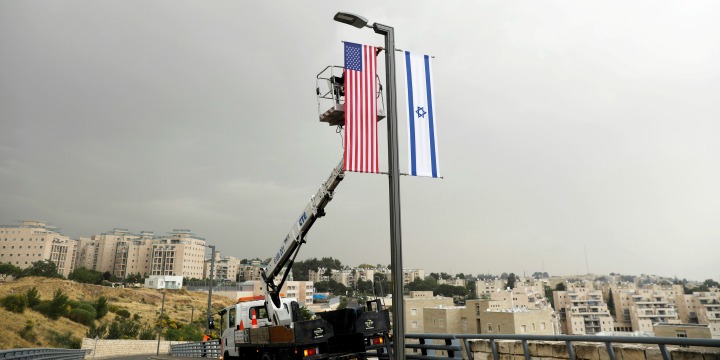
A worker on a crane hangs a US flag next to an Israeli flag near the site of the new US Embassy in Jerusalem, May 7, 2018. Photo: Reuters / Ronen Zvulun / File.
The Middle East has always been a place of universal truths. The first and most prominent is the belief that resolving the conflict between Israelis and Palestinians is the gateway to broader peace in the region. Solve the conflict and, in doing so, address all the other deep-rooted problems that affect the Middle East. Fail, and instability, war, and hatred will flourish.
However, the Middle East of today — shaken up by the Arab Spring revolts and alarmed by the rise of the Islamic Republic of Iran — is a profoundly different place than it was a decade ago. The decision by the Trump administration to recognize Jerusalem as Israel’s capital and relocate the embassy from Tel Aviv to Jerusalem is an acknowledgment of these new realities.
The timing of the decision and the reaction to it, especially from the Arab world, have revealed some remarkable truths about the New Middle East.
First, while most of the Arab world objected to the announcement by the Trump administration, they made a tactical decision not to back up their condemnation by any meaningful actions to support the Palestinians. Why? Because solving the Israeli-Palestinian peace process is no longer important enough for them to sacrifice more pressing security concerns.
The Arab Spring revolts shredded the myth that the Israeli-Palestinian conflict is the epicenter of war in the Middle East. The stability of the region has nothing to do with checkpoints between Gaza and its neighbors. Making peace between Jerusalem and Ramallah cannot rebuild the broken cities of Syria, nor can it end sectarian strife in Iraq or the civil war in Yemen.
The Arab world’s backing of the Palestinian cause has always been motivated by pragmatism rather than passion. Yet now it is the exact same pragmatism over Iran’s illicit nuclear and malign non-nuclear activities that brings Israel and its Arab neighbors closer together than ever before.
Against these changes, the US recognition of Jerusalem could inject new life into the stalled peace process, because it drives home to the Palestinians that unilateralism is no longer an attractive option and makes genuine peace negotiations the only viable solution.
Joshua S. Block is the president and CEO of The Israel Project, an educational organization focused on Israel and the Middle East and securing Israel’s future. This article was originally published in USA Today.