 Pod Save America Hosts Call on Democrats to Cut All Israel Military Aid, No Longer Accept AIPAC Funding
 Jews, Israelis Targeted in Austria Amid Surge in Antisemitic Incidents; Local Jewish Community Calls for Action
 ‘All of Our Strength’: Over 1,000 Pro-Israel Activists Gather in DC for Solidarity Conference
 ‘Devastated’: Wesley LePatner, Killed in Manhattan Mass Shooting, Was a Jewish Communal, Philanthropic Leader
 Sen. Angus King Vows to No Longer Vote for Israel Military Aid Until Gaza Conditions Improve
 Europe Won’t Pressure Israel to ‘Commit Suicide’ Amid Gaza Backlash, Palestinian State Push, Says Israeli FM
 Israel’s National Soccer Coach Attacked in Athens Before Soccer Fans Chant ‘F–K Israel, Free Palestine’ at Match
 New York Judge Sentences Neo-Nazi to 5 Years for Livestreaming Bomb Threats Against Jewish Hospitals
 US Pressures Lebanon to Issue Cabinet Decision to Disarm Hezbollah Before Talks Continue
 UK Plans to Recognize Palestinian State in September Unless Israel Meets Conditions, Starmer Says


‘By Supporting UNRWA, We Keep The Conflict Alive,’ Swiss Foreign Minister Declares After Visit to Jordan
Error: Contact form not found.
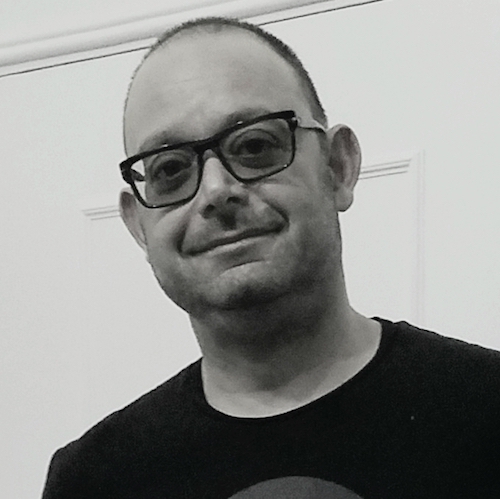 by Ben Cohen

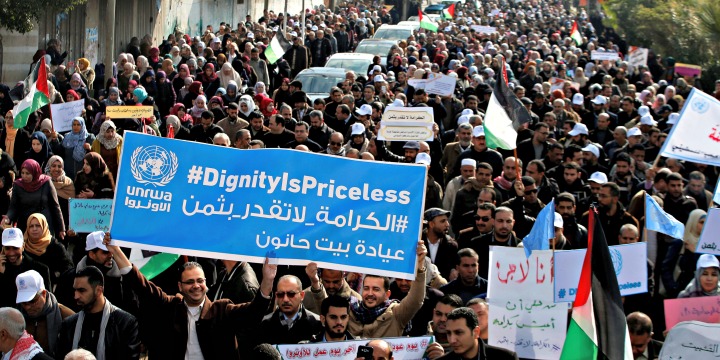
Palestinian employees of UNRWA in Gaza City demonstrate against the US decision in Jan 2018 to cut contributions to the agency. Photo: Reuters / Mohammed Salem.
In an unexpected departure from the international consensus in support of UNRWA — the UN body that sustains the descendants of the Palestinian refugees of the 1948 War of Independence — Switzerland’s foreign minister has stated that continued funding for the agency without the reform of its mandate is perpetuating the Palestinian conflict with Israel.
“Today [UNRWA] has become part of the problem,” Swiss Foreign Minister Ignazio Cassis told a group of Swiss journalists as he flew home from an official visit to Jordan on Thursday. “It provides the ammunition to continue the conflict. For as long as Palestinians live in refugee camps, they want to return to their homeland.”
Cassis continued: “By supporting UNRWA, we keep the conflict alive. It is a perverse logic, because actually everyone wants to end the conflict.”
The foreign minister said his interest in UNRWA’s future had been triggered by the US announcement in January that it was withholding $65 million out of a $125 million aid package earmarked for the agency.
In Cassis’ view, the US was taking “a big risk: millions of Palestinians could take to the streets.”
“When all UNRWA states refuse to provide funds, a machinery which provides stability breaks down,” he said. “This is a risk that Switzerland cannot afford — different from the US, perhaps.”
But he also argued that sustaining UNRWA in its present form — a policy that goes back to the agency’s formation in 1949 — no longer made sense for the international community. “Instead of supporting UNRWA schools and hospitals, we could support Jordanian institutions to promote the integration of Palestinian refugees,” Cassis suggested.
Saying that it was “unrealistic” for the 5 million Palestinians registered with UNRWA to “return” to what is now Israel, Cassis also questioned whether it was correct to refer to this population as “refugees,” a legal designation.
“The word ‘refugee’ in this case no longer corresponds to the meaning we attach to it,” Cassis remarked. “We speak of third-generation families who live not in actual camps but in cities. Most have a Jordanian passport. I wanted to visit the camps to get an idea why we still talk about refugees.”
In what might be seen as another departure from protocol, Cassis was also disarmingly frank about the attractions of Europe from the vantage point of the conflict-ridden Middle East.
“We are neither at war nor are we affected by economic sanctions. We trade goods and services worth more than a billion francs every day,” the foreign minister reflected, in answer to a question about Swiss economic negotiations with the EU. “But we are so spoiled by our prosperity, by the peace, that we realize too seldom how lucky we are.”