 Pod Save America Hosts Call on Democrats to Cut All Israel Military Aid, No Longer Accept AIPAC Funding
 Jews, Israelis Targeted in Austria Amid Surge in Antisemitic Incidents; Local Jewish Community Calls for Action
 ‘All of Our Strength’: Over 1,000 Pro-Israel Activists Gather in DC for Solidarity Conference
 ‘Devastated’: Wesley LePatner, Killed in Manhattan Mass Shooting, Was a Jewish Communal, Philanthropic Leader
 Sen. Angus King Vows to No Longer Vote for Israel Military Aid Until Gaza Conditions Improve
 Europe Won’t Pressure Israel to ‘Commit Suicide’ Amid Gaza Backlash, Palestinian State Push, Says Israeli FM
 Israel’s National Soccer Coach Attacked in Athens Before Soccer Fans Chant ‘F–K Israel, Free Palestine’ at Match
 New York Judge Sentences Neo-Nazi to 5 Years for Livestreaming Bomb Threats Against Jewish Hospitals
 US Pressures Lebanon to Issue Cabinet Decision to Disarm Hezbollah Before Talks Continue
 UK Plans to Recognize Palestinian State in September Unless Israel Meets Conditions, Starmer Says


South Korea Asks US for ‘Maximum Flexibility’ on Iran Sanctions Waiver
Error: Contact form not found.
 by Reuters and Algemeiner Staff

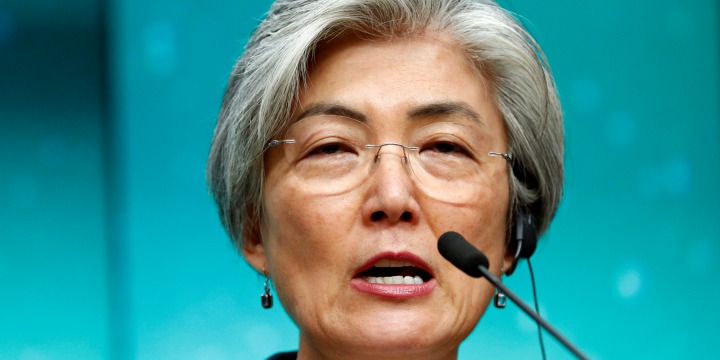
South Korean Foreign Minister Kang Kyung-Wha attends a news conference after the ASEM leaders summit in Brussels, Belgium, Oct. 19, 2018. Photo: Reuters / Francois Lenoir.
South Korea has asked the United States for “maximum flexibility” on its request for a waiver to prevent South Korean companies from being affected by renewed US sanctions against Iran, the Foreign Ministry said.
The sanctions against Iranian crude oil exports are set to take effect on Nov. 5 as part of President Donald Trump’s efforts to force Tehran to accede to a more restrictive deal on curbing its nuclear and missile program.
South Korea, a US ally and one of Asia’s biggest buyers of Iranian oil, has already stopped crude imports from Iran. South Korean building firms have also canceled energy-related contracts in Iran due to financing difficulties.
Foreign Minister Kang Kyung-wha asked for the exemption in a telephone call with US Secretary of State Mike Pompeo late on Monday, the ministry said in a statement.
“Minister Kang requested the US side exert maximum flexibility so that South Korea can secure an exemption to minimize the damage to our companies,” the ministry said.
Pompeo said he noted Seoul’s position and would continue discussions on the matter, the ministry said.
The exemption issue is the latest sign of strain between Seoul and Washington over a range of issues, especially the enforcement of sanctions aimed at limiting North Korea’s nuclear and missile program.
South Korea and Japan have been in talks with the United States in a bid to avoid adverse impacts from the reimposition of US sanctions on Iran. Both countries won waivers during the previous round of sanctions that ended in 2016, but Washington has adopted a more aggressive stance this time.
South Korean buyers of Iranian oil have cut their purchases in recent months due to expensive Middle East grades and uncertainty over trade with Iran. Imports of Iranian oil fell to zero in September for the first time since 2012.
Another risk for South Korean companies is that sanctions will make it difficult to receive and make payments in dollars for projects linked to Iran.
On Monday, Hyundai Engineering & Construction said it scrapped a 595 billion won ($521 million) deal to build a petrochemicals complex in Iran due to lack of financing.
In June, Daelim Industrial said a 2.23 trillion won contract to build a refinery project in Iran was canceled due to financing problems.