 Pod Save America Hosts Call on Democrats to Cut All Israel Military Aid, No Longer Accept AIPAC Funding
 Jews, Israelis Targeted in Austria Amid Surge in Antisemitic Incidents; Local Jewish Community Calls for Action
 ‘All of Our Strength’: Over 1,000 Pro-Israel Activists Gather in DC for Solidarity Conference
 ‘Devastated’: Wesley LePatner, Killed in Manhattan Mass Shooting, Was a Jewish Communal, Philanthropic Leader
 Sen. Angus King Vows to No Longer Vote for Israel Military Aid Until Gaza Conditions Improve
 Europe Won’t Pressure Israel to ‘Commit Suicide’ Amid Gaza Backlash, Palestinian State Push, Says Israeli FM
 Israel’s National Soccer Coach Attacked in Athens Before Soccer Fans Chant ‘F–K Israel, Free Palestine’ at Match
 New York Judge Sentences Neo-Nazi to 5 Years for Livestreaming Bomb Threats Against Jewish Hospitals
 US Pressures Lebanon to Issue Cabinet Decision to Disarm Hezbollah Before Talks Continue
 UK Plans to Recognize Palestinian State in September Unless Israel Meets Conditions, Starmer Says


Analysts: US Likely to Cut Number of Iran Oil Sanctions Waivers in May
Error: Contact form not found.
 by Reuters and Algemeiner Staff

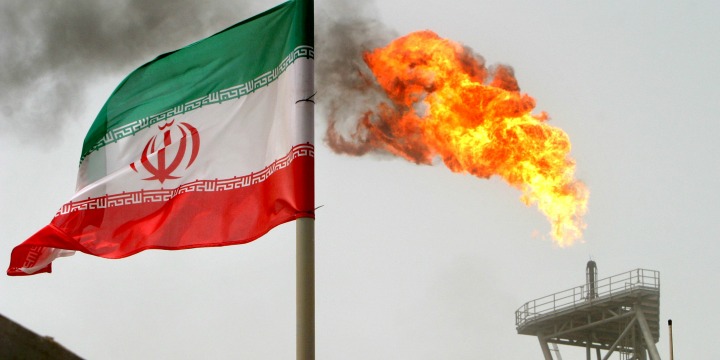
A gas flare on an oil production platform in the Soroush oilfields is seen alongside an Iranian flag in Iran, July 25, 2005. Photo: Reuters / Raheb Homavandi / File.
The United States is likely to extend waivers from sanctions on Iranian oil imports in May but will reduce the number of countries receiving them to placate top buyers China and India and to decrease the chance of higher oil prices, analysts said.
Washington surprised oil markets after granting waivers to eight Iranian oil buyers when the sanctions on oil imports started in November. Benchmark Brent crude futures fell 22 percent that month and the waivers influenced the Organization of the Petroleum Exporting Countries’ (OPEC) decision to agree in December to supply cuts starting in 2019.
Reducing the number of waivers will limit oil exports from Iran, the fourth-largest producer in OPEC, but the United States is unlikely to meet its earlier target of driving Iranian oil exports to zero.
China, India, Japan, South Korea and Turkey are likely to be given waivers after they expire in May that could cap Iran’s crude oil exports at about 1.1 million barrels per day, US-based analysts at Eurasia Group said on Thursday. That would remove Italy, Greece and Taiwan from the current waivers list.
“Other geopolitical priorities will moderate the administration’s desire to halt Iranian exports, particularly with Iran’s top two purchasers, China and India,” the analysts said.
“The reductions will probably hit the Iranian economy hard especially because President Hassan Rouhani’s administration is planning its budget around unrealistically high expectations for oil revenue.”
Asia’s Iranian crude imports fell to their lowest in more than five years in November when US sanctions took effect.
China and India continued to import Iranian oil from November while Turkey resumed imports in December.
South Korea is expected to receive condensate from Iran this month after a four-month halt while Japan’s shipments are still pending banks’ approval to process payment to Iran.
However, the United States is unlikely to completely removed Iranian oil from the market because the loss of that supply would probably result in a politically unpalatable increase in oil prices.
“Given (US) President Trump’s public affection for low oil prices, and the difficulty of getting countries like China and India to completely cut back, the White House will likely settle for less than zero next time though they may be able to achieve a reduction of several hundred thousand additional barrels,” Mike Tran, an analyst at RBC Capital Markets said on Thursday in a note.