 Pod Save America Hosts Call on Democrats to Cut All Israel Military Aid, No Longer Accept AIPAC Funding
 Jews, Israelis Targeted in Austria Amid Surge in Antisemitic Incidents; Local Jewish Community Calls for Action
 ‘All of Our Strength’: Over 1,000 Pro-Israel Activists Gather in DC for Solidarity Conference
 ‘Devastated’: Wesley LePatner, Killed in Manhattan Mass Shooting, Was a Jewish Communal, Philanthropic Leader
 Sen. Angus King Vows to No Longer Vote for Israel Military Aid Until Gaza Conditions Improve
 Europe Won’t Pressure Israel to ‘Commit Suicide’ Amid Gaza Backlash, Palestinian State Push, Says Israeli FM
 Israel’s National Soccer Coach Attacked in Athens Before Soccer Fans Chant ‘F–K Israel, Free Palestine’ at Match
 New York Judge Sentences Neo-Nazi to 5 Years for Livestreaming Bomb Threats Against Jewish Hospitals
 US Pressures Lebanon to Issue Cabinet Decision to Disarm Hezbollah Before Talks Continue
 UK Plans to Recognize Palestinian State in September Unless Israel Meets Conditions, Starmer Says


Key Document on Bezeq Could Clear Netanyahu in Case 4,000
Error: Contact form not found.
 by Israel Hayom / JNS.org

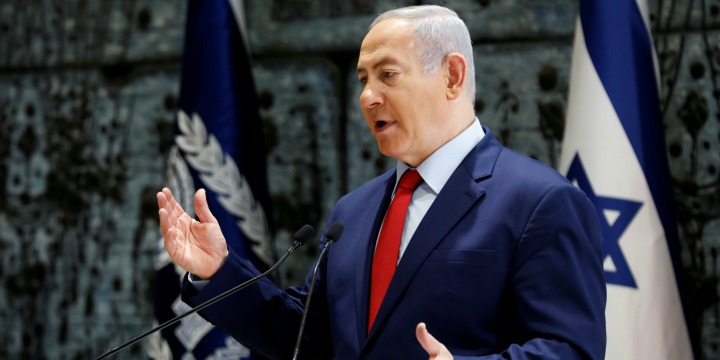
Israeli Prime Minister Benjamin Netanyahu, Dec. 24, 2018. Photo: Reuters / Amir Cohen / File.
JNS.org – A newly unearthed document could undermine a key premise in Case 4,000, a corruption case in which Prime Minister Benjamin Netanyahu is considered a suspect.
Case 4,000 centers on an alleged conflict of interest involving Netanyahu, Bezeq and the Walla news website, which Bezeq owns. The police allege that Bezeq’s controlling shareholder, Shaul Elovitch, ensured positive coverage of the Netanyahu family on Walla in exchange for the prime minister promoting government regulations favorable to Bezeq that would cement the telecom giant’s market share and be worth hundreds of millions of dollars to the corporation.
Police investigators say Netanyahu went out of his way to push for regulation that allowed Bezeq to merge with Yes, a provider of satellite TV, as part of the illicit deal with Elovitch. Investigators say this was clearly a quid pro quo because Netanyahu used his clout to override the objections among various officials in the Communications Ministry and expedited the approval process in a way that gave Elovitch favorable treatment.
But a new document from the minutes of a meeting held by the Communications Ministry’s Cable and Satellite Broadcasting Council on June 23, 2015 shows that the merger was approved without any objections and only after the proper procedures were followed.
According to the minutes, which were released after a freedom of information request by the Movement for Quality Government in Israel, a council chairwoman asked, “Who is in favor of the merger?” and then she rules: “The merger is approved unanimously.”
The minutes also show that three senior officials from the ministry who participated in the meeting did not voice any objection to the merger.
The council signed off on the merger, and only then did Netanyahu, as the newly appointed communication minister, sign off on the merger.
In fact, the council meeting was only the final step in a drawn-out regulatory process. Deliberations on the possible merger go back as early as 2004 and in March 2014, more than a year before Netanyahu became communications minister, the Israel Antitrust Authority gave it a green light.
Netanyahu became communications minister only in May 2015, about a month before the ministry’s regulatory council approved the merger. This means that he only had about a month in which he was in a position of influence in the decade-long approval process.