 Pod Save America Hosts Call on Democrats to Cut All Israel Military Aid, No Longer Accept AIPAC Funding
 Jews, Israelis Targeted in Austria Amid Surge in Antisemitic Incidents; Local Jewish Community Calls for Action
 ‘All of Our Strength’: Over 1,000 Pro-Israel Activists Gather in DC for Solidarity Conference
 ‘Devastated’: Wesley LePatner, Killed in Manhattan Mass Shooting, Was a Jewish Communal, Philanthropic Leader
 Sen. Angus King Vows to No Longer Vote for Israel Military Aid Until Gaza Conditions Improve
 Europe Won’t Pressure Israel to ‘Commit Suicide’ Amid Gaza Backlash, Palestinian State Push, Says Israeli FM
 Israel’s National Soccer Coach Attacked in Athens Before Soccer Fans Chant ‘F–K Israel, Free Palestine’ at Match
 New York Judge Sentences Neo-Nazi to 5 Years for Livestreaming Bomb Threats Against Jewish Hospitals
 US Pressures Lebanon to Issue Cabinet Decision to Disarm Hezbollah Before Talks Continue
 UK Plans to Recognize Palestinian State in September Unless Israel Meets Conditions, Starmer Says



In an interview with Beirut-based Al Mayadeen TV, Saturday, Nasrallah said Israel had only discovered some of Hezbollah’s tunnels and warned that Hezbollah could “at any moment” decide to respond differently to Israel’s actions in Syria, hinting that Tel Aviv might be a target.
Eizenkot said: “We were used to hearing him [Nasrallah] once a week. We haven’t heard from him in 10 weeks. We need to view his speech against the backdrop of the timing. Hezbollah is wrapping up five years of involvement in Syria with 2,000 killed, 9,000 wounded. The [Iranian expeditionary] Quds Force has transferred a billion dollars to [Hezbollah] over the years, and the [US] sanctions [on Iran] are having an impact on Hezbollah.”
According to Eizenkot, Hezbollah “wanted to send in thousands of fighters to conquer the Galilee. That’s the plan they were working on, just as Nasrallah said over a decade ago. What would the State of Israel look like if even 10 percent of the plan had been a success, and they wouldn’t have sent in 6,000 fighters to Israel, but just 600?”
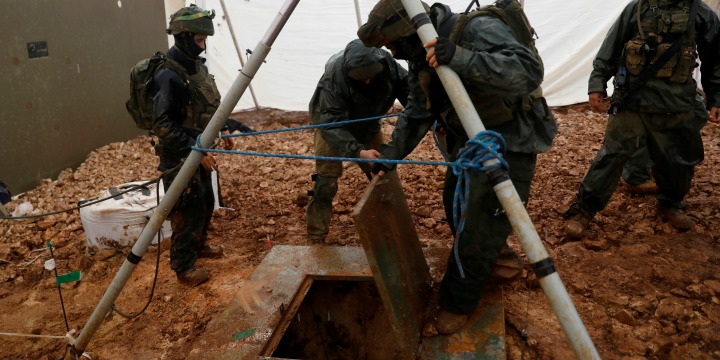
With Operation Northern Shield to expose and neutralize cross-border terror tunnels dug by Hezbollah under the Israel-Lebanon security fence now officially behind us, Eizenkot said, “This is an opportunity for the UN to demand the enforcement of [Resolution] 1701 [that ended the 2006 Second Lebanon War and calls for all armed organizations to remain north of Lebanon’s Litani River] in southern Lebanon and return Lebanon to the Lebanese. The Iranians in 2015 set out a grandiose vision to establish Iranian hegemony in Syria.”
Asked by the director of the Institute for National Security Studies and former Military Intelligence head Amos Yadlin about the erosion of Israel’s policy of ambiguity, Eizenkot said, “The policy of ambiguity that we adopted was the right [policy] and it remains the right [policy] today.”
Eizenkot noted that he recently told The New York Times that Israel has carried out thousands of strikes both inside and outside of Syria over the past four years.
“What we will reveal to the Israeli public is the fighting in Gaza and Judea and Samaria. All of this vast effort [against] the Iranian entrenchment, the high-trajectory weaponry, the underground threat, the contribution to the fight against Islamic State was concealed from the Israeli public, which can only judge what it sees. And it sees what is happening down south,” he said.
Prime Minister Benjamin Netanyahu also dismissed Nasrallah’s threats, saying the Iranian-backed group is “in distress” and “very embarrassed.”
Netanyahu told his cabinet on Sunday that the Hezbollah leader “broke his silence” in a televised address on Saturday because the terrorist group faced major financial pressure due to US sanctions against Iran, and because of Operation Northern Shield.
Nasrallah’s address was his first public appearance since November when Israel intensified strikes against suspected Iranian arms shipments to Hezbollah in Syria. He warned Netanyahu not to continue attacking Syria, lest he “drag the region into a war or a major confrontation.”
“Nasrallah has good reasons not to want to feel the might of our arm,” Netanyahu said.