 Pod Save America Hosts Call on Democrats to Cut All Israel Military Aid, No Longer Accept AIPAC Funding
 Jews, Israelis Targeted in Austria Amid Surge in Antisemitic Incidents; Local Jewish Community Calls for Action
 ‘All of Our Strength’: Over 1,000 Pro-Israel Activists Gather in DC for Solidarity Conference
 ‘Devastated’: Wesley LePatner, Killed in Manhattan Mass Shooting, Was a Jewish Communal, Philanthropic Leader
 Sen. Angus King Vows to No Longer Vote for Israel Military Aid Until Gaza Conditions Improve
 Europe Won’t Pressure Israel to ‘Commit Suicide’ Amid Gaza Backlash, Palestinian State Push, Says Israeli FM
 Israel’s National Soccer Coach Attacked in Athens Before Soccer Fans Chant ‘F–K Israel, Free Palestine’ at Match
 New York Judge Sentences Neo-Nazi to 5 Years for Livestreaming Bomb Threats Against Jewish Hospitals
 US Pressures Lebanon to Issue Cabinet Decision to Disarm Hezbollah Before Talks Continue
 UK Plans to Recognize Palestinian State in September Unless Israel Meets Conditions, Starmer Says


Qatar Says Economic Conditions for Israeli-Palestinian Peace Require ‘Fair Political Solutions’
Error: Contact form not found.
 by Reuters and Algemeiner Staff

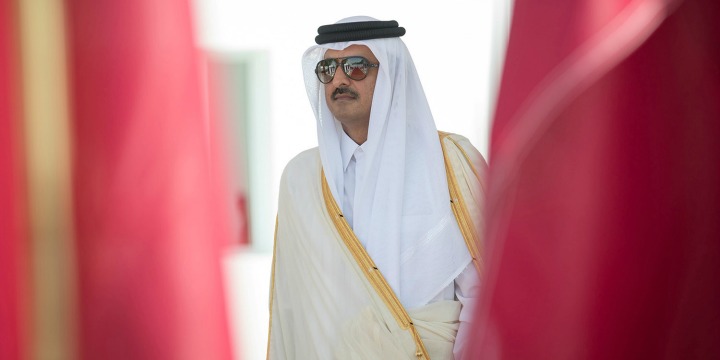
Qatar’s Emir Sheikh Tamim bin Hamad al-Thani attends the country’s consultative Shoura council in Doha, Qatar, November 6, 2018. Photo: Qatar News Agency/Handout via REUTERS.
Qatar said on Friday that economic development needed for Israeli-Palestinian peace could not be achieved without “fair political solutions” acceptable to Palestinians, referring to a US plan set to be unveiled next month.
The White House will lay out the first part of President Donald Trump’s long-awaited Israeli-Palestinian peace plan when it holds an international conference in Bahrain in late June.
The plan, touted by Trump as the “deal of the century,” is expected to encourage investment in the West Bank and Gaza Strip by Arab donor countries before grappling with thorny political issues at the heart of the conflict.
Palestinian officials have rebuked the US effort, which they believe will be heavily biased in favor of Israel.
Qatar’s Foreign Ministry, in a statement, commented on the upcoming conference: “Tackling these challenges requires sincerity of intent, concerted efforts from regional and international players, and appropriate political conditions for economic prosperity.”
“These conditions would not be achieved without fair political solutions to the issues of the peoples of the region, especially the Palestinian issue, in accordance with a framework acceptable to the brotherly Palestinian people,” the statement said.
Qatar, a close US ally and home to its largest Middle East air base, has poured millions of dollars into the impoverished Gaza Strip over the past year to boost its ailing economy, and this month pledged an additional $480 million to support both Gaza and the West Bank.
The tiny Gulf state has not said whether it will attend the June 25-26 conference in Manama, which is expected to include representatives and business executives from Europe, the Middle East, and Asia, including some finance ministers.
Chief among the Palestinians’ concerns is whether the plan will meet their core demand of calling for them to have an independent state in the West Bank, eastern Jerusalem, and the Gaza Strip — territory Israel captured in the 1967 Arab-Israeli war.
Trump’s Middle East team, led by his senior adviser and son-in-law Jared Kushner, has declined to say whether the plan includes a two-state solution, a central goal of other recent peace efforts that is widely endorsed internationally.