 Pod Save America Hosts Call on Democrats to Cut All Israel Military Aid, No Longer Accept AIPAC Funding
 Jews, Israelis Targeted in Austria Amid Surge in Antisemitic Incidents; Local Jewish Community Calls for Action
 ‘All of Our Strength’: Over 1,000 Pro-Israel Activists Gather in DC for Solidarity Conference
 ‘Devastated’: Wesley LePatner, Killed in Manhattan Mass Shooting, Was a Jewish Communal, Philanthropic Leader
 Sen. Angus King Vows to No Longer Vote for Israel Military Aid Until Gaza Conditions Improve
 Europe Won’t Pressure Israel to ‘Commit Suicide’ Amid Gaza Backlash, Palestinian State Push, Says Israeli FM
 Israel’s National Soccer Coach Attacked in Athens Before Soccer Fans Chant ‘F–K Israel, Free Palestine’ at Match
 New York Judge Sentences Neo-Nazi to 5 Years for Livestreaming Bomb Threats Against Jewish Hospitals
 US Pressures Lebanon to Issue Cabinet Decision to Disarm Hezbollah Before Talks Continue
 UK Plans to Recognize Palestinian State in September Unless Israel Meets Conditions, Starmer Says



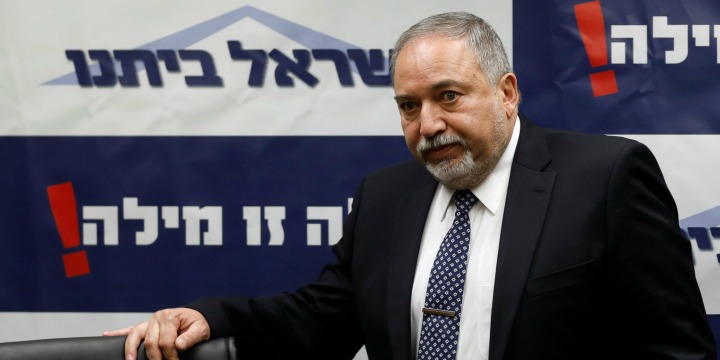
The answer lies with Yisrael Beiteinu chairman Avigdor Lieberman’s sense of power. He is convinced that Israeli Prime Minister Benjamin Netanyahu will not be able to swear in a government without him, not now and not after the next election.
Lieberman has always had a de facto monopoly over the so-called “Russian electorate” in Israel, and it is this that has contributed to his sense of power even during tough political times.
Russian-speaking voters have allied themselves with Lieberman because other Israeli politicians have repeatedly ignored them. The left stopped caring about them because they have right-wing views, and the right has simply given up trying to convince them to ditch Lieberman.
About 75 percent of Russian-speaking voters say they support the right, but this electorate is significantly underrepresented in right-wing political circles despite being one of its main pillars of support, along with national religious voters, who are duly represented in many right-wing circles.
The neglect of Russian-speaking voters dealt a crushing blow to two right-wing parties in the April 9 election. The New Right, headed by Education Minister Naftali Bennett and Justice Minister Ayelet Shaked, did not place any Russian speakers on their candidate list. This was part of why the party failed to pass the minimum electoral threshold and won zero Knesset seats.
Likewise, the Likud ignored this electorate (not for the first time), with zero campaigning on the Russian street and zero Russian candidates. This was a tactical decision, the idea being to not take votes from Lieberman so as to minimize the risk of Yisrael Beiteinu not passing the electoral threshold.
This was a mistake that might cost all of us dearly, because Lieberman and Netanyahu are now engaged in a tit-for-tat that could result in a new election being called, sending millions of shekels down the drain. Had Likud courted the Russian vote, the party might have gained another five seats.
Former Likud Prime Minister Menachem Begin brought into his tent voters of Middle Eastern and North African descent, and this ensured the Likud would continue to be in power for many more years.
The right must strike a similar bond with Israelis from the former Soviet Union. It is high time that the Israeli right tapped the vast potential of this group, welcomed them into its fold and gave them leadership positions. Likud, being the party in power, should lead this effort. Hopefully, this will result in a small party like Yisrael Beiteinu no longer being necessary — and no longer being in a position to make over-the-top demands.
Ariel Bolstein is the founder of the Israel-advocacy organization Faces of Israel. This column first appeared in Israel Hayom.