 Pod Save America Hosts Call on Democrats to Cut All Israel Military Aid, No Longer Accept AIPAC Funding
 Jews, Israelis Targeted in Austria Amid Surge in Antisemitic Incidents; Local Jewish Community Calls for Action
 ‘All of Our Strength’: Over 1,000 Pro-Israel Activists Gather in DC for Solidarity Conference
 ‘Devastated’: Wesley LePatner, Killed in Manhattan Mass Shooting, Was a Jewish Communal, Philanthropic Leader
 Sen. Angus King Vows to No Longer Vote for Israel Military Aid Until Gaza Conditions Improve
 Europe Won’t Pressure Israel to ‘Commit Suicide’ Amid Gaza Backlash, Palestinian State Push, Says Israeli FM
 Israel’s National Soccer Coach Attacked in Athens Before Soccer Fans Chant ‘F–K Israel, Free Palestine’ at Match
 New York Judge Sentences Neo-Nazi to 5 Years for Livestreaming Bomb Threats Against Jewish Hospitals
 US Pressures Lebanon to Issue Cabinet Decision to Disarm Hezbollah Before Talks Continue
 UK Plans to Recognize Palestinian State in September Unless Israel Meets Conditions, Starmer Says


Qatar Says It Has Reservations About Arab Statements on Iran
Error: Contact form not found.
 by Reuters and Algemeiner Staff

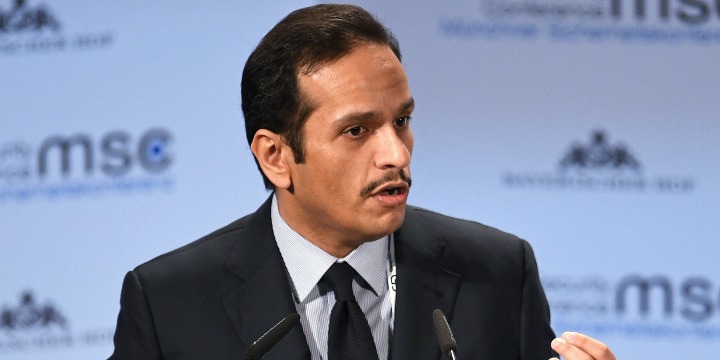
Qatari FM Sheikh Mohammed bin Abdulrahman Al-Thani speaks at the annual Munich Security Conference in Germany, Feb. 17, 2019. Photo: Reuters / Andreas Gebert.
Qatar said on Sunday it has reservations about hardline statements on Iran made at emergency summits of Gulf and wider Arab states called by Saudi Arabia, becoming the second Arab country to reject the statement following Iraq.
Qatar’s foreign minister, Sheikh Mohammed bin Abdulrahman Al-Thani, said statements at the summits were not adopted using traditional procedures.
“The statements condemned Iran but did not refer to a moderate policy to speak with Tehran,” he said in remarks reported by Qatar’s state-owned Al Jazeera television.
“They adopted Washington policy toward Iran, rather than a policy that puts neighborhood with Iran into consideration,” he added.
Saudi Arabia’s King Salman convened the emergency summits on May 30 to discuss drone strikes on oil installations in Saudi Arabia and attacks on four vessels, including two Saudi oil tankers, off the United Arab Emirates coast.
Qatari Prime Minister Abdullah bin Nasser Al Thani, whose country hosts the largest US military base in the region, attended the summits, the most senior Qatari official to visit the kingdom since Saudi Arabia, the United Arab Emirates, Bahrain and Egypt imposed an economic and diplomatic boycott on Qatar in 2017. The embargo was imposed over allegations that Qatar supports terrorism and is aligning itself with regional foe Iran. Qatar denies the allegations.
The right of Saudi Arabia and the United Arab Emirates to defend their interests after the attacks on oil pumping stations in the kingdom and tankers off the UAE were supported in a Gulf Arab statement and a separate communique issued after the wider summit.
Tehran denies any involvement in the attacks. In a sign of regional tensions, Iraq, which has good ties with neighboring Iran and with Washington, said it objected to the Arab communique, which stated that any cooperation with Tehran should be based on “non-interference in other countries.”
US National Security Adviser John Bolton said on Thursday that evidence of Iran being behind the tanker attacks would be presented to the UN Security Council as early as next week.
Tensions have risen between the United States and Iran after US President Donald Trump a year ago withdrew Washington from a 2015 international nuclear deal with Iran, re-imposed sanctions and boosted its military presence in the Gulf.





