 Pod Save America Hosts Call on Democrats to Cut All Israel Military Aid, No Longer Accept AIPAC Funding
 Jews, Israelis Targeted in Austria Amid Surge in Antisemitic Incidents; Local Jewish Community Calls for Action
 ‘All of Our Strength’: Over 1,000 Pro-Israel Activists Gather in DC for Solidarity Conference
 ‘Devastated’: Wesley LePatner, Killed in Manhattan Mass Shooting, Was a Jewish Communal, Philanthropic Leader
 Sen. Angus King Vows to No Longer Vote for Israel Military Aid Until Gaza Conditions Improve
 Europe Won’t Pressure Israel to ‘Commit Suicide’ Amid Gaza Backlash, Palestinian State Push, Says Israeli FM
 Israel’s National Soccer Coach Attacked in Athens Before Soccer Fans Chant ‘F–K Israel, Free Palestine’ at Match
 New York Judge Sentences Neo-Nazi to 5 Years for Livestreaming Bomb Threats Against Jewish Hospitals
 US Pressures Lebanon to Issue Cabinet Decision to Disarm Hezbollah Before Talks Continue
 UK Plans to Recognize Palestinian State in September Unless Israel Meets Conditions, Starmer Says



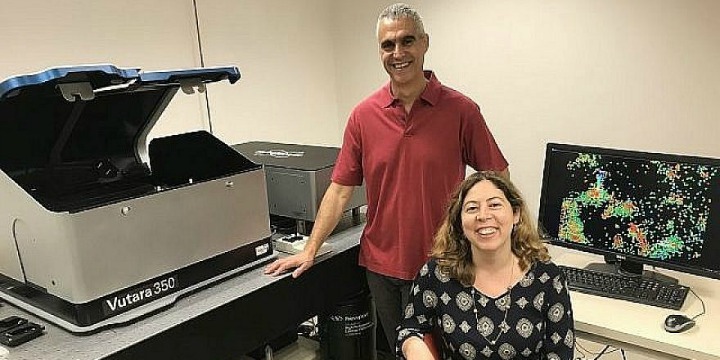
The study was conducted in collaboration with Cambridge University, which provided a mouse model for Parkinson’s disease that allowed the scientists to study the different stages of the accumulation of alpha-synuclein.
The Israeli scientists also teamed up with Max Planck Institute in Gottingen and Ludwig-Maximilians-Universität München to study the effects of a drug called anle138b on the protein and found a reversal of motoric behaviors in the treated mice.
The research was published on June 5 in the Acta Neuropathologicamedical journal.
Authors Professor Uri Ashery, head of the Sagol School of Neuroscience at Tel Aviv University, and Dr. Dana Bar-On, also of the Sagol School of Neuroscience, said the research was promising due to the potential for detection and treatment of Parkinson’s before symptoms even develop and in a minimally invasive manner.
Approximately 10 million people worldwide are affected by Parkinson’s disease.