 Pod Save America Hosts Call on Democrats to Cut All Israel Military Aid, No Longer Accept AIPAC Funding
 Jews, Israelis Targeted in Austria Amid Surge in Antisemitic Incidents; Local Jewish Community Calls for Action
 ‘All of Our Strength’: Over 1,000 Pro-Israel Activists Gather in DC for Solidarity Conference
 ‘Devastated’: Wesley LePatner, Killed in Manhattan Mass Shooting, Was a Jewish Communal, Philanthropic Leader
 Sen. Angus King Vows to No Longer Vote for Israel Military Aid Until Gaza Conditions Improve
 Europe Won’t Pressure Israel to ‘Commit Suicide’ Amid Gaza Backlash, Palestinian State Push, Says Israeli FM
 Israel’s National Soccer Coach Attacked in Athens Before Soccer Fans Chant ‘F–K Israel, Free Palestine’ at Match
 New York Judge Sentences Neo-Nazi to 5 Years for Livestreaming Bomb Threats Against Jewish Hospitals
 US Pressures Lebanon to Issue Cabinet Decision to Disarm Hezbollah Before Talks Continue
 UK Plans to Recognize Palestinian State in September Unless Israel Meets Conditions, Starmer Says


Beware of the Sanctions Busters
Error: Contact form not found.
 by Paul Miller / JNS.org

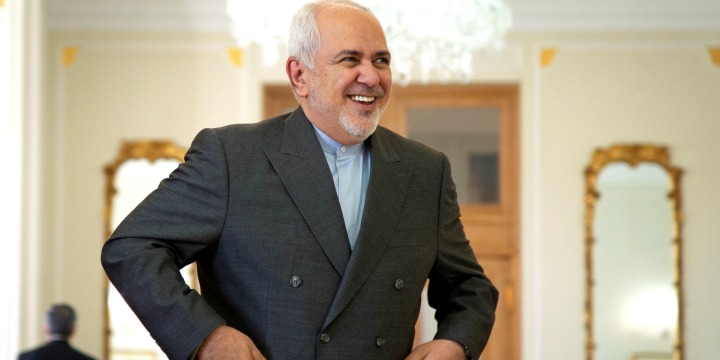
Iran’s Foreign Minister Mohammad Javad Zarif is seen before meeting with Oman’s Minister of State for Foreign Affairs Yousuf bin Alawi bin Abdullah (not pictured) in Tehran, Iran July 27, 2019. Photo: Nazanin Tabatabaee/WANA (West Asia News Agency) via Reuters.
JNS.org – The new US sanctions against Iran’s Foreign Minister Mohammad Javad Zarif mark the Trump administration’s latest crackdown on the Islamic Republic’s destabilizing behavior. Yet while levying sanctions is one thing, enforcing them is another matter entirely.
Continuously escalating tensions in the Persian Gulf come as Donald Trump urges the international community to cease doing business with the Iranians for the purpose of not only forcing Tehran to curb its nuclear program, but also to end its ballistic-missile program, support for terrorism, and regional aggression.
Despite some grumbling, especially in Europe, most countries have acceded to Trump’s demands, either out of fear of coming into conflict with “hard-hitting” US sanctions, or out of genuine concern over Iran’s threats.
With new British Prime Minister Boris Johnson assuming office at 10 Downing Street, the United Kingdom is also taking a sterner approach towards Iranian aggression, as London has rejected the possibility of swapping seized oil tankers with Tehran. The United Kingdom reportedly might even follow the United States in pulling out of the Iran nuclear deal.
Even Iran’s top two oil importers, China and India, the former of which is locked in a trade war with America, appear to be cutting back on ties with Iran.
But with most of the world looking to stay out of Trump’s crosshairs, Armenia, which shares a small border with northern Iran, may be offering the mullahs one of their best escape routes from crippling American sanctions.
On his US visit in mid-July, Armenia’s parliament speaker Ararat Mirzoyan said his nation “would like the United States to not put pressure on Armenia to be involved in the agenda of sanctions against Iran.” While Mirzoyan’s new comments have clearly spelled out why the Trump administration should be concerned about Armenia’s potential to subvert sanctions, such concerns should also be viewed within the broader context of Armenia-Iran relations.
In February, Armenian Prime Minister Nikol Pashinyan visited Tehran to meet with Iranian President Hassan Rouhani and Supreme Leader Ayatollah Ali Khamenei. While this trip might not seem problematic on the surface, the rhetoric emerging from the meeting was alarming.
After meeting Pashinyan, Rouhani said, “We expressed satisfaction over Armenia’s position toward the sanctions imposed on Iran. The goal of our two countries is to push forward in accordance with our interests and not to allow any third country to interfere in these projects and cooperation.”
While most countries are avoiding business with Iran, Armenian-Iranian trade hit a record high of $364 million in 2018. And that is no coincidence. Armenia inaugurated a free economic zone in its southernmost city of Mehri along the Iranian border in December 2017.
Armenia’s current leadership also appears unfazed by US sanctions. Following last year’s visit to Yerevan by National Security Advisor John Bolton — a key architect of American pressure on Iran — Pashinyan dismissed the notion of diminished Armenian ties with Tehran. But perhaps even more troubling for America is Armenia’s apparent effort to play an active role in helping Iran evade US sanctions.
A proposed new gas deal with Iran, which would transport Iranian gas through Armenia to Georgia, could run afoul of US sanctions. Armenia’s current gas imports from Iran are exempt from sanctions under existing barter agreements, but any new agreements could draw the ire of the United States. In other words: Armenia is the sanctions buster whose behavior could undermine Trump’s ambitions to curb Iranian aggression.
In fact, Armenia has a history of helping Iran skirt international sanctions. In 2012, a Reuters report exposed how Armenian banks assisted Iran through illicit banking that allowed Tehran to “obfuscate payments to and from foreign clients and deceive Western intelligence agencies trying to prevent it from expanding its nuclear and missile programs.”
More recently, the US Treasury Department sanctioned Armenia-based Flight Travel LLC for its connection to Iranian Mahan Air, which is linked to Iran’s Islamic Revolutionary Guard Corps, a newly designated foreign terrorist organization.
For Trump, the blueprint should be clear: Beware of sanctions busters such as Armenia, which could sabotage efforts to crack down on Tehran, and instead focus on cultivating geopolitically sensible partnerships with states who share American values and interests. The wrong strategic choices could mean the amplification of Iranian aggression.
Paul Miller is president and executive director of the news and public-policy group the Haym Salomon Center. Follow him on Twitter @pauliespoint.