 Pod Save America Hosts Call on Democrats to Cut All Israel Military Aid, No Longer Accept AIPAC Funding
 Jews, Israelis Targeted in Austria Amid Surge in Antisemitic Incidents; Local Jewish Community Calls for Action
 ‘All of Our Strength’: Over 1,000 Pro-Israel Activists Gather in DC for Solidarity Conference
 ‘Devastated’: Wesley LePatner, Killed in Manhattan Mass Shooting, Was a Jewish Communal, Philanthropic Leader
 Sen. Angus King Vows to No Longer Vote for Israel Military Aid Until Gaza Conditions Improve
 Europe Won’t Pressure Israel to ‘Commit Suicide’ Amid Gaza Backlash, Palestinian State Push, Says Israeli FM
 Israel’s National Soccer Coach Attacked in Athens Before Soccer Fans Chant ‘F–K Israel, Free Palestine’ at Match
 New York Judge Sentences Neo-Nazi to 5 Years for Livestreaming Bomb Threats Against Jewish Hospitals
 US Pressures Lebanon to Issue Cabinet Decision to Disarm Hezbollah Before Talks Continue
 UK Plans to Recognize Palestinian State in September Unless Israel Meets Conditions, Starmer Says


Argentina Opposition Scores Big Primary Win, Hurting Macri’s Re-election Bid
Error: Contact form not found.
 by Reuters and Algemeiner Staff

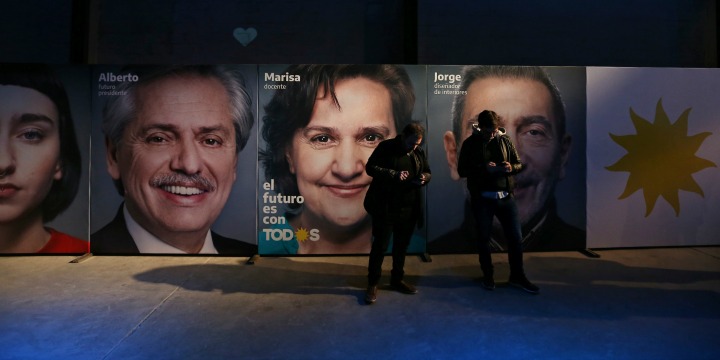
Guests wait for the arrival of presidential candidate Alberto Fernandez during the primary elections, at a cultural centre in Buenos Aires, Argentina, August 11, 2019. Photo: REUTERS/Agustin Marcarian.
Argentine voters soundly rejected President Mauricio Macri’s austere economic policies in primary elections on Sunday, raising serious questions about his chances of re-election in October, early official results showed.
A coalition backing opposition candidate Alberto Fernandez – whose running mate is former president Cristina Fernandez – led by a wider-than-expected 14 percentage points with 47.1 percent of votes, with fourth-fifths of ballots counted.
On Sunday, Macri told supporters the primary vote was a “bad election” for his coalition ahead of the official results.
“Recognizing that we have had a bad election, that forces us, starting tomorrow, to redouble our efforts so that in October we will get the support that is needed to continue the change,” Macri said.
“This is something that nobody expected. Nobody had these numbers. All the pollsters have failed.”
Analysts predict a slide in Argentine stock and bond prices when financial markets open on Monday if Fernandez records a lead of more than five to six percentage points – slightly more than the level predicted in recent opinion polls.
There could be an even stronger degree of market volatility if final results show that Fernandez has enough support to clinch the presidency in October’s first round, analysts said.
In order to win the presidency outright, a candidate needs at least 45 percent of the vote or 40 percent and a difference of 10 percentage points over the second-place runner. If there is no clear winner, voters will return for a run-off on Nov. 24.
Argentina’s main political parties have already chosen their presidential nominees, allowing the primary to serve as the first concrete measure of voter sentiment after opinion polls showed a narrow margin between Macri and Fernandez.
Voters were given a stark choice, stay the course of painful austerity measures under Macri or a return to interventionist economics.
Fernandez has promised access to free medicines for retirees and better wages for workers while hammering Macri for the uptick in poverty and unemployment.
Re-electing Macri would mean seeing through painful cuts in public spending as part of the $57 billion standby agreement he negotiated with the International Monetary Fund last year.
Yet Macri is hoping some recent glimmers of economic revival are enough to encourage voters to stick with his free-markets reform agenda despite a painful recession and 55 percent inflation.