 Pod Save America Hosts Call on Democrats to Cut All Israel Military Aid, No Longer Accept AIPAC Funding
 Jews, Israelis Targeted in Austria Amid Surge in Antisemitic Incidents; Local Jewish Community Calls for Action
 ‘All of Our Strength’: Over 1,000 Pro-Israel Activists Gather in DC for Solidarity Conference
 ‘Devastated’: Wesley LePatner, Killed in Manhattan Mass Shooting, Was a Jewish Communal, Philanthropic Leader
 Sen. Angus King Vows to No Longer Vote for Israel Military Aid Until Gaza Conditions Improve
 Europe Won’t Pressure Israel to ‘Commit Suicide’ Amid Gaza Backlash, Palestinian State Push, Says Israeli FM
 Israel’s National Soccer Coach Attacked in Athens Before Soccer Fans Chant ‘F–K Israel, Free Palestine’ at Match
 New York Judge Sentences Neo-Nazi to 5 Years for Livestreaming Bomb Threats Against Jewish Hospitals
 US Pressures Lebanon to Issue Cabinet Decision to Disarm Hezbollah Before Talks Continue
 UK Plans to Recognize Palestinian State in September Unless Israel Meets Conditions, Starmer Says


Israel to Award $2.6 Million to a Supermarket Chain That Commits to Using More Packaging
Error: Contact form not found.
 by Tofi Stoler / CTech

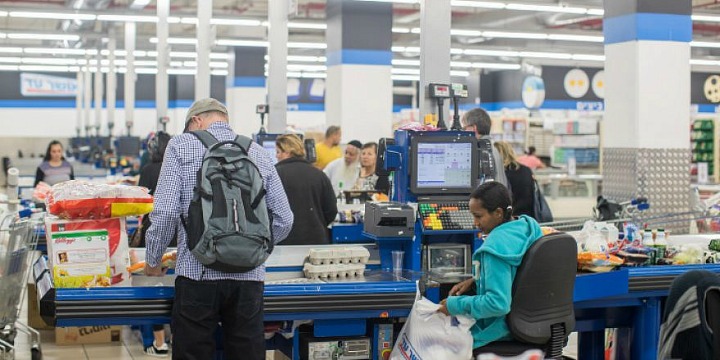
Shoppers in Osher Ad Supermarket branch in Talpiot, Jerusalem, on Nov. 12, 2017. Photo: Yonatan Sindel/Flash90.
CTech – The Israeli government wants to see local food retailers use more packaging. On Sunday, Israel’s Ministry of Agriculture and Rural Development announced it would award one supermarket chain an NIS 9.5 million (approximately $2.6 million) grant, as part of a pilot program that would see food retailers pre-package produce.
Most fresh produce in Israel is currently sold in bulk, allowing consumers to choose the exact amounts they require and make independent choices about the use of packaging. According to the new plan — which the ministry claims would help prevent food waste by protecting produce from damage and providing optimal conditions — tomatoes, cucumbers, bell peppers, eggplants, zucchinis, apples, pears, bananas, peaches, nectarines, avocados, and mandarins, will all come pre-packed in packages available in two sizes.
According to the ministry, between 20 percent and 52 percent of fresh produce in Israel is wasted. The rate of depreciation of produce in shops is estimated at 15 percent-17 percent and 40 percent at the consumer’s home, the ministry said. The data presented by the ministry shows the most sensitive produce are bananas with a 17 percent depreciation rate, tomatoes with 16 percent, and cucumbers with 15 percent. The ministry estimates the program would decrease the amount of wasted produce in shops and at the consumer’s home by 10 percent-15 percent and 20 percent-25 percent, respectively.
The grant will be awarded to the chain whose plans to package the produce are deemed the most sustainable according to criteria set by the ministry, which include the degree in which the packaging materials can be recycled or reused. Extra points will be given to retailers that agree to collect and return a deposit on the packaging, to those who will use additional means to prolong the shelf life of produce, such as refrigerated shelves, and to those who will provide consumers with ways of keeping produce fresh longer at home.
The winning chain will have to implement its suggested policy in 20 stores across the country over a period of three years in which the ministry will examine whether the program has indeed contributed to significantly reducing food waste throughout the supply chain. The ministry will also check to determine whether this reduction resulted in decreased greenhouse gas emissions after taking into account the added pollution created by the production and recycling process of the packaging.