 Pod Save America Hosts Call on Democrats to Cut All Israel Military Aid, No Longer Accept AIPAC Funding
 Jews, Israelis Targeted in Austria Amid Surge in Antisemitic Incidents; Local Jewish Community Calls for Action
 ‘All of Our Strength’: Over 1,000 Pro-Israel Activists Gather in DC for Solidarity Conference
 ‘Devastated’: Wesley LePatner, Killed in Manhattan Mass Shooting, Was a Jewish Communal, Philanthropic Leader
 Sen. Angus King Vows to No Longer Vote for Israel Military Aid Until Gaza Conditions Improve
 Europe Won’t Pressure Israel to ‘Commit Suicide’ Amid Gaza Backlash, Palestinian State Push, Says Israeli FM
 Israel’s National Soccer Coach Attacked in Athens Before Soccer Fans Chant ‘F–K Israel, Free Palestine’ at Match
 New York Judge Sentences Neo-Nazi to 5 Years for Livestreaming Bomb Threats Against Jewish Hospitals
 US Pressures Lebanon to Issue Cabinet Decision to Disarm Hezbollah Before Talks Continue
 UK Plans to Recognize Palestinian State in September Unless Israel Meets Conditions, Starmer Says


Iraq Resists US Pressure to Reduce Iranian Gas Imports
Error: Contact form not found.
 by Reuters and Algemeiner Staff

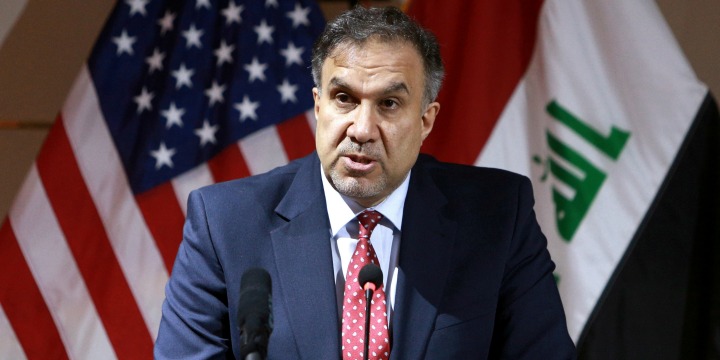
Iraqi Minister of Electricity Luay Al Khateeb speaks speaks during a press conference in Baghdad, Dec. 11, 2018. Photo: Hadi Mizban / Pool via Reuters / File.
Iraq will struggle to generate enough electricity unless it continues to use Iranian gas for three to four more years, the electricity minister said on Tuesday, resisting US pressure to stop the imports from its Middle East neighbor.
Iranian oil exports have tumbled since the United States imposed new sanctions on Iran this year, seeking to isolate the Islamic Republic in a row over its nuclear ambitions.
Iraq has a US waiver to import Iranian gas, but Washington has been pressing Baghdad to phase them out.
“At the end of the day it is an open market,” Electricity Minister Luay al Khateeb told reporters on the sidelines of the World Energy Congress in Abu Dhabi. “The issue of electricity is regularly becoming a political affair in Iraq.”
Power cuts in Iraq have often prompted protests against the authorities. Iran supplies enough gas to power 2,500 megawatts (MW), as well as providing Iraq with 1,200 MW in direct power supplies.
The minister said Iraq now had capacity for 18,000 MW, up from 12,000-15,000 MW last year but still below peak demand that could reach about 25,000 MW and was rising every year.
Exports of gas to Iraq and exports of refined products to global markets remain an important source of revenues for Iran.
“We have balanced relations with everyone and people should respect it,” al Khateeb when asked about rising US pressure over its Iranian energy supplies.
The minister said the power sector needed investment worth at least $30 billion to upgrade the grid, which was 50 years old and had lost 25 percent of its capacity due to Islamic State attacks.
Al Khateeb said Iraq was paying for Iranian gas based on a formula averaging around 11 percent of the price of benchmark Brent crude oil or about $6 per million British thermal unit (MBTU). This compares to $2-$3 per MBTU in the oversupplied US market.
Iranian gas imports could be reduced if Iraq used more of its gas reserves rather than flaring it, or burning off the associated gas that is produced during oil extraction.
Oil Minister Thamer Ghadhban said four projects were underway to help convert 1.2 billion cubic feet of associated gas into liquids and significantly reduce flaring.