 Pod Save America Hosts Call on Democrats to Cut All Israel Military Aid, No Longer Accept AIPAC Funding
 Jews, Israelis Targeted in Austria Amid Surge in Antisemitic Incidents; Local Jewish Community Calls for Action
 ‘All of Our Strength’: Over 1,000 Pro-Israel Activists Gather in DC for Solidarity Conference
 ‘Devastated’: Wesley LePatner, Killed in Manhattan Mass Shooting, Was a Jewish Communal, Philanthropic Leader
 Sen. Angus King Vows to No Longer Vote for Israel Military Aid Until Gaza Conditions Improve
 Europe Won’t Pressure Israel to ‘Commit Suicide’ Amid Gaza Backlash, Palestinian State Push, Says Israeli FM
 Israel’s National Soccer Coach Attacked in Athens Before Soccer Fans Chant ‘F–K Israel, Free Palestine’ at Match
 New York Judge Sentences Neo-Nazi to 5 Years for Livestreaming Bomb Threats Against Jewish Hospitals
 US Pressures Lebanon to Issue Cabinet Decision to Disarm Hezbollah Before Talks Continue
 UK Plans to Recognize Palestinian State in September Unless Israel Meets Conditions, Starmer Says


US Sanctions on Iran Threaten Access to Certain Medicines: Report
Error: Contact form not found.
 by Reuters and Algemeiner Staff

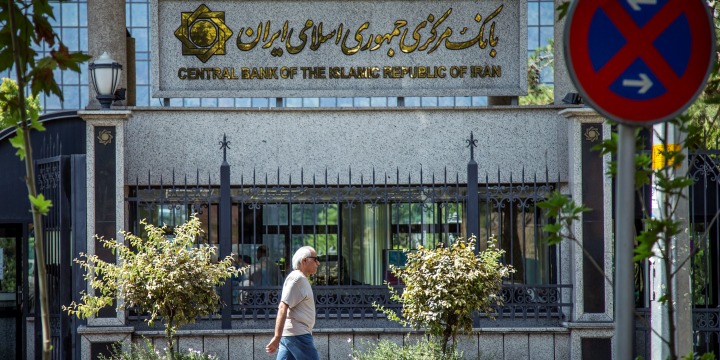
A man walks past the Central Bank of Iran in Tehran, Aug. 1, 2019. Photo: Nazanin Tabatabaee / WANA (West Asia News Agency) via Reuters.
US sanctions on Iran threaten access by some Iranians to medicines that treat diseases such as cancer and epilepsy, despite exemptions in the measures for imports of humanitarian goods, a report said on Tuesday.
“There’s no acute nationwide shortage of medicine in Iran at this point,” Tara Sepehri Far, a researcher at Human Rights Watch and an author of the report, said at the Atlantic Council think tank in Washington. “But people who are suffering from rare and special diseases are already seeing the negative effect of sanctions.”
If the situation does not change, “we expect the harm to be even greater,” Far said.
Iran’s MAHAK Pediatric Cancer Treatment & Research Center lacked three key chemotherapy drugs — pegaspargase, mercaptopurine and vinblastine — in May, the report said.
Hundreds of people who have epidermolysis bullosa, or EB, a type of disease that causes fragile, blistering skin, had difficulty accessing medicine after the sanctions were imposed, it said.
Food, medicine and other humanitarian supplies are exempt from sanctions that Washington reimposed last year after President Donald Trump walked away from a 2015 international deal over Iran’s nuclear program.
But the US measures targeting everything from oil sales to shipping and financial activities have deterred several foreign banks from doing business with Iran, including humanitarian deals. Imports of grain have been slowed as well.
As oil exports fall, it could result in higher inflation and affect the affordability of medicine, the report said.
‘Corruption and mismanagement’
In response to the report, a US Treasury Department official said exceptions to the sanctions allowed the sale of agricultural commodities, food, medicine and medical devices to Iran. “The people of Iran have long suffered from the regime’s corruption and mismanagement,” the official said on condition of anonymity.
A mechanism the Treasury Department introduced last week will facilitate humanitarian exports to Iran, the official said.
A senior administration official told Reuters this month that any drug shortages represented the Iranian government’s prioritization of its missile program and other initiatives.
The official conceded that slowdowns in some drug imports were possible, but put the onus on Tehran, which the official said must address corruption in the medicine trade. “To blame us for that is a little more than just disingenuous,” said the official, who spoke on condition of anonymity.
Last week, the Treasury and State Departments said the administration’s new humanitarian mechanism would ensure “unprecedented transparency” into food and medical trade with Iran.
It requires foreign governments and banks to provide Treasury an unprecedented amount of information on a monthly basis to ensure no funds are diverted by Tehran “to develop ballistic missiles, support terrorism, or finance other malign activities,” the administration said.
The move sparked a debate on whether humanitarian trade would be eased or gummed up as it requires banks to reveal large amounts of information.
Adam Smith, a lawyer who worked on sanctions under former President Barack Obama, said the new mechanism could enhance humanitarian trade if the banks find that the markets are big enough to go through the trouble.
“I actually don’t think this could make things worse,” Smith said at the Atlantic Council. “But … there’s still more that needs to be released about how this will work and what the risks are if you get it wrong.”