 Pod Save America Hosts Call on Democrats to Cut All Israel Military Aid, No Longer Accept AIPAC Funding
 Jews, Israelis Targeted in Austria Amid Surge in Antisemitic Incidents; Local Jewish Community Calls for Action
 ‘All of Our Strength’: Over 1,000 Pro-Israel Activists Gather in DC for Solidarity Conference
 ‘Devastated’: Wesley LePatner, Killed in Manhattan Mass Shooting, Was a Jewish Communal, Philanthropic Leader
 Sen. Angus King Vows to No Longer Vote for Israel Military Aid Until Gaza Conditions Improve
 Europe Won’t Pressure Israel to ‘Commit Suicide’ Amid Gaza Backlash, Palestinian State Push, Says Israeli FM
 Israel’s National Soccer Coach Attacked in Athens Before Soccer Fans Chant ‘F–K Israel, Free Palestine’ at Match
 New York Judge Sentences Neo-Nazi to 5 Years for Livestreaming Bomb Threats Against Jewish Hospitals
 US Pressures Lebanon to Issue Cabinet Decision to Disarm Hezbollah Before Talks Continue
 UK Plans to Recognize Palestinian State in September Unless Israel Meets Conditions, Starmer Says


US Warship in Gulf Seizes Missile Parts of Suspected Iran Origin
Error: Contact form not found.
 by Reuters and Algemeiner Staff

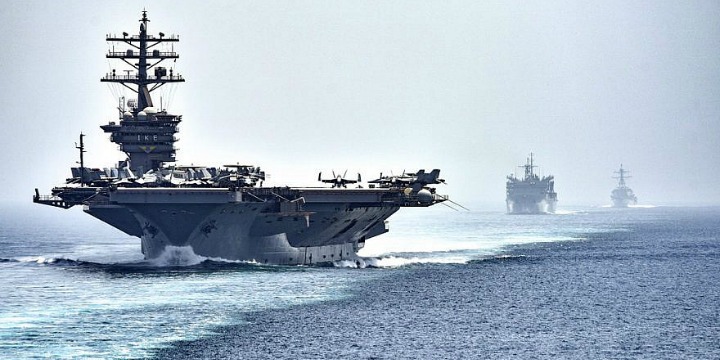
The aircraft carrier USS Dwight D. Eisenhower, followed by the fast-combat support ship USNS Arctic and the guided-missile destroyer USS Nitze, transit the Strait of Hormuz. Photo: Mass Communication Specialist 3rd Class J. Alexander Delgado / US Navy.
A US Navy warship seized advanced missile parts believed to be linked to Iran from a boat it had stopped in the Arabian Sea, US officials said on Wednesday, as Trump’s administration pressures Tehran to curb its activities in the region.
In a statement, the Pentagon confirmed that on Nov. 25 a US warship found “advanced missile components” on a stateless vessel and an initial investigation indicated the parts were of Iranian origin.
“A more thorough investigation is underway,” the statement said.
US officials, speaking on the condition of anonymity, said the guided missile destroyer Forrest Sherman detained a small boat and a detachment of US personnel boarded the vessel, where the missile parts were found.
The crew on the small boat have been transferred to the Yemeni Coast Guard and the missile parts are in the possession of the United States, the officials added.
One of the officials said they believed from initial information that the weapons were bound for Iran-aligned Houthi fighters in Yemen.
In recent years, US warships have intercepted and seized Iranian arms likely bound for Houthi fighters. The official said this was different, citing the advanced nature of the parts.
Under a United Nations resolution, Tehran is prohibited from supplying, selling or transferring weapons outside the country unless approved by the Security Council. A separate UN resolution on Yemen bans the supply of weapons to Houthi leaders.
The Houthis have built their arsenal using local manufacturing, foreign expertise and parts smuggled in from Iran, their ally, and elsewhere. The conflict in Yemen is seen in the region as a proxy war between Saudi Arabia and Iran.
A senior Pentagon official said earlier on Wednesday there were indications that Iran could potentially carry out aggressive actions in the future.
Tensions in the Gulf have risen since attacks on oil tankers this summer, including off the coast of the United Arab Emirates, and a major assault on energy facilities in Saudi Arabia. Washington has blamed Iran, which has denied being behind the attacks.
Since May, the Pentagon has sent 14,000 additional troops to the region to deter Iran.
US officials told Reuters there were ongoing conversations about potentially adding additional US troops in the Middle East, but that no decisions have been made and plans were fluid.